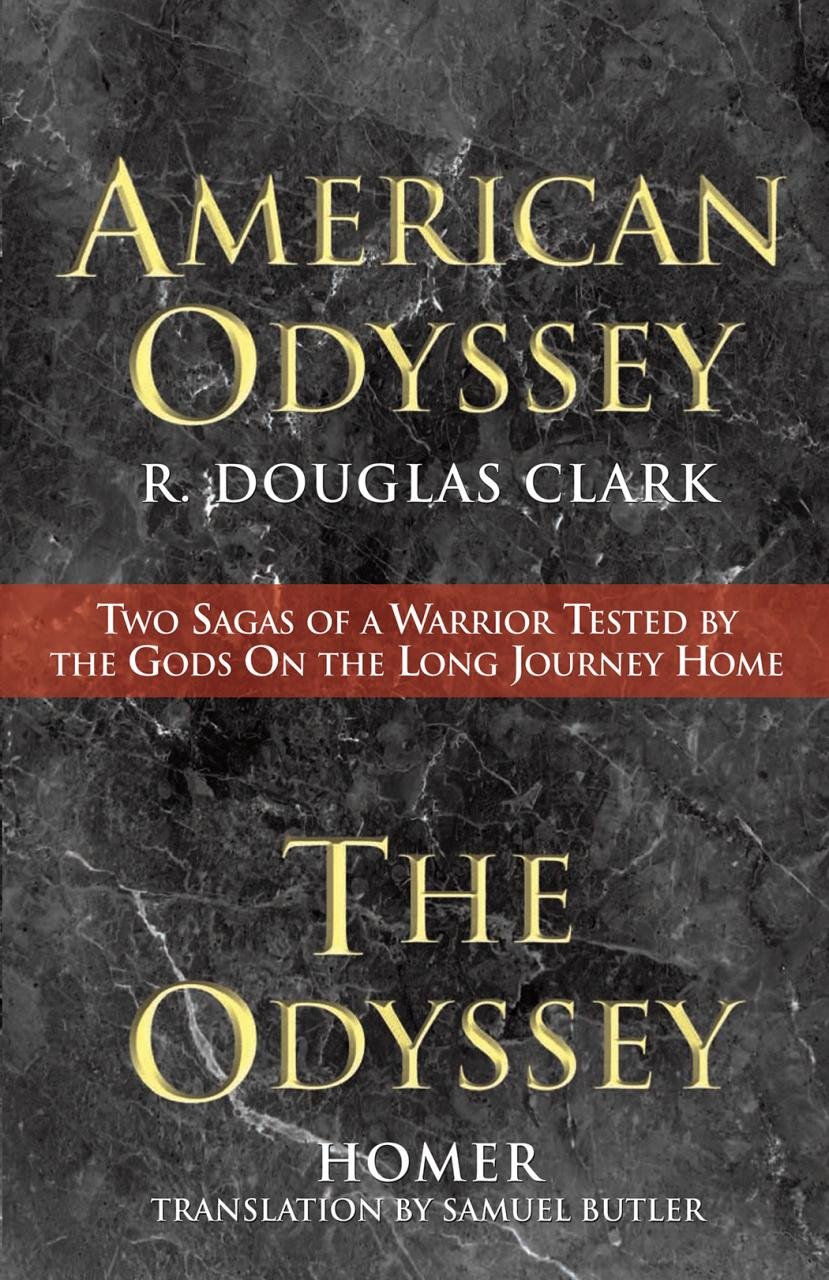
American Odyssey and The Odyssey: Two Sagas of a Warrior Tested by the Gods On the Long Journey Home
$26.95
by R. Douglas Clark



About American Odyssey In millennia long past, Ulysses battled the fates to return to the home and family he loved. Little changes. Now, Leo Lewis–though his war was in Afghanistan, not Troy–finds the same gods and goddesses arrayed behind him and against him. In spirited writing both sly and sublime, R. Douglas Clark captures the essence of the warrior's journey. Today's way home lies not across the Mediterranean but instead becomes the great American road trip–towns unknown, adventures unimagined, people strange and loving. As mortals shape Leo's experiences for better or worse, so, too, do the gods. The novel is an original, one man's struggle to find a way for the byroads of the continent to heal his horrors and deal with his demons. As it unfolds, Clark's tale of this solitary, damaged Marine becomes the story of a million other veterans taking the "long drive home." Tested by a pantheon of self-serving yet sometimes-compassionate gods, Leo finds a journey full of twists and turns, with the abiding lesson that no one should presume to know his own fate–and survival is just as uncertain as it ever was amid the combat and chaos of Kandahar. About The Odyssey The Trojan War is over. The victorious heroes have returned home–except for Ulysses. For he has incurred the wrath of mighty Poseidon, and the god of the seas and storms will have his revenge. Trapped in the lovely clutches of the beautiful nymph Calypso, captive of the giant Cyclops Polyphemus, compelled to journey into Hades–Ulysses struggles on for ten long years, while home in Ithaca, suitors for the hand of his wife Penelope have taken over his palace and feast on his wealth. It is a tale that has survived through the ages, driven by the power of its story and the fascination of the interplay among its characters, both human and divine, all brought vitally to life in this translation by noted author and classical scholar Samuel Butler. I'm so sick and tired of my kids all blaming each other when something goes wrong in the world. It's good to have Homer's reliable information so I can settle their little spats and get back to bed with Hera. -- Zeus Thanks a lot, Homer. I'm sure glad you kept me up to date on what was taking Ulysses so long. I knew he should have been home sooner after that awful war, especially with a hot chick like Penelope waiting for him. I really feel sorry for the poor guy--and he's such a hunk too! --Helen of Troy Boy, and I thought my twelve labors were tough. At least they didn't take ten years like that Ulysses dude. He sure saw a lot of action--just the way I like things--and Homer really can tell it like it is. I can't wait for the sequel. --Hercules R. Douglas Clark is a small business entrepreneur, father, baseball fan, and musician who grew up in Colorado and Oregon and now lives on a raspberry farm in Chimaya, New Mexico. After 25 years as a Eugene, Oregon, business owner, he moved in 2002 to Chimaya, where he ran the local Boys and Girls Club before retiring a second time and shifting his main focus to fiction–resulting now in his first novel, American Odyssey. Homer was the ancient bard who gave Western literature the works we call The Iliad and The Odyssey–if he ever existed. While no proven facts document the life of a historical person named Homer–and even the question of a single author for the tales has been debated for centuries–there is no disputing the power of the stories and the fascination of the interplay among its characters, both human and divine. The man we call Homer, unquestionably the greatest of the Greek epic poets, is believed to have lived in the eastern Mediterranean early in the millennium before the Christian Era. Preview of The Odyssey I had hardly finished telling everything to the men before we reached the island of the two Sirens, for the wind had been very favorable. Then, all of a sudden, it fell dead calm, with no breath of wind nor a ripple upon the water, so the men furled the sails and stowed them; then, taking to their oars, they whitened the water with the foam they raised in rowing. Meanwhile, I look a large wheel of wax and cut it up small with my sword. Then I kneaded the wax in my strong hands till it became soft, which it soon did between the kneading and the rays of the sun-god, son of Hyperion. Then I stopped the ears of all my men, and they bound me hands and feet to the mast as I stood upright on the crosspiece; but they went on rowing themselves. When we had got within earshot of the land, and the ship was going at a good rate, the Sirens saw that we were getting inshore and began with their singing. Come here, they sang, renowned Ulysses, honor to the Achaean name, and listen to our two voices. No one ever sailed past us without staying to hear the enchanting sweetness of our songand he who listens will go on his way not only charmed but also wiser, for we know all the ills that the gods laid upon the Argives and Trojans before Tro