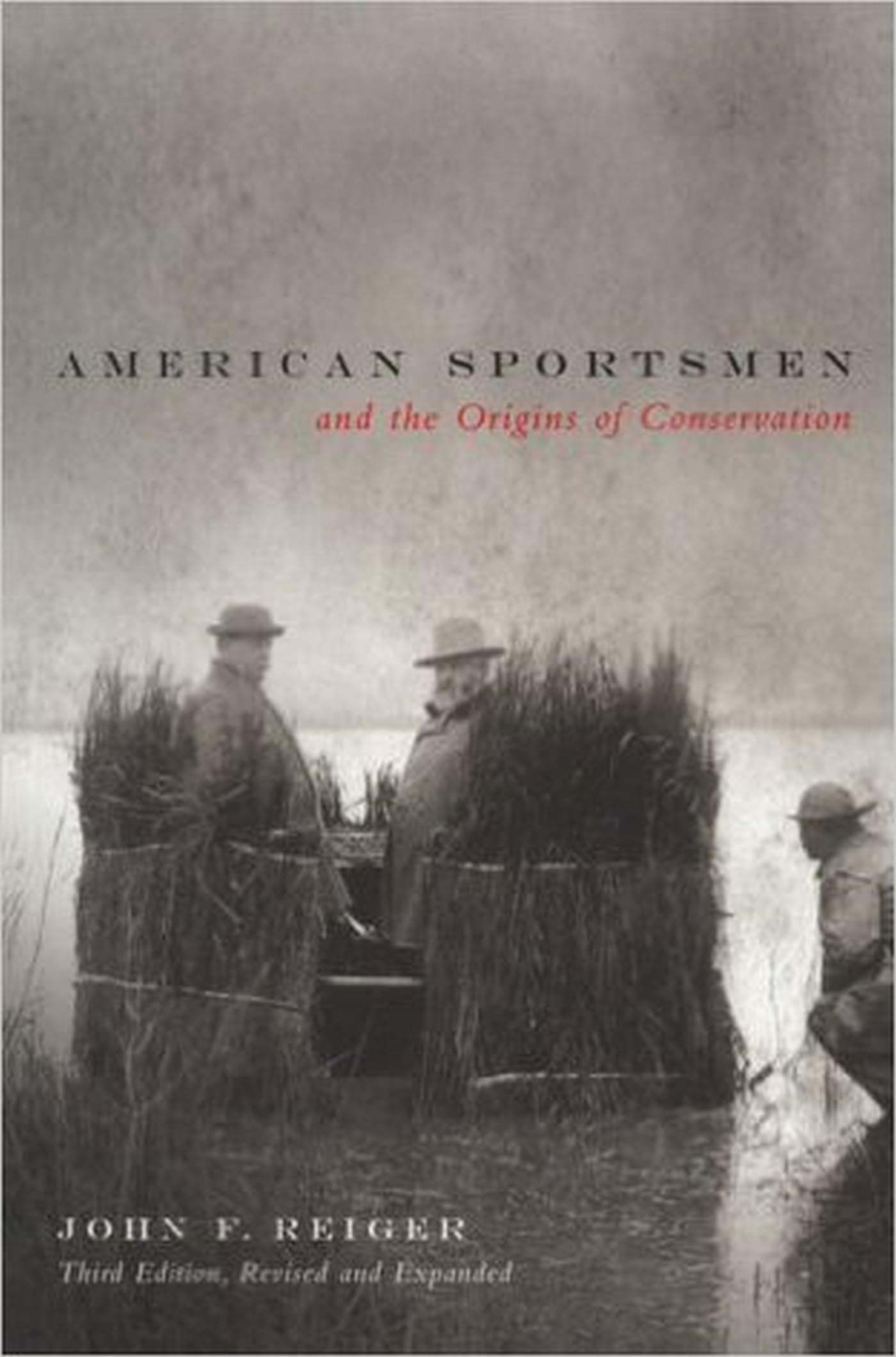



Environmentalists who believe that hunters and anglers are interested only in the kill and the catch may be surprised to learn that sportsmen were originally in the vanguard of the conservation movement. John Reiger's work has been hailed as an authoritative look at these early conservationists; now his landmark book is available in an expanded edition that broadens its historic sweep. Beginning in the 1870s, sportsmen across America formed hundreds of organizations that not only fostered responsibility for game habitats but also spearheaded the creation of national parks, forests, and wildlife refuges. Reiger tells how these "gentlemen" hunters and anglers, outdoor journals like Forest and Stream , and organizations such as the Boone and Crockett Club—founded by Theodore Roosevelt, George Bird Grinnell, and other prominent sportsmen—lobbied for laws regulating the taking of wildlife, and helped to arouse public interest in wilderness preservation. In this new edition, Reiger traces the antecedents of the sportsmen's conservation movement to the years before the Civil War. He extends his coverage into the present by demonstrating how the nineteenth-century sportsman's code—with its demand for taking responsibility for the total environment—continues to be the cornerstone of the sporting ethic. A new Epilogue depicts leading environmental thinker Aldo Leopold as the best-known exponent of this hunter-conservationist ideal. Praised as "one of the seminal works in conservation history" by historian Hal Rothman, Reiger's book continues to be essential reading for all concerned with how earlier Americans regarded the land, demonstrating even to those who oppose hunting that they share with sportsmen and sportswomen an awareness and appreciation of our fragile environment. We owe the term conservation , in its environmental sense, to Gifford Pinchot, the head of the U.S. Forest Service in Theodore Roosevelt's administration. Having formulated the doctrine of multiple use for the nation's forests, Pinchot asserted that America's renewable resources could be made to last indefinitely so long as a certain amount of natural capital was kept in the bank and managed efficiently. The idea of "conservation," writes historian John Reiger, precedes Pinchot by many years. Its foremost exponents were sport hunters, who had an interest in keeping the wild well stocked with a fresh supply of targets. Acting through organizations such as the Boone and Crockett Club and publications such as Field and Stream and American Sportsman , these hunters advanced a waste-not, want-not ethic that cohered with other conservationist measures, among them the establishment of the first national parks. One of them, George Bird Grinnell, wrote by way of explanation, "No woods, no game; no woods, no water; no water, no fish." That simple message carried, and by the 1880s thousands of hunters had adopted a code of sporting ethics that prohibited wanton, wasteful behavior and encouraged careful attention to the condition of wildlife in the field. Reiger continues the story to the middle years of the 20th century, when the forester Aldo Leopold developed the still-influential "conservation ethic." Reiger's book, originally published in 1975 and substantially revised, has become a standard work, and it offers much useful material for students of American environmental history. --Gregory McNamee ". . . a major achievement . . . should be read by all who are concerned with the integrity of the natural world." -- The New York Times, December 15, 2002 Environmentalists who believe that hunters are interested only in the kill may be surprised to learn that sportsmen were originally in the vanguard of the conservation movement. John Reiger's work has been hailed as an authoritative look at these early conservation efforts; now his landmark book is available in an expanded edition that broadens its historic sweep. Beginning in the 1870s, sportsmen across America formed hundreds of organizations that not only fostered responsibility for game habitats but also spearheaded the creation of national parks, forests, and wildlife refuges. Reiger tells how these "gentlemen" hunters and anglers, outdoor journals like "Forest and Sream," and organizations such as the Boon and Crockett club lobbied state legislatures and the Congress to regulate the taking of wildlife, and helped to arouse public interest in wilderness preservation. For this new edition, Reiger has expanded the book beyond its original focus on the period 1870-1901. He has added a new chapter that traces the antecedents of the sportsmen's conservation movement to the years before the Civil War, and has also brought his coverage into the twentieth century by showing how sport hunting and fishing, and conservation, moved beyond class distinctions and eventually became influenced by television. A new Epilogue depicts Aldo Leopold as the hunter-conservationist ideal and shows how the