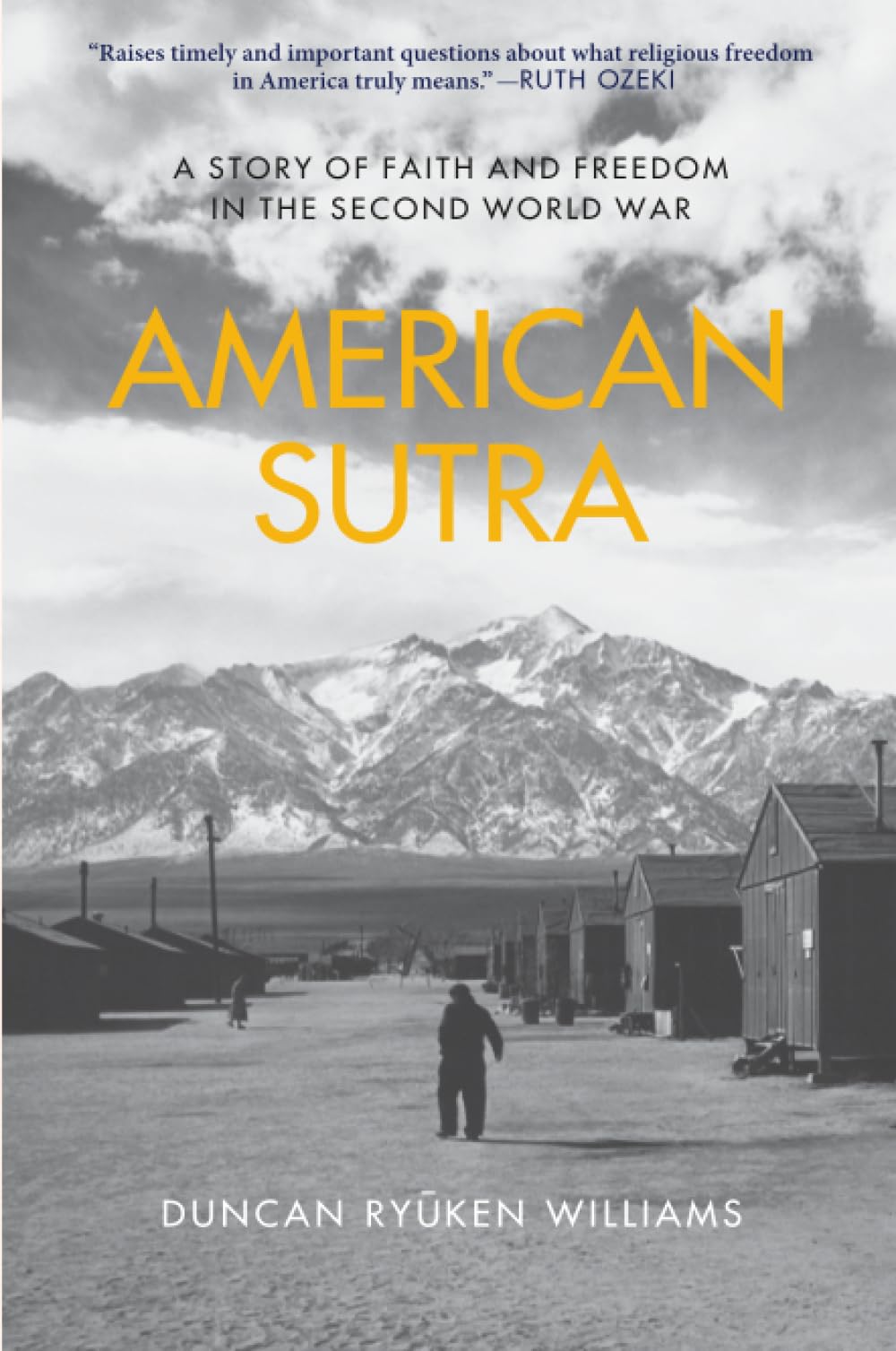



Winner of the Grawemeyer Award in Religion A Los Angeles Times Bestseller “Raises timely and important questions about what religious freedom in America truly means.” ―Ruth Ozeki “A must-read for anyone interested in the implacable quest for civil liberties, social and racial justice, religious freedom, and American belonging.” ―George Takei On December 7, 1941, as the bombs fell on Pearl Harbor, the first person detained was the leader of the Nishi Hongwanji Buddhist sect in Hawai‘i. Nearly all Japanese Americans were subject to accusations of disloyalty, but Buddhists aroused particular suspicion. From the White House to the local town council, many believed that Buddhism was incompatible with American values. Intelligence agencies targeted the Buddhist community, and Buddhist priests were deemed a threat to national security. In this pathbreaking account, based on personal accounts and extensive research in untapped archives, Duncan Ryūken Williams reveals how, even as they were stripped of their homes and imprisoned in camps, Japanese American Buddhists launched one of the most inspiring defenses of religious freedom in our nation’s history, insisting that they could be both Buddhist and American. “A searingly instructive story…from which all Americans might learn.” ― Smithsonian “Williams’ moving account shows how Japanese Americans transformed Buddhism into an American religion, and, through that struggle, changed the United States for the better.” ―Viet Thanh Nguyen, author of The Sympathizer “Reading this book, one cannot help but think of the current racial and religious tensions that have gripped this nation―and shudder.” ―Reza Aslan, author of Zealot “ American Sutra tells the story of how Japanese American Buddhist families like mine survived the wartime incarceration. Their loyalty was questioned, their freedom taken away, but their spirit could never be broken. A must-read for anyone interested in the implacable quest for civil liberties, social and racial justice, religious freedom, and American belonging.” ― George Takei, actor, director, and activist “In his revealing new history of Japanese American internment, Williams foregrounds the Buddhist dimension of the Japanese American experience. His moving account shows how Japanese Americans transformed Buddhism into an American religion, and, through that struggle, changed the United States for the better.” ― Viet Thanh Nguyen, author of the Pulitzer Prize–winning The Sympathizer “Explores for the first time the significance of religion, particularly Buddhism, among Japanese-Americans incarcerated at Heart Mountain and the nine other camps overseen by the War Relocation Authority…A searingly instructive story about America from which all Americans might learn.” ― Peter Manseau , Smithsonian “Williams’ account of Japanese American Buddhists in internment―tales of suffering borne with dignity, and thereby transformed into great compassion―is the fruit of painstaking labor to unearth the buried stories and lives upon which American Sutra has been inscribed.” ― Mark Unno , Buddhadharma “Williams delivers a pioneering reinterpretation and retelling of the internment through the lens of religion… A pleasure to read.” ― Choice “Magisterial and engaging…Provid[es] a comprehensive overview of the wartime experience of Japanese American Buddhists―a majority in the camps, U.S. military service, and the community as a whole. He shows how racism and religious intolerance fed on and intensified each other, long before the war.” ― Vince Schleitwiler , International Examiner “ American Sutra is a critically important, carefully researched, and deeply moving work of scholarship and storytelling that brings to light―from a dark and shameful period in our nation’s past―a forgotten part of our religious and cultural history. This book raises timely and important questions about what religious freedom in America truly means.” ― Ruth Ozeki, author of A Tale for the Time Being “A pioneering work on the history of Japanese Americans during WWII―an instant classic.” ― Tetsuden Kashima, author of Judgment without Trial “Duncan Williams’s book is deep, detailed, and timely, especially at a time when the meaning of ‘citizenship’ in America is still unsettled.” ― Gary Snyder, author of the Pulitzer Prize–winning Turtle Island “ American Sutra movingly and insightfully tells the long-buried true history of the ordeals suffered and triumphs achieved by Japanese American Buddhist individuals unjustly dispossessed and interned during WWII who drew on their Buddhist faith to remain loyal to the nation. I cannot recommend this compelling work highly enough for anyone who faces clearly the present-day conflicts of identities and yet aspires to a twenty-first-century vision of America’s still-possible promise for the world.” ― Robert A. F. Thurman, Columbia University “By recounting the struggle of those interned to maintain their fa