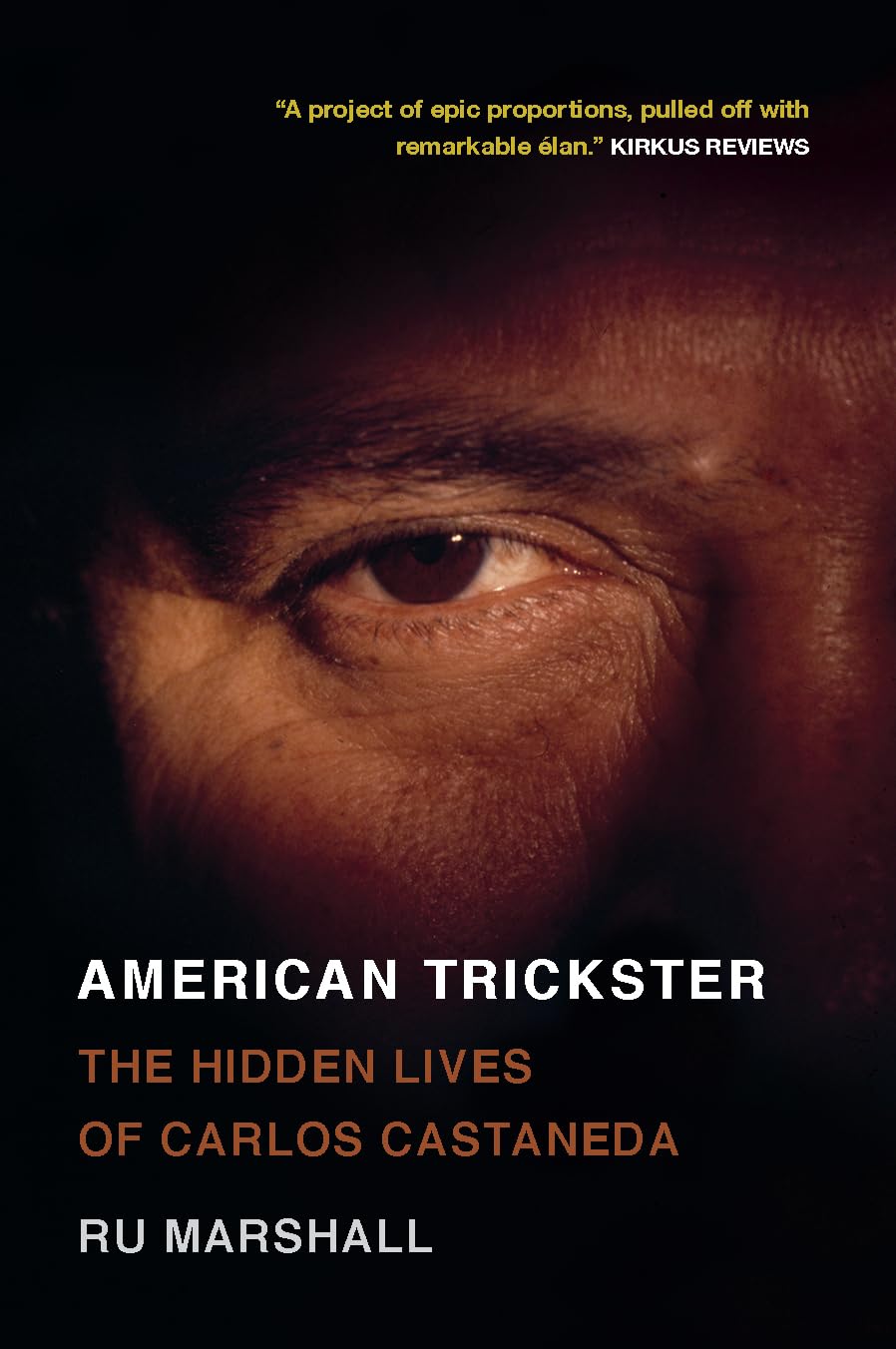



“A project of epic proportions, pulled off with remarkable élan.” —Kirkus Reviews A gripping exposé of deception, cult power, and the long shadow of Carlos Castaneda, the man behind the biggest literary hoax of the twentieth century. Twenty years in the making, American Trickster: The Hidden Lives of Carlos Castaneda unravels the story of the secretive faux-anthropologist who pulled off one of the greatest literary hoaxes in modern history. Both an investigation of the techniques employed by charismatic narcissists and a study of the cult dynamics that still shape American life, American Trickster defies conventional biography. It emerges as a chilling allegory for the Trump era, a trenchant critique of academia’s complicity in distorting and erasing Indigenous culture, and a deep dive into the mechanics of New Age spiritual abuse. Carlos Castaneda, born in Peru in 1925, fled to the U.S. in 1951, escaping responsibility for a child he fathered with a thirteen-year-old girl. He changed his name repeatedly, worked as a taxi driver, studied creative writing, and eventually enrolled in anthropology at UCLA in 1959. In 1968, the University of California Press published his first book, The Teachings of Don Juan , which described his supposed encounters with a Yaqui shaman who initiated him into a secret world of peyote-fueled visions and ancient knowledge never before shared with a “Westerner.” Castaneda was quickly hailed as a revolutionary figure. Admirers ranged from John Lennon and Joni Mitchell to Federico Fellini, George Lucas, and Octavio Paz. His books became international bestsellers and remain the most popular titles ever published on Native American spirituality—despite having little to no connection to actual Indigenous practices. For a time, his truth went unchallenged. Then, in 1973, Time magazine published a searing exposé revealing that Castaneda wasn’t who he claimed to be. As his academic credibility unraveled, he turned inward, building a secretive spiritual group that blurred the line between fiction and reality. Castaneda’s followers, mostly women, became living extensions of the characters in his books—devoted disciples who often abandoned their former lives entirely. By the 1990s, as book sales declined, the group emerged publicly, offering workshops and seminars to thousands across the globe. When Castaneda was diagnosed with liver cancer, he told his disciples he would not die, but burn from within and ascend to another realm—and invited them to join him. After his death in 1998, five of his closest female followers vanished. They are widely believed to have taken their own lives. “Marshall reveals in this detailed, well-documented, and revelatory biography, early suspicions . . . that Castaneda’s writings are mostly, if not entirely, fictional.” — Booklist “A stunning, genre-stretching biography. Marshall's philosophical acuity, honest self-examination, and edgy style make this book a fascinating quest narrative.” —Carol Sklenicka, author of Raymond Carver: A Writer's Life “Necessary and groundbreaking. Marshall paints a devastating portrait of the spiritual leader’s genuine allure, and the febrile cultural landscape of the sixties that proved such a fertile ground for his fabrications.” —Ranbir Sidhu, author of Deep Singh Blue and Good Indian Girls “Through exhaustive research, incisive analysis, and bravura storytelling, Ru Marshall reveals the true story of one of the 20th century’s most mysterious figures, and in so doing, reinvigorates and expands the biography genre.” —Matthew Sharpe, author of Jamestown and The Sleeping Father “Anyone who wants to understand how charisma, cults and today's politics work, should read this. It gives us the vocabulary we need to comprehend what's going on in our divided country while showing us how vulnerable we all are to seduction.” —Helen Benedict, author of A Map of Hope and Sorrow and Wolf Season “Marshall reaches deep into philosophy, film, history and anthropology to examine Castaneda’s sinister legacy. Spooky, mercurial, power-hungry, and dangerous—what is certain about Castaneda? He was short. Even Marshall's footnotes are witty.” —Terese Svoboda, author Anything That Burns You: A Portrait of Lola Ridge “Certain writers leave their music in your head, and it stays. If Ru’s voice went to a bar, it would order a Negroni with gin and talk to the bartender about their day. Everyone in the bar would drift over, and everyone at the bar would think Ru was speaking directly to them. They would be. That is the illusion that narrative produces when it is intimate and in love with the comedy and sexiness of uncertainty. Uncertainty about knowing the self, the outer world, and the sources of human pain. Uncertainty is the lab where all art experiments are staged, and Ru Marshall is a master storyteller who will keep seducing you with language.” —Laurie Stone, who writes the Substack publication Everything is Personal “Ru Mar