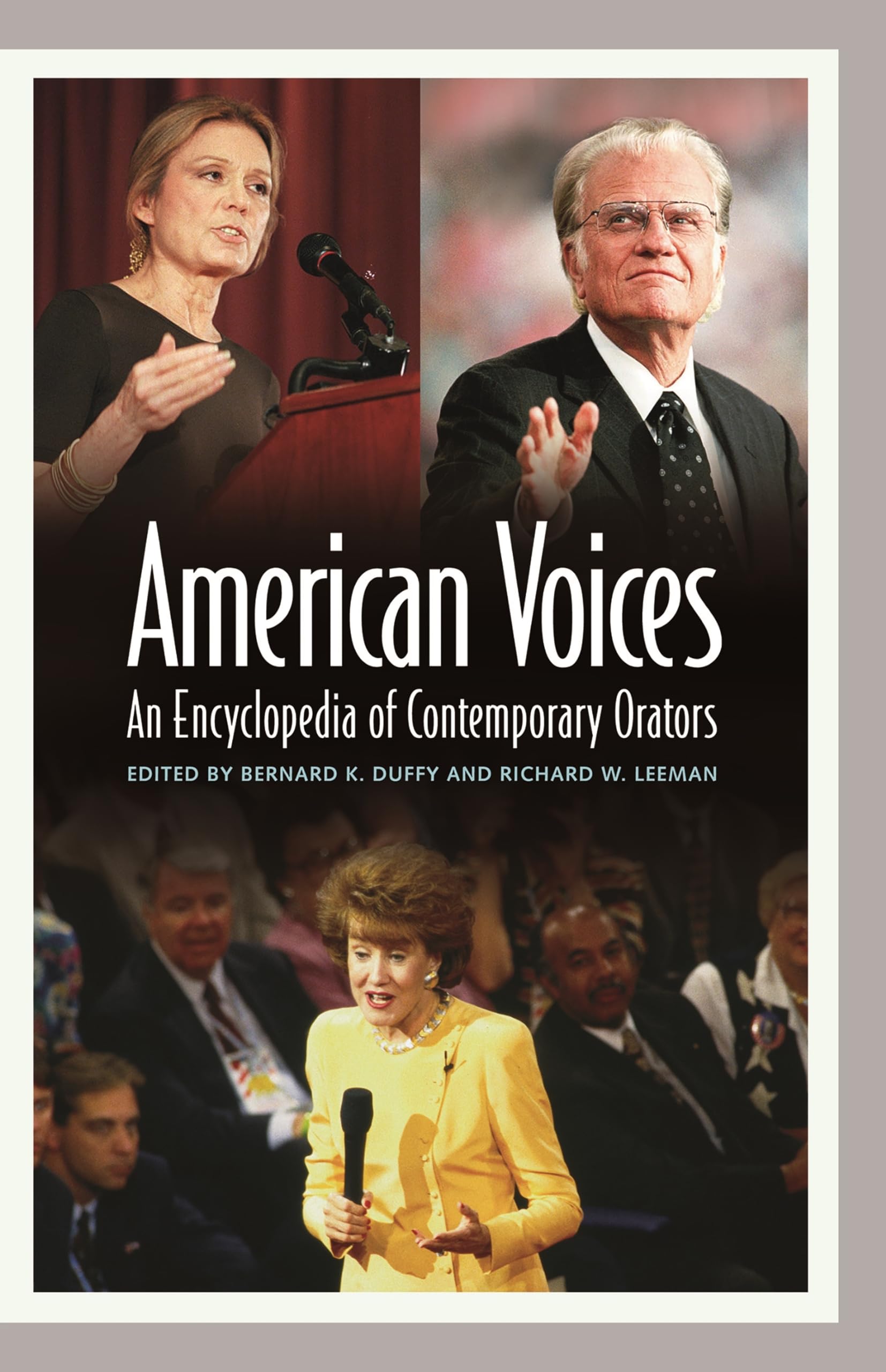



Contemporary public speaking remains an important part of our national life and a substantial force in shaping current events. Many of America's most important moments and issues, such as wars, scandals, election campaigns, September 11, 2001, have been defined by oratory. Here, over 50 essays cover a substantial and interesting group of major American social, political, economic, and cultural figures from the 1960s to the present. Each entry explains the biographical forces that shaped a speaker and his or her rhetorical approach, focuses mainly on a discussion of the orator's major speeches within the context of historical events, and concludes with an appraisal of the speaker and his or her contribution to American political and social life. All entries incorporate chronologies of major speeches, bibliographies including primary sources, biographies, and critical studies and archival collections or Web sites appropriate for student research. Entries include high profile individuals such as: John D. Ashcroft, Elizabeth Dole, Jerry Falwell, Anita Hill, Ralph Nader, Ronald Reagan, Janet Reno, Gloria Steinem, Malcolm X; and many others. Excerpts of major speeches and sidebars complement the text. Ideal for researchers and students in public speaking classes, American history classes, American politics classes, contemporary public address classes, and rhetorical theory/criticism classes. Grade 10 Up–This unique reference examines more than 50 contemporary speakers from the 1960s to the present in terms of style, substance, and ability to shape American thought. All U.S. presidents since 1960 are included, as well as legendary orators such as Martin Luther King, Jr.; Wilma Mankiller; Billy Graham, Jr.; Ralph Nader; and Thurgood Marshall. More contemporary names include Christine Todd Whitman, Sandra Day O'Connor, Larry Kramer, and Donald Rumsfeld. Entries, written by individual contributors, are consistent in objectivity and in their focus on the subject's life as an orator, though some essays are more biographical than others. Jocelyn Elders's upbringing in a poor family resulted in a problem-solving approach in her public addresses about health care. Robert F. Kennedy changed his political focus from anticommunism activities to working for the disadvantaged, and his speeches on civil rights were much more passionate. Portions of key speeches are discussed in terms of purpose and effectiveness. Well-known speeches such as Caesar Chavez's El Plan de Delano and Hillary Rodham Clinton's It Takes a Village can be found in the comprehensive index by phrase or subject matter. Lists of official Web sites, selected critical studies in periodicals and books, and a chronology of major speeches follow each essay. This volume will aid history classes, debate clubs, and public-speaking forums. –Vicki Reutter, Cazenovia High School, NY Copyright © Reed Business Information, a division of Reed Elsevier Inc. All rights reserved. Following Greenwood's American Orators of the Twentieth Century and American Orators before 1900 (both 1987), this volume covers 58 speakers from the 1960s to the present day, including all U.S. presidents since 1960. Also represented are the "most recognized" speakers, such as Billy Graham, Jesse Jackson, and Sandra Day O'Connor. The editors and contributors are highly experienced professionals from the communications field. The volume begins with a discussion of the role of oratory and the evolution of vernacular style. Treating individuals in alphabetical order from John D. Ashcroft to Malcolm X, the essays, which average seven and a half pages in length, examine how each speaker's background influenced his or her style. Language, principal themes, and delivery are also discussed. In addition, the entries analyze how styles changed over time. For example, beginning in 1996, Hillary Clinton's speeches signaled a "shift toward a more traditional, feminine persona." Each entry concludes with notes on information sources, including research collections, critical studies, biographies, and audiovisual materials, and a chronology of major speeches. A bibliographic essay on general sources rounds out the work. This volume is an informative resource and a useful complement to other reference works that cover many of the same individuals but from different angles. Recommended for academic and large public. Carol Sue Harless Copyright © American Library Association. All rights reserved “Duffy and Leeman have compiled a collection of essays representing American orators since 1960….The 50 signed entries include every president since John F. Kennedy, politicians, activists, and jurists; despite its selective content the editors have made an admirable effort to represent all backgrounds. The introduction defines the coverage and discusses how the Internet, radio, and television have influenced rhetoric. Each essay includes a brief biography and examines key speeches made by each orator, complete with