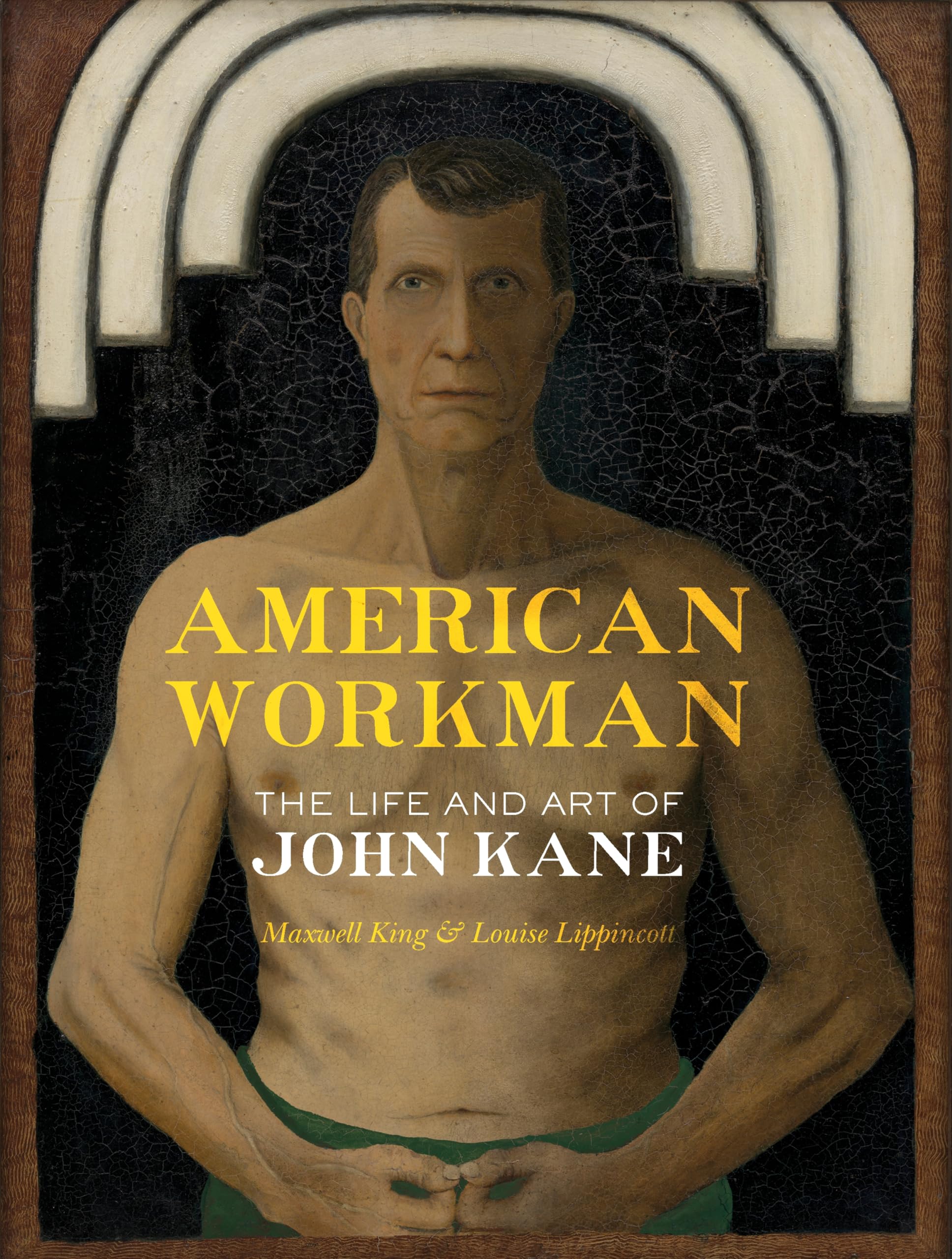



American Workman presents a comprehensive, novel reassessment of the life and work of one of America’s most influential self-taught artists, John Kane. With a full account of Kane’s life as a working man, including his time as a steelworker, coal miner, street paver, and commercial painter in and around Pittsburgh in the early twentieth century, the authors explore how these occupations shaped his development as an artist and his breakthrough success in the modern art world. A rough-and-tumble blue-collar man prone to brawling and drinking, Kane also sought out beauty in the industrial world he inhabited. This Kane paradox―brawny and tough, sensitive and creative―was at the heart of much of the public’s interest in Kane as a person. The allure of the Kane saga was heightened all the more by the fact that he did not achieve renown until he was at the age at which most people are retiring from their professions. Kane’s dedication to painting resulted in a fascinating body of work that has ended up in some of America’s most important museums and private collections. His dramatic life story demonstrates the courage, strength, and creativity of his generation of workmen. They may be long gone, but thanks to Kane they cannot be forgotten. An exhaustive biography as well as a deep critical appreciation of Kane’s art, American Workman should bring new attention to this artist’s remarkable work. ― Pittsburgh Magazine American Workman revisits the life and works of John Kane, a significant figure in the intersecting histories of self-taught art and American modernism. King and Lippincott offer a thorough, accessible account of the artist from his Scottish childhood through his years working as a laborer in Pittsburgh, PA, to his reception as an artist celebrated on a national stage. The work offers first a chronicle of Kane's life and then segues into a discussion of his art and its reception. Commitment to a generous exploration of Kane's life and times unites the authors' narratives, enabling readers to grasp the extraordinary arc of Kane's career. . . .The authors' primary goal for American Workman is the recuperation of Kane's legacy for future histories of American art, and they succeed in a historical moment when the larger impacts of a diverse array of self-taught artists―William Edmondson, Grandma Moses, Morris Hirshfield, Bill Traylor―are being reassessed. Highly recommended. ― Choice American Workman asserts that everything we thought we knew about Kane is probably wrong. ― ARTnews American Workman , the first new account of Kane’s life and work in fity years, is gorgeous . . . King presents a thoughtful account that shuns the contemporary tactic of inventing scenes and dialogue . . . [and] Lippincott also offers bracing art-historical detective work and well-grounded speculation about Kane’s motives and aims. ― Pittsburgh Post-Gazette Lippincott should be applauded for the deep research in her half of the book, which focuses exclusively on Kane’s art. . . . While Kane’s work may still be a fixture at MoMA, maybe it’s time he’s broken out of that stuffy Masters of Popular Painting gallery. American Workman may provide the groundwork for doing just that. ― ARTnews This reassessment of the life and art of John Kane (1860-1934) sets a new standard for art scholarship. . . . Illustrations make this book a rich experience. ― Maine Antiques Digest When Andy Warhol first hit the art world, he was only the second most famous painter to come out of Pittsburgh. John Kane, steelworker and house painter, had garnered his own headlines in the 1920s, when museums discovered his ‘primitive’ oils. Almost a century later, Maxwell King and Louise Lippincott are giving Kane the attention he deserves. They do a lovely job on both life and art, and the amalgam Kane forged from the two. -- Blake Gopnik, author of Warhol: The Definitive Biography of the Pop Artist John Kane saw beauty where others saw a tortured industrial landscape. His artistic eye saw the can-do spirit of Pittsburgh, often filtering out the gritty ugliness that other observers could not see through. Maxwell King and Louise Lippincott have achieved something quite remarkable with their insightful and balanced examination of a most extraordinary man whose talent enabled him to elevate fleeting moments of ordinary life to works of art for the ages. -- Andrew E. Masich, president and CEO, Senator John Heinz History Center American Workman is a long-overdue reexamination of the first self-taught American painter to be taken up by the modern art establishment. As Louise Lippincott notes, there are many parallels between our twenty-first century reality and Kane’s Depression-era Pittsburgh―among them, a glaring divide between economic haves and have-nots, and an art world hungry for the next big thing. . . . This is not, however, a rags-to-riches story, but something more trenchant. Although John Kane died in poverty, he left an arti