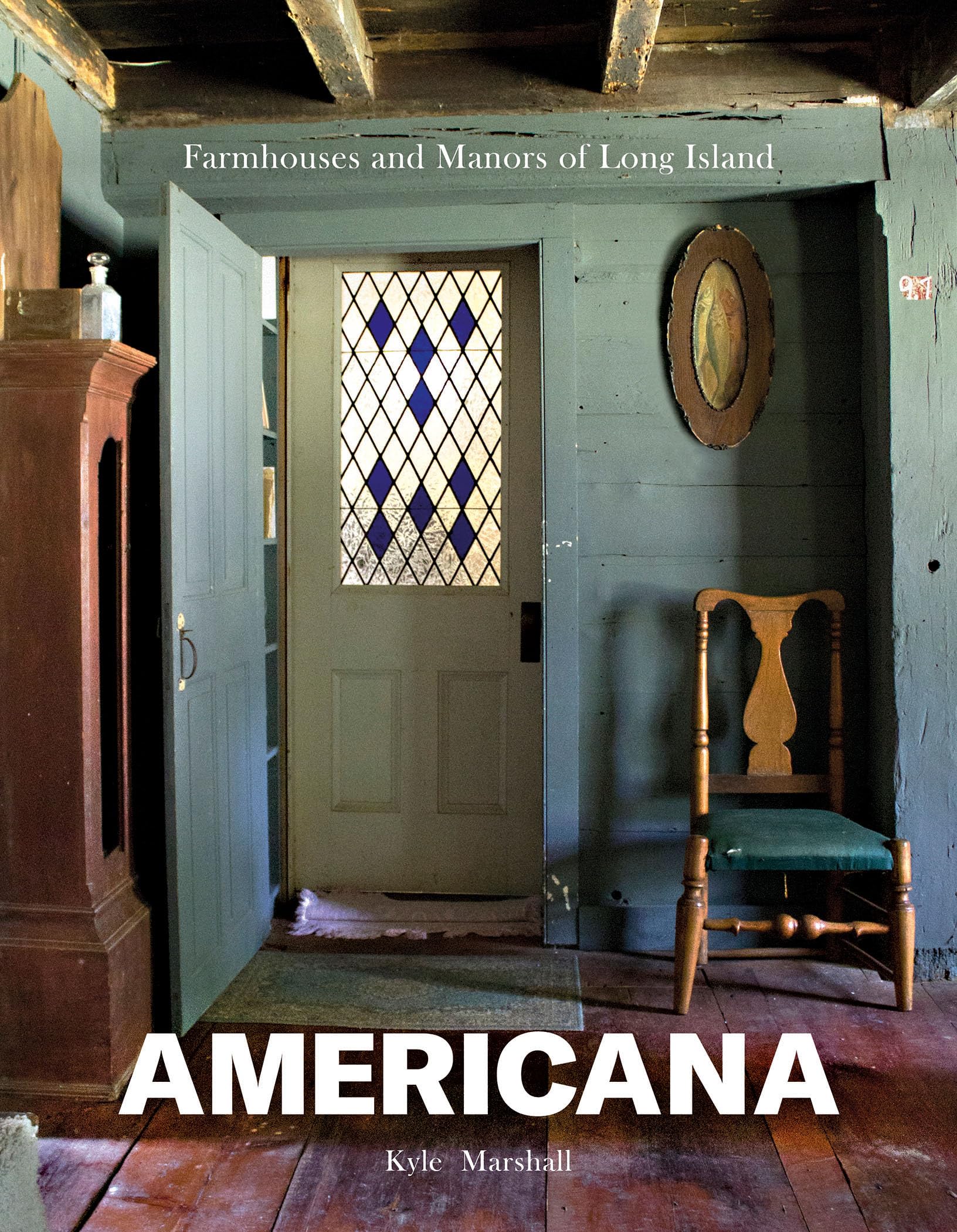



Set between the sound and the sea, Long Island is home to some of America's most intriguing country houses. This book highlights the best examples, telling the story of each through outstanding contemporary color photography. The dwellings, which began as 17th-century homesteads and 18th-century, high-style plantation manor houses, embody centuries of ownership and building activity―an aesthetic evolution shaped by both Dutch and English colonial influences and proximity to the cultural crossroads of Long Island Sound and New York City. These many-layered homes, both large and small, have anchored successive generations engaged in living well amid evolving American taste, each generation expanding, altering, and redefining them in accordance with popular trends and personal eccentricities. Representing the best of maverick Americana, their charmed interiors exude warmth, comfort, and familiarity and contain wonderful old objects and materials that will satiate all who hunger for old houses. "According to Horace, a picture is a poem ( ut pictura poesis ), inasmuch as it tells a story. Kyle's book on a subject heretofore relegated to obscurity tells the many stories of Long Island farmhouses and manor houses vividly and compellingly. Though his focus employs the long lens of looking back, this is no dry recitation of dates and places, nor a reveling in the dewy-eyed nostalgia of bygone times. Rather, it's a collection of vignettes and musings, and through this exercise he demonstrates, with verve and vibrancy, how the past is always present--that far from being dusty artifacts, these places remain as buoyant and alive today as they were in yesteryear." From the foreword by William Miller Kyle Marshall is a designer based in New York City and the Long Island hamlet of Locust Valley. He is the creative director for Bunny Williams Home and was formerly a furniture designer for Ralph Lauren Home. He graduated from Rhode Island School of Design. Farmhouse and Manors of Long Island Americana By Kyle Marshall Schiffer Publishing, Ltd Copyright © 2019 Kyle Marshall All rights reserved. ISBN: 978-0-7643-5786-2 Contents Foreword, 6, Introduction Albertson-Meyer House, Carl J. Schmidlapp House, East Farm, Foxland, Powell Farmhouse, Raynham Hall, Youngs Farm, 11, The Houses, The Homestead, Nissequogue, 23, Willow Hill, Springs, 37, Sagtikos Manor, Islip, 45, Turbillon, Mill Neck, 57, Rock Hall, Lawrence, 73, The Henry Lloyd and, Joseph Lloyd Manor Houses, Lloyd Neck, 83, Thatch Meadow Farm, Head of the Harbor, 95, Hay Fever, Locust Valley, 107, Cedarmere, Roslyn, 121, Carhart House, Lattingtown, 133, Old Mastic, Mastic, 145, Casa Blanca, Lattingtown, 159, Point Place, Miller Place, 169, Sylvester Manor, Shelter Island, 183, Terry-Mulford House, Orient, 195, Acknowledgments, 204, Resources, 205, Bibliography, 206, CHAPTER 1 THE HOMESTEAD Nissequogue The most satisfying approach to the Homestead is the same as it was hundreds of years ago: over the glistening currents of the sound, into Smithtown Bay, and onward across the clear, black-bottomed waters of Stony Brook Harbor. Here the horizon is all shoreline, with twin encircling ribbons of chartreuse saltwater grasses and green tree canopies separated by pebbled beach. Lackadaisical birds linger in the air, and tiny minnows school below. Completing the tableaux at the end of the seventeenth century were wood-clad houses surrounded by clearings. At that time, perched on the western shore far from the mouth of the harbor, stood a little house with its back to a quiet hill. Its site formed part of a large area of land purchased in the 1660s by Richard Smith from Lion Gardiner of Gardiners Island, who had received the land from Sachem Wyandanch several years prior. Thirty years later, in 1725, you would find a busier bay, with that small house just a bit more sophisticated. Ebenezer Smith grafted an addition onto the original house, which became a subsidiary wing. The larger new section presented a neat three-bay façade with two full stories. It was an example of architectural progression in this burgeoning community, whose homes still lacked flourishes such as dormers and welcoming porches. Within a few decades the main section was again expanded to a full five-bay length, bookended by the original chimney stack and a new eastern chimney. During the nineteenth century, notes of casual ease crept in. A wraparound porch upended the simplicity of the exterior, running across the main five-bay section. It provided a wonderful place to take in the view, to be sure, but it was an ungainly addition for such a tightly conceived building. All else remained substantially the same, and the house stayed in Smith family hands until the beginning of the twentieth century, when it was purchased by William Dixon. Dixon sought a smart Long Island farmhouse, an early-twentieth-century idealization of the island's colonial-era homestead hous