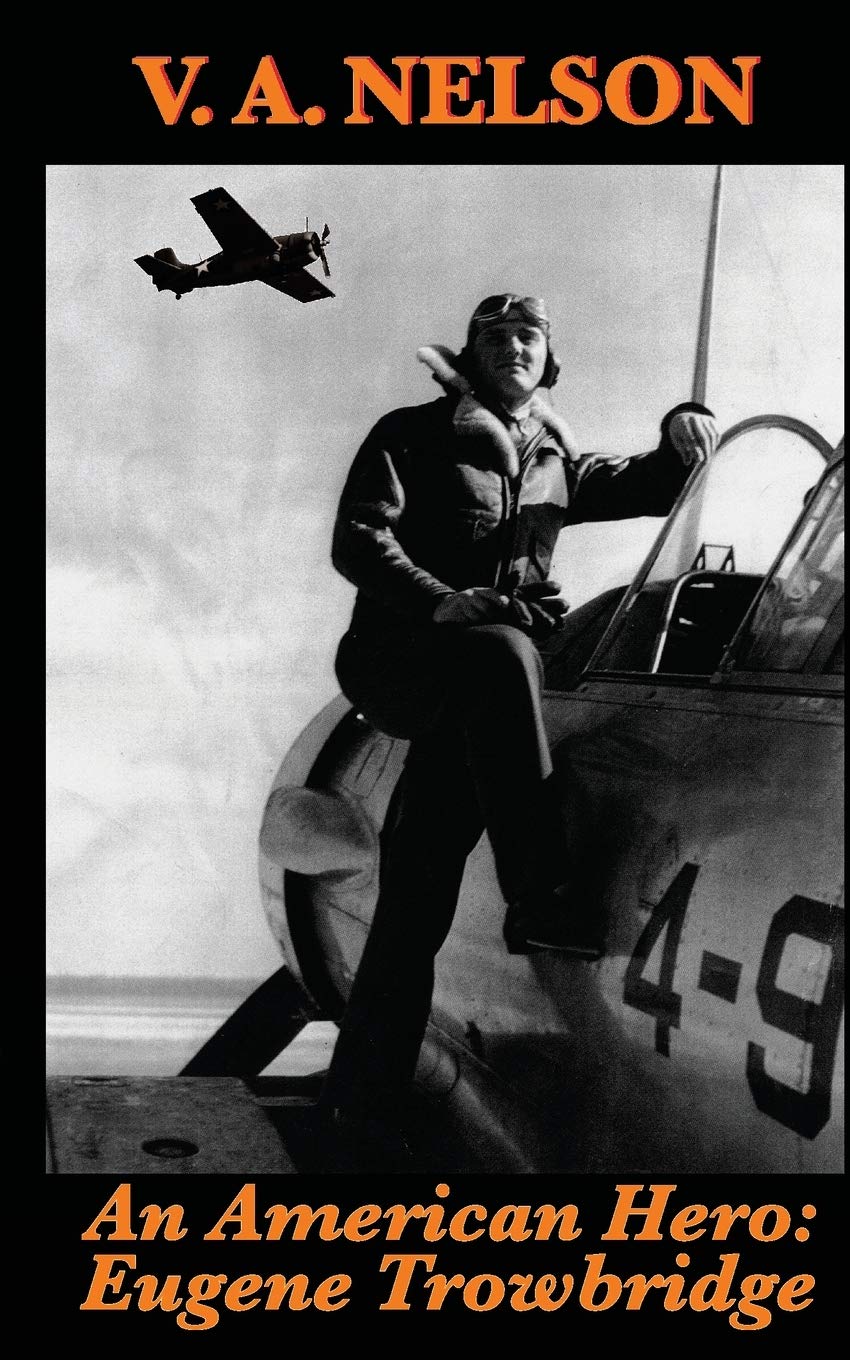



It is August of 1942. Nineteen brave pilots of U.S. Marine Fighter Squadron VMF-223 must fly into the jaws of Hell. Like the brave Greek defenders at the pass of Thermopylae in 480 BC, these few aviators will play a major role in the fierce struggle to hold out against the Empire of Japan. Guadalcanal may be the closest thing to Hell on Earth; but it is strategically too important for either country to give it up. The mortgage payment for this real estate will have to be made in human blood and much more. This is based upon the true story of a marine fighter double-ace and recipient of the Navy Cross. When I was a child in the late 1940's, I heard a lot about the Second World War from relatives and other adults. My father served in the army air corps. One uncle was a tank driver in Patton's 3rd Army. He was the sole survivor of his tank crew when the tank exploded at the Battle of the Bulge. He brought back battlefield souvenirs like a Luger sidearm taken off of a dead Germain officer. Another uncle was killed in action when his destroyer was hit by a Kamikazi during the Okinawa operations. A friend and I started assembling plastic model navy ships. Pretty soon we had a sizeable fleet. I watched many war movies made in the 1940's and 50's. Later, I toured museum navy ships and was very interested in the engineering of these ships. I read a lot of history books about World War Two. When I was in the 9th grade at school, no one knew that our band director was a war hero. I learned of this many decades later. I located his son. He generously provided me with documents, newspaper articles, and Eugene Trowbridge's diary. I spent two years researching information about the Guadalcanal campaign and had to sort out conflicting accounts. My final goal was to publish the book at the time of the 75th anniversary of his first landing on Guadalcanal's just completed, dusty, and bumpy landing strip named Henderson Field (August 20, 1942). V. A. Nelson was born in Graceville, Minnesota. He graduated from Edina (Minnesota) High School in 1961. He earned his B.A. from the University of Minnesota in 1965 and his M.D. from the Medical College of Wisconsin in 1969. His wife, Debbie, and he were married during his senior year of medical school. They have three children and four grandchildren. He took further training at Santa Clara Valley Medical Center in San Jose, California (Stanford University), Queen's Medical Center in Honolulu, Hawaii (University of Hawaii), McLaren Regional Medical Center in Flint, Michigan (Michigan State University), and at the U.S. Army Aero-medical Center in Ft. Rucker, Alabama. He served as a flight surgeon on army active duty from 1973-1975. In January of 1974 he proposed, to the army, an ejection system for helicopters using explosive bolts to release the rotor blades before timed upward crew ejection. The Russians now have it. In 1975, he entered private medical practice in Anoka, Minnesota. In 1978, he moved to Houston, Texas where he has been the Clinical Director of a University of Texas residency program, a partner in a large multispecialty medical group, and the medical director of a hospital clinic. In May of 2004, he was assigned by the University of Texas Medical Branch to work in the Flight Analog Research Unit and in the Human Test Subject Facility at NASA's Johnson Space Center. There, he supported work on countermeasures to the pathophysiologic effects of prolonged space-travel. In July of 2009, he contracted to work in the Soldier Readiness Center at Ft. Hood, Texas. He was the only physician present during the November fifth shooting and was one of the first responders to render medical care to the victims. In 2006, he started work on the manuscript for his first novel, The Tower Of Babel: NASA's Great Endeavor. It was completed in 2011 in time for it to be entered in the Amazon Breakthrough Novel Award where it became a quarter-finalist. Much of the manuscript was completed before the Ft Hood shooting, and he had to relive a scene written in chapter 12 of the manuscript. His second novel, Magnificent Endeavor, was copyrighted in 2013. He published a non-fiction book, Patient-centered Healthcare Reform: What We Want and Need, in December of 2016 before congress addressed revision of the Affordable Care Act.