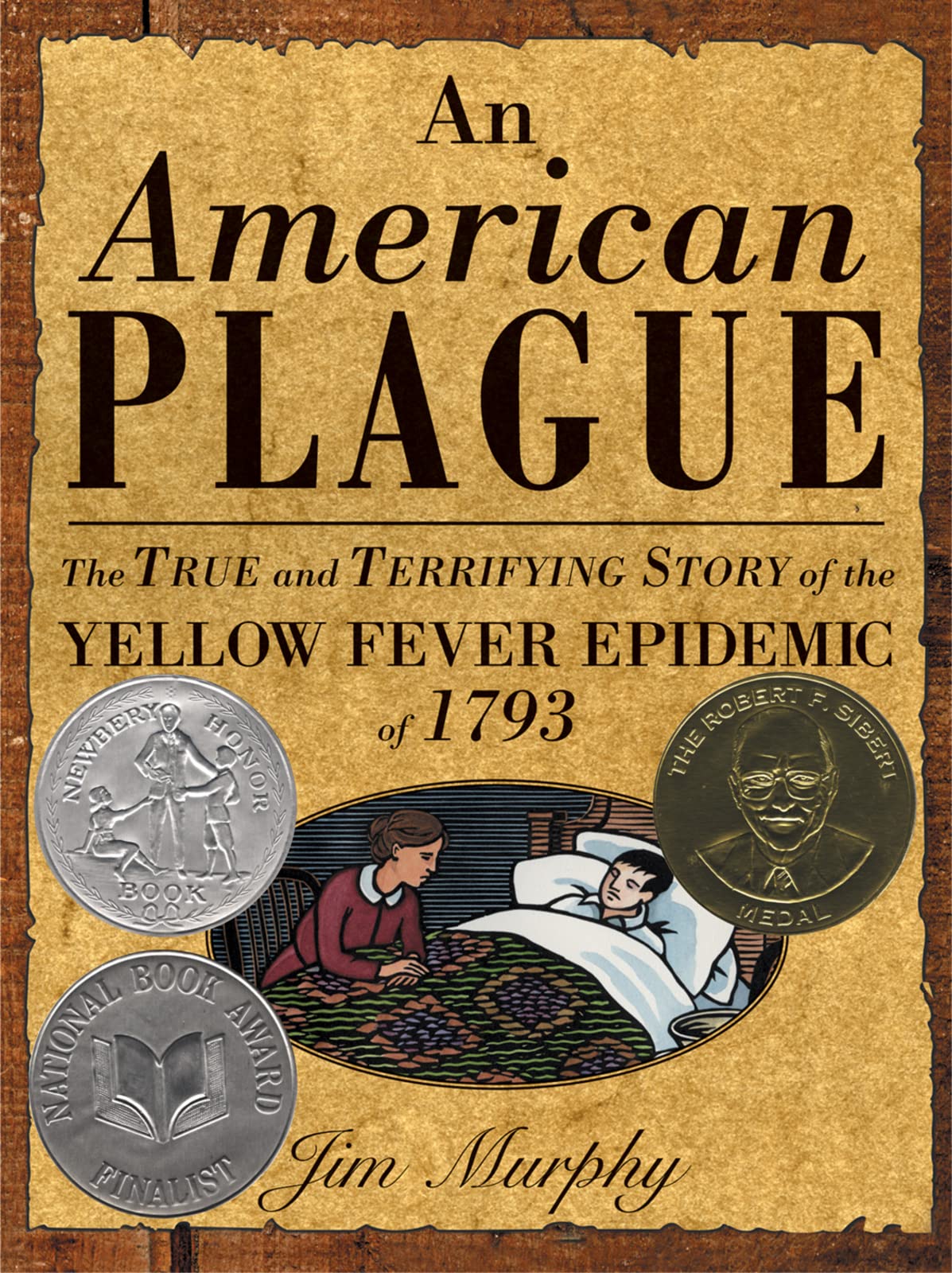
An American Plague: The True and Terrifying Story of the Yellow Fever Epidemic of 1793 (Newbery Honor Book)
$11.89
by Jim Murphy



Powerful and riveting, this Newbery Honor–winning narrative describes the illness known as yellow fever, the toll it took on the nation’s capital—and the eventual triumph over the disease. Long before Covid and the West Nile virus, yellow fever was a medical mystery that forced thousands in Philadelphia, the nation’s temporary capital, to flee and brought the workings of the federal government to a virtual halt. A riveting account of this country’s first large-scale medical epidemic, An American Plague is generously illustrated with archival prints and photographs and includes a bibliography, map, and index. This is the story of how half the city’s residents fled and half of those who remained died; neighboring towns, cities and states barricaded themselves; George Washington himself fled, setting off a constitutional crisis; and bloodletting caused blood to run through the streets. It is also the story of a little known chapter in Black history in which free Blacks nursed the sick only to be later condemned for their heroic efforts. Meticulously researched, first-hand accounts, newspaper clippings, death lists, and period engravings recreate the fear and panic while exploring the political, social, cultural, medical and scientific history of the times. A final chapter explores the causes of the epidemic and provides a wake-up call about the potential for epidemics today. Newbery Honor Book * National Book Award Finalist * Winner of the Sibert Medal Grade 6-10-If surviving the first 20 years of a new nationhood weren't challenge enough, the yellow fever epidemic of 1793, centering in Philadelphia, was a crisis of monumental proportions. Murphy chronicles this frightening time with solid research and a flair for weaving facts into fascinating stories, beginning with the fever's emergence on August 3, when a young French sailor died in Richard Denny's boardinghouse on North Water Street. As church bells rang more and more often, it became horrifyingly clear that the de facto capital was being ravaged by an unknown killer. Largely unsung heroes emerged, most notably the Free African Society, whose members were mistakenly assumed to be immune and volunteered en masse to perform nursing and custodial care for the dying. Black-and-white reproductions of period art, coupled with chapter headings that face full-page copies of newspaper articles of the time, help bring this dreadful episode to life. An afterword explains the yellow fever phenomenon, its causes, and contemporary outbreaks, and source notes are extensive and interesting. Pair this work with Laurie Halse Anderson's wonderful novel Fever 1793 (S & S, 2000) and you'll have students hooked on history. Mary R. Hofmann, Rivera Middle School, Merced, CA Copyright 2003 Reed Business Information, Inc. Gr. 6-12. History, science, politics, and public health come together in this dramatic account of the disastrous yellow fever epidemic that hit the nation's capital more than 200 years ago. Drawing on firsthand accounts, medical and non-medical, Murphy re-creates the fear and panic in the infected city, the social conditions that caused the disease to spread, and the arguments about causes and cures. With archival prints, photos, contemporary newspaper facsimiles that include lists of the dead, and full, chatty source notes, he tells of those who fled and those who stayed--among them, the heroic group of free blacks who nursed the ill and were later vilified for their work. Some readers may skip the daily details of life in eighteenth-century Philadelphia; in fact, the most interesting chapters discuss what is now known of the tiny fever-carrying mosquito and the problems created by over-zealous use of pesticides. The current struggle to contain the SARS epidemic brings the "unshakeable unease" chillingly close. Hazel Rochman Copyright © American Library Association. All rights reserved "A mesmerizing, macabre account...powerful evocative prose... compelling subject matter...fascinating discussion...valuable lesson in reading and writing history. Stellar." - Kirkus Reviews (starred review) "Leisurely, lyrical tone...Murphy injects the events with immediacy...archival photographs...bring the story to life...comprehensive history." - Publishers Weekly "Laudable insight...Readers view the panic from several vantage points...allows his audience to share the contemporary complexity...truly absorbing." - Bulletin of the Center for Children’s Books (starred review) "Solid research and a flair for weaving facts into fascinating stories...extensive and interesting...you'll have students hooked on history." - School Library Journal "History, science, politics and public health come together in this dramatic account...brings the 'unshakeable unease' chillingly close." - Booklist "Diverse voices...representative images...Everywhere, Murphy is attentive to telling detail...Thoroughly documented...the work is both rigorous and inviting." - Horn Book Magazine "Nobo