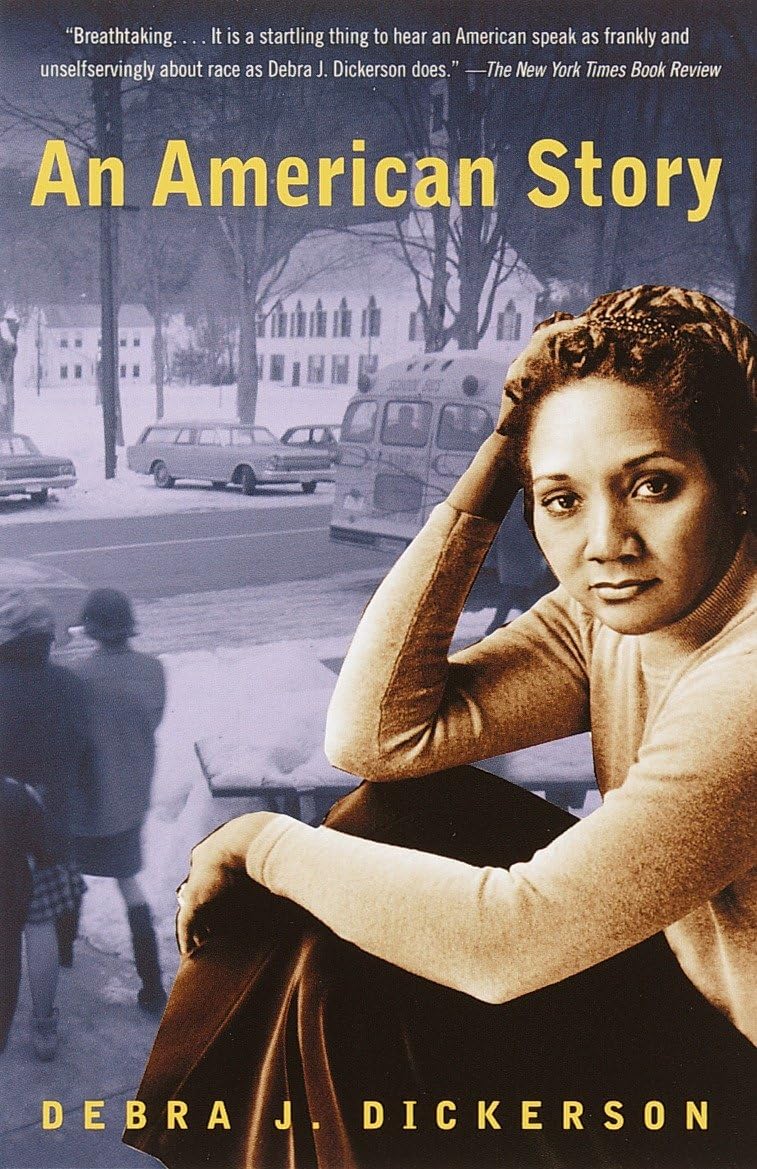



A profoundly courageous and insightful memoir, An American Story documents the events that have shaped journalist Debra Dickerson's conscience. The daughter of former sharecroppers, Dickerson never imagined she would emerge from her squalid St. Louis neighborhood to become an acclaimed journalist with a Harvard Law degree. A constant reader and a straight-A student, nevertheless Dickerson's lack of confidence kept her from accepting the many colleges offers she received. Instead she enlisted in the U.S. Air Force, quickly rising through the ranks. In spite of her success, she recognized within herself deep-seated conflict at being a working class black woman living in a white man's world. Her path to self-acceptance is at the heart of this refreshing narrative. "Breathtaking... It is a startling thing to hear an American speak as frankly and un-selfservingly about race." -- The New York Times Book Review "[Dickerson's] willingness to bare herself on these pages is more of a patriotic act than all her years in military service." -- Newsday "Debra J. Dickerson... analyzes [her life] with the ferociousness of her intellect and the humility of her heart." -- Ms. A profoundly courageous and insightful memoir, An American Story documents the events that have shaped journalist Debra Dickerson's conscience. The daughter of former sharecroppers, Dickerson never imagined she would emerge from her squalid St. Louis neighborhood to become an acclaimed journalist with a Harvard Law degree. A constant reader and a straight-A student, nevertheless Dickerson's lack of confidence kept her from accepting the many colleges offers she received. Instead she enlisted in the U.S. Air Force, quickly rising through the ranks. In spite of her success, she recognized within herself deep-seated conflict at being a working class black woman living in a white man's world. Her path to self-acceptance is at the heart of this refreshing narrative. A profoundly courageous and insightful memoir, An American Story" documents the events that have shaped journalist Debra Dickerson's conscience. The daughter of former sharecroppers, Dickerson never imagined she would emerge from her squalid St. Louis neighborhood to become an acclaimed journalist with a Harvard Law degree. A constant reader and a straight-A student, nevertheless Dickerson's lack of confidence kept her from accepting the many colleges offers she received. Instead she enlisted in the U.S. Air Force, quickly rising through the ranks. In spite of her success, she recognized within herself deep-seated conflict at being a working class black woman living in a white man's world. Her path to self-acceptance is at the heart of this refreshing narrative. Debra J. Dickerson lives in Washington, D.C. From: chapter one FAMILY HISTORY mama It wasn't just the social and historical contexts into which I was born that made me gnaw at the corners of my place in the scheme of things; there were also the specifics of my large and close-knit family. My mother's side, my closest side, is full of vinegary characters who, out of pure cussedness, loved to fight whatever power was closest to hand. (Usually, this fight was verbal rather than legal or physical; in my family, a cutting wit is the weapon of choice. Since the little guy couldn't actually change his situation, we believe, he might as well make fun of it.) Despite their many years sharecropping in the Mississippi Delta, they rarely expended much of their hell-raising energy railing against whites. My maternal grandfather, John Bishop "Paw Paw" Gooch, was not exactly a Norman Rockwell figure. His stories, and he had lots of them, were always either profane, sacrilegious, or X-rated, but blacks were almost always the main players. "White folks don bother me," he used to say, "you know in the fust fi minutes where you stands wid any particular one of em. 'S niggers that cause all my problems." He cackled about having been too young to fight in World War I and too old for World War II. He cheated his great-grandchildren at board games and blew smoke in their faces if they complained. He once tossed a crumpled dollar bill at a preteen collecting for football uniforms on the street and sneered, "Now quit beggin." He pinched my teenage girlfriends' behinds at holiday gatherings and convinced his cronies that I was his wife. I was eleven. When the Gooches got together, laughter and liquor flowed and everybody yelled at once, jockeying for the floor in a wonderful cacophony. Their stories, by and large, all had punch lines rather than the indictments one might have expected. They were intended to entertain, to capture the spirit of the times and the personalities of their friends and neighbors. While there were, of course, stand-alone stories of white brutality and the like, those were rare. Jim Crow was the backdrop to all their lives, but they seemed to regard it with the same spirit of inventiveness and perspicacity as they did the w