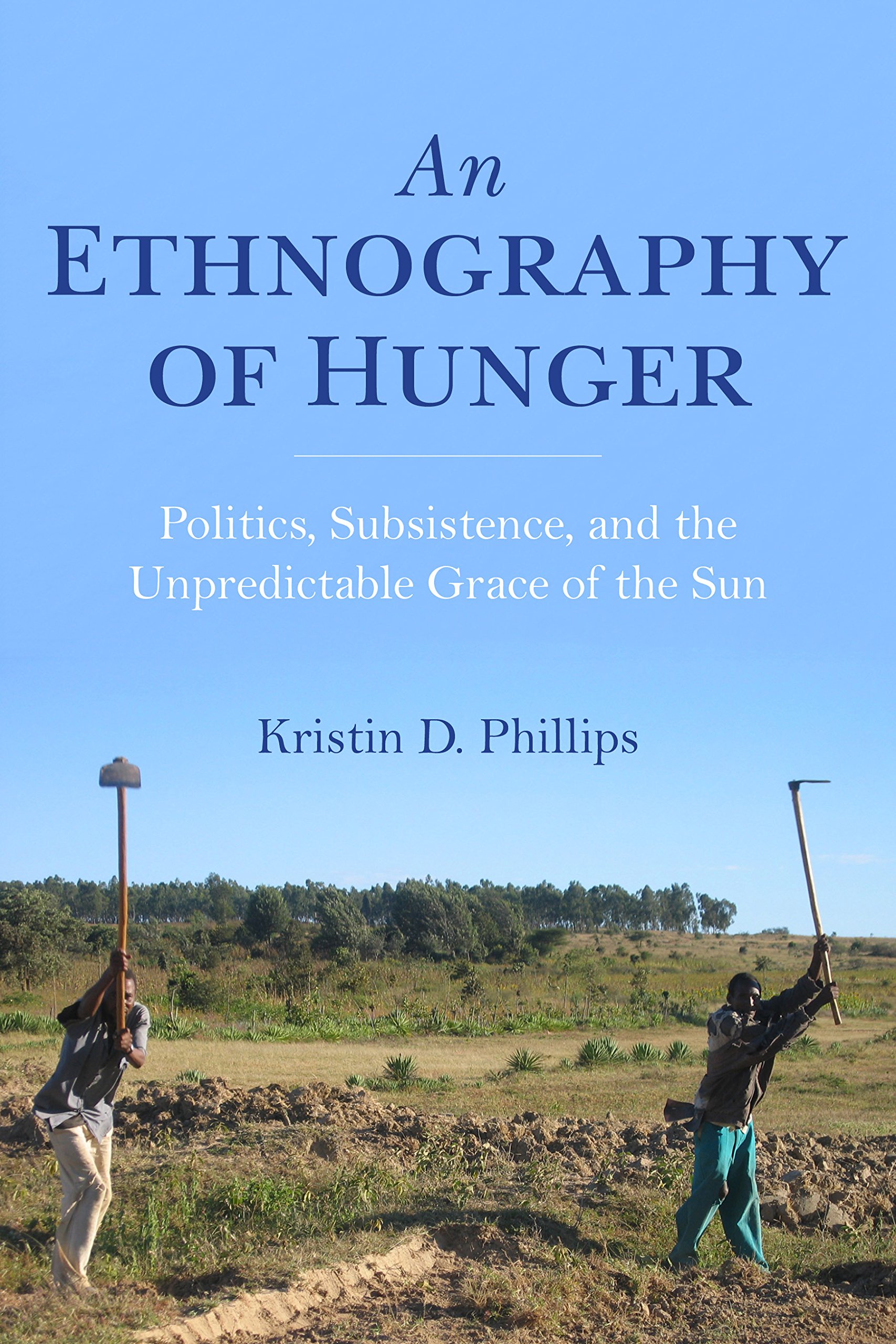
An Ethnography of Hunger: Politics, Subsistence, and the Unpredictable Grace of the Sun (Framing the Global)
$22.60
by Kristin Phillips



In An Ethnography of Hunger Kristin D. Phillips examines how rural farmers in central Tanzania negotiate the interconnected projects of subsistence, politics, and rural development. Writing against stereotypical Western media images of spectacular famine in Africa, she examines how people live with―rather than die from―hunger. Through tracing the seasonal cycles of drought, plenty, and suffering and the political cycles of elections, development, and state extraction, Phillips studies hunger as a pattern of relationships and practices that organizes access to food and profoundly shapes agrarian lives and livelihoods. Amid extreme inequality and unpredictability, rural people pursue subsistence by alternating between―and sometimes combining―rights and reciprocity, a political form that she calls "subsistence citizenship." Phillips argues that studying subsistence is essential to understanding the persistence of global poverty, how people vote, and why development projects succeed or fail. "Kristin Phillips has written a compelling, compassionate exploration of the social life of food and hunger in rural Tanzania. She masterfully evokes the voices and visions of everyday people seeking economic security and political justice in the face of deepening inequalities, a negligent state, and exploitative development projects. An Ethnography of Hunger should be read by anyone interested in the intersections of food, power, and sociality in agrarian communities."―Dorothy L. Hodgson, author of Gender, Justice and the Problem of Culture: From Customary Law to Human Rights in Tanzania "This book presents an empirically detailed and powerfully argued analysis of how rural communities negotiate precarious livelihoods amidst pressures to participate in local development."―Lisa Cliggett, author of Grains from Grass: Aging, Gender, and Famine in Rural Africa "The book is ethnographically rich and presents us with new ways of thinking about development practices and environmental politics broadly defined. More importantly, An Ethnography of Hunger makes a significant contribution to the understanding of the relationship between power, politics and the environment. The book, for many years to come, will provoke intellectual debate about the place of politics and the environment in Tanzania, Africa, and beyond."― Political and Legal Anthrology Review "Recommended."― Choice "Phillips's nuanced analysis of the lived experience of hunger, its embeddedness in social relationships, and its impact on political subjectivity are truly original and set this book apart from other anthropological studies of hunger, subsistence farming, or political subjectivity."―Jennie E. Gurnet - Georgia State University, African Studies Review Kristin D. Phillips is Senior Lecturer in the Department of Anthropology at Emory University. Her work has appeared in African Studies Review , PoLAR: Political and Legal Anthropology, Comparative Education Review, and Critical Studies in Education. An Ethnography of Hunger Politics, Subsistence, and the Unpredictable Grace of the Sun By Kristin D. Phillips Indiana University Press Copyright © 2018 Kristin D. Phillips All rights reserved. ISBN: 978-0-253-03837-1 Contents Preface, ix, Acknowledgments, xvii, Note on Language and Translation, xxiii, Introduction: Subsistence Citizenship, 1, Part I: The Frames of Subsistence in Singida: Cosmology, Ethnography, History, 1 Hunger in Relief: Village Life and Livelihood, 25, 2 The Unpredictable Grace of the Sun: Cosmology, Conquest, and the Politics of Subsistence, 48, Part II: The Power of the Poor on the Threshold of Subsistence, 3 We Shall Meet at the Pot of Ugali: Sociality, Differentiation, and Diversion in the Distribution of Food, 79, 4 Crying, Denying, and Surviving Rural Hunger, 106, Part III: Subsistence Citizenship, 5 Subsistence versus Development, 131, 6 Patronage, Rights, and the Idioms of Rural Citizenship, 151, Conclusion: The Seasons of Subsistence and Citizenship, 177, Bibliography, 183, Index, 201, CHAPTER 1 Hunger in Relief Village Life and Livelihood All the rocks in Singida were once meat. People were eating them all the time. But they were also given the law by the elders that they should never put salt on the meat. One day, a person decided to put salt on the meat, even though he had been told many times not to. He didn't believe it. He thought that he was doing a good thing, but kumbe!, he broke the command. On that day, all the meat turned to rocks, and there was not so much to eat. The Story of How all the Rocks in Singida Were Once Meat. Told by Mama Rosalia, 2005 Let us begin then with the social and material landscape of Singida region. Singida region, home to over a million residents, sprawls in Tanzania's heartland, 700 kilometers northwest of Tanzania's commercial center, Dar es Salaam, and 330 kilometers northwest of the nation's capital Dodoma (see map 1.1). Three o