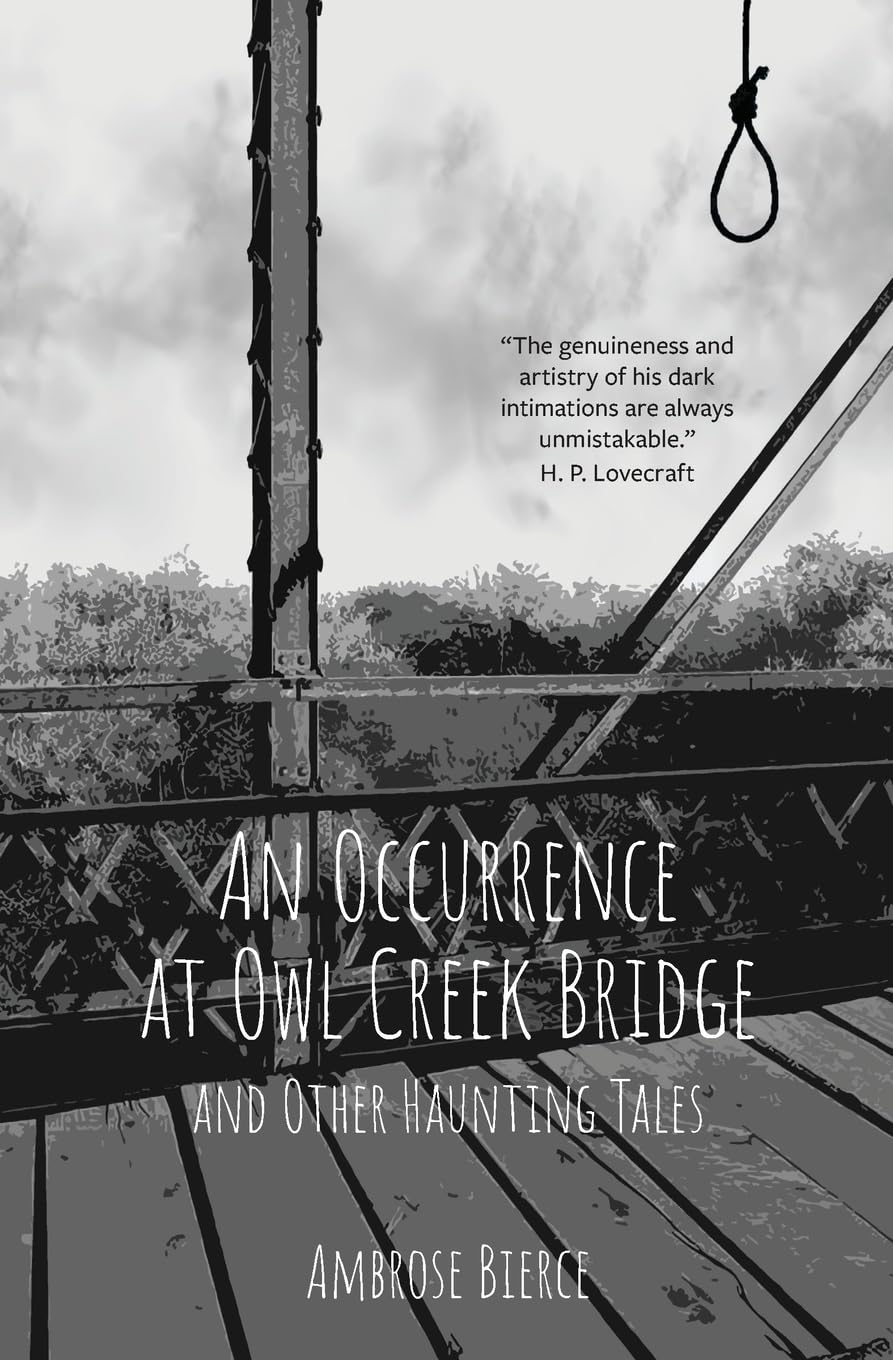
An Occurrence at Owl Creek Bridge and Other Haunting Tales (Warbler Classics Annotated Edition)
$9.99
by Ambrose Bierce



“The genuineness and artistry of his dark intimations are always unmistakable.” —H. P. Lovecraft An Occurrence at Owl Creek Bridge and Other Haunting Tales gathers fifteen of Ambrose Bierce’s most enduring works of horror and the uncanny, including “An Occurrence at Owl Creek Bridge,” “The Death of Halpin Frayser,” “The Moonlit Road,” “The Damned Thing,” and “An Inhabitant of Carcosa.” Each embodies Bierce’s merciless wit and pitiless realism, his fascination with the blurred borders between waking and dream, life and annihilation. His soldiers, visionaries, and victims inhabit a moral wilderness where the ghost’s presence is often indistinguishable from memory, guilt, or madness. Bierce’s imagination fuses the Gothic and the psychological into an art at once precise and hallucinatory. His prose—unsentimental, gleaming as steel—transforms the horror story into a form of metaphysical inquiry. This Warbler Classics edition includes a detailed biographical timeline. AMBROSE BIERCE (1842–1914?) was one of nineteenth-century America’s most caustic and commanding men of letters—a soldier, journalist, satirist, and master of the macabre. Born in Ohio and raised in Indiana, Bierce served with distinction in the Union Army’s 9th Indiana Infantry Regiment, fighting in some of the Civil War’s bloodiest campaigns. After the war he became a regular columnist at the San Francisco Examiner and one of the most influential journalists on the West Coast. In addition to his journalistic work, he wrote piercingly about the ghastly things he had seen in the war and was a pioneer of the psychological horror story. In late 1913, at the age of seventy-one, Bierce crossed the border into revolutionary Mexico, intending to witness PanchoVilla’s campaign as an observer. He was never seen again. AMBROSE BIERCE (1842-1914?) was one of nineteenth-century America's most caustic and commanding men of letters-a soldier, journalist, satirist, and master of the macabre. Born in Ohio and raised in Indiana, Bierce served with distinction in the Union Army's 9th Indiana Infantry Regiment, fighting in some of the Civil War's bloodiest campaigns. After the war he became a regular columnist at the San Francisco Examiner and one of the most influential journalists on the West Coast. In addition to his journalistic work, he wrote piercingly about the ghastly things he had seen in the war and was a pioneer of the psychological horror story. In late 1913, at the age of seventy-one, Bierce crossed the border into revolutionary Mexico, intending to witness Pancho Villa's campaign as an observer. He was never seen again.