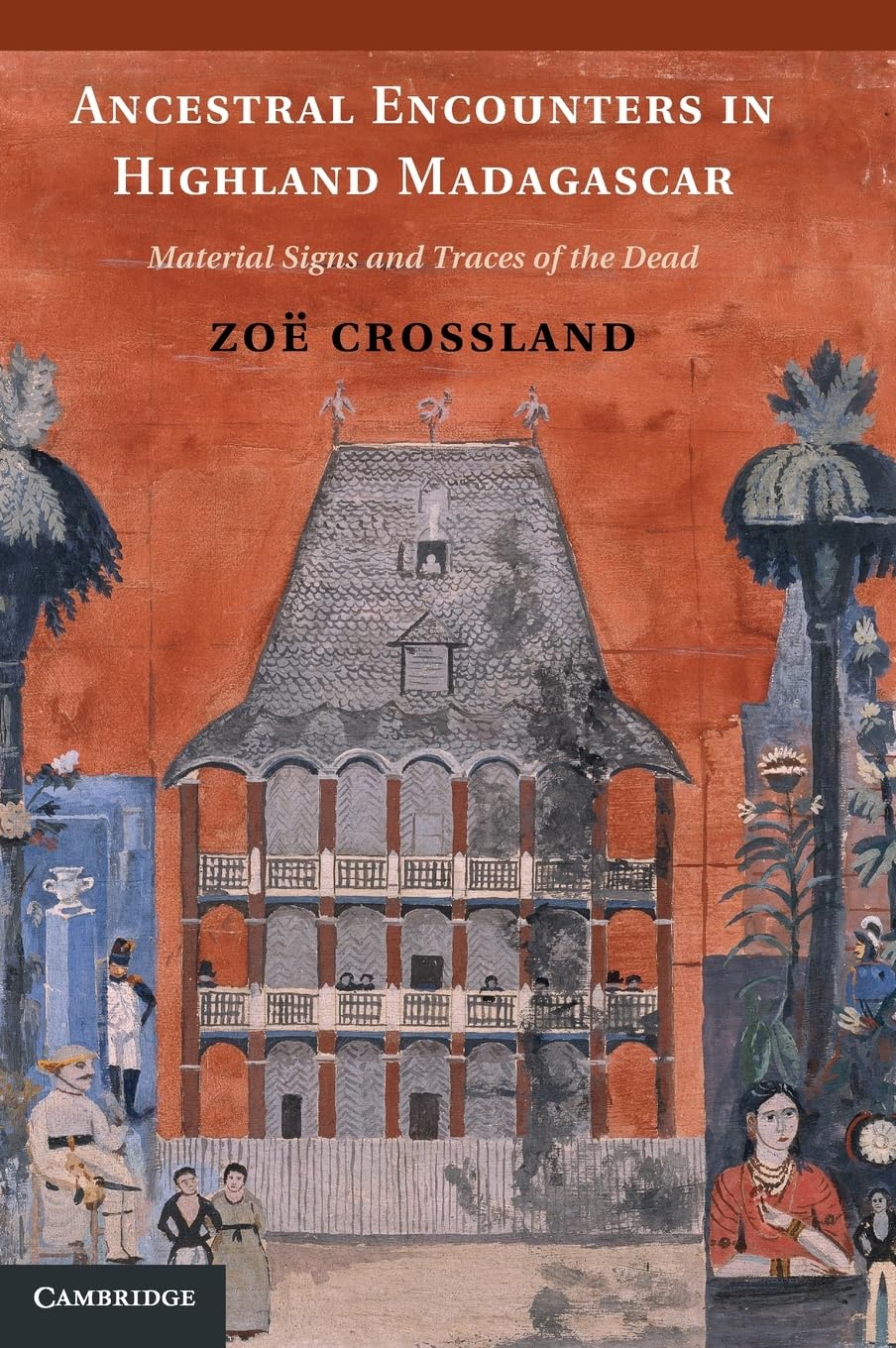
Ancestral Encounters in Highland Madagascar: Material Signs and Traces of the Dead
$56.65
by Zoë Crossland



Nineteenth-century highland Madagascar was a place inhabited by the dead as much as the living. Ghosts, ancestors, and the possessed were important historical actors alongside local kings and queens, soldiers, traders, and missionaries. This book considers the challenges that such actors pose for historical accounts of the past and for thinking about questions of presence and representation. How were the dead made present, and how were they recognized or not? In attending to these multifarious encounters of the nineteenth century, how might we reflect on the ways in which our own history-writing makes the dead present? To tackle these questions, Zoë Crossland tells an anthropological history of highland Madagascar from a perspective rooted in archaeology and Peircean semiotics, as well as in landscape study, oral history, and textual sources. "From fires to missionary history to stone monuments to ghost stories, Crossland paints a Malagasy history that is as alive as the world in which these encounters occurred." Carla Klehm, Azania: Archaeological Research in Africa "… this is a rich and complex study by a younger scholar with a depth and a range which takes its remit well beyond its immediate locus in nineteenth-century highland Madagascar … Zoë Crossland's writing is richly informed by theoretical perspectives." John Mack, Antiquity "Crossland offers a richly layered analysis of Madagascar's present and past landscapes … The richness of [her] interpretations … cannot be fully appreciated without reading this book, which is highly recommended." Michael T. Lucas, Historical Archaeology "Crossland has crafted a fascinating and richly detailed historical ethnography of the Imerina kingdom (fanjakana) of the Malagasy highlands." Susan D. Gillespie, Journal of African Archaeology This book examines encounters between the living and the dead in nineteenth-century highland Madagascar, considering the challenges that ghostly actors pose for writing history. Zoë Crossland is Associate Professor of Anthropology at Columbia University. Her research focuses on the historical archaeology of Madagascar, as well as forensic archaeology and evidential practices around human remains. She is the co-author of A Fine and Private Place: The Archaeology of Death and Burial in Post-Medieval Britain and Ireland (with Annia Cherryson and Sarah Tarlow) and the editor of Disturbing Bodies: Perspectives on Forensic Anthropology (with Rosemary Joyce, forthcoming). Her work has appeared in American Anthropologist and Archaeological Dialogues, and is forthcoming from the Annual Review of Anthropology. She established the U.S. branch of the Theoretical Archaeology Group, an international conference devoted to discussing archaeological theory.