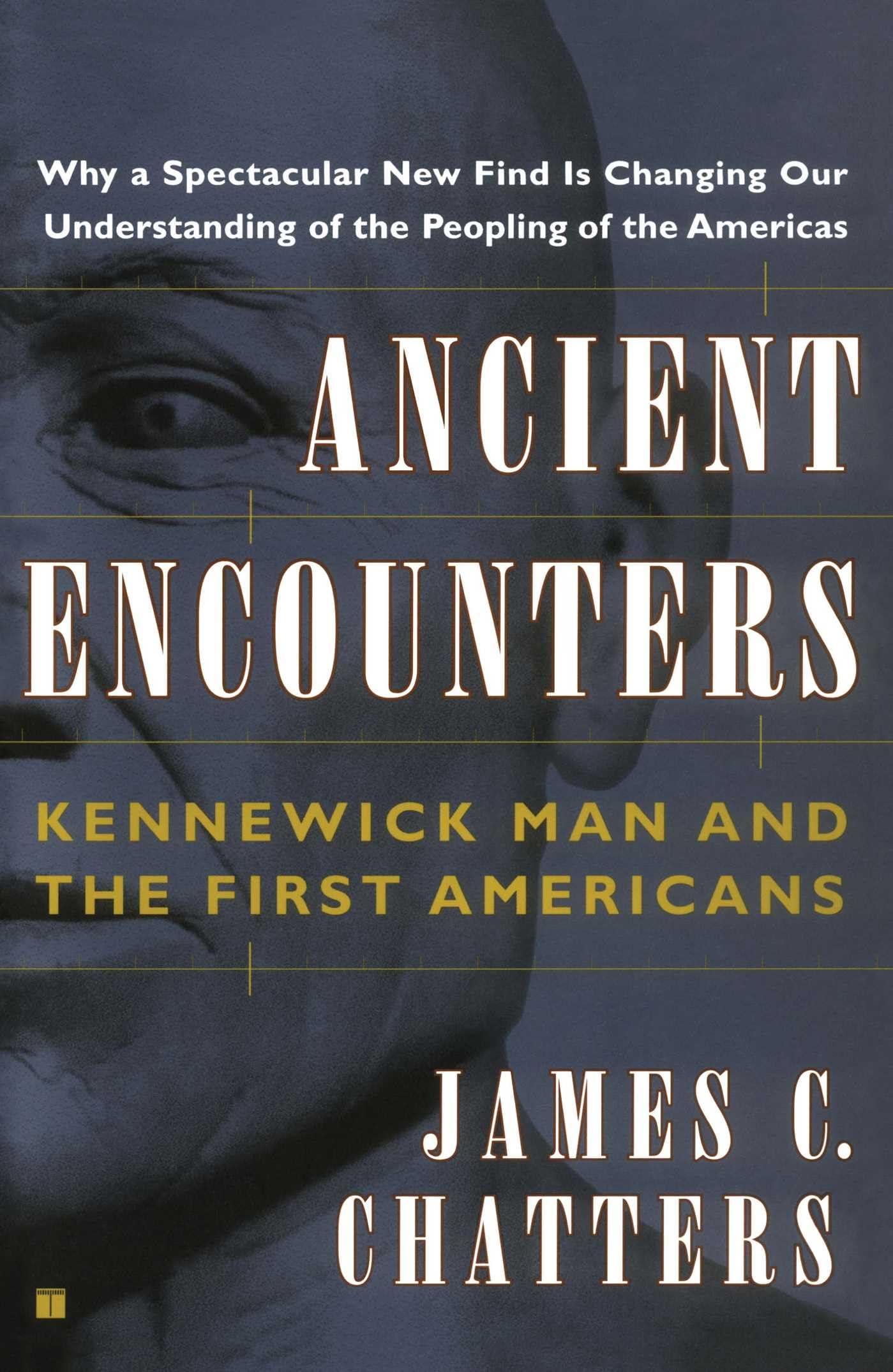



In 1996, two young men found a skeleton along the Columbia River near Kennewick, Washington. "Kennewick Man," as he became known, was brought to forensic anthropologist Jim Chatters, who was astonished when tests revealed the skeleton to be nearly 9,500 years old, one of the oldest intact skeletons ever found in North America -- and one that bore little resemblance to modern Native Americans. So who was Kennewick Man, and where did he come from? Chatters set off to find out, but his work on the skeleton was soon halted when local Native American groups claimed the skeleton as an ancestor under federal law, and demanded the right to rebury the remains. Agreeing with their claim, the U.S. government seized Kennewick Man and put him into federal storage, where he remains to this day. So began a harsh, politically charged conflict, with scientists, Native Americans, and government agencies fighting to decide the destiny of Kennewick Man. While this battle raged, Chatters began a quest to understand the lives and origins of Kennewick Man and his contemporaries, a quest that took him across three continents and far back in time to learn the identity of these true First Americans. Ultimately, it led him to a sense of what it really means to be human. Gavin McNett The New York Times Gripping. A deeply researched and writerly account of what we know about [Kennewick Man] and his people -- and where they might have come from. Frank D. Roylance Baltimore Sun Revealing and compelling. American Archaeology Riveting. A strong case for continuing this research in the interest of our common humanity. James C. Chatters, PH.D., is an archaeologist and paleoecologist who has dedicated his life to understanding the human and environmental prehistory of North America. He is currently a principal scientist with Foster Wheeler Environmental Corporation, an adjunct associate professor of research at Central Washington University, and a deputy coroner for Benton County, Washington. He formerly taught at the University of Washington and served as senior research scientist at Pacific Northwest National Laboratory. He now lives in Bothell, Washington. Chapter 1: The Stone Had Teeth The call came early Sunday evening, July 28, 1996. On the line was Floyd Johnson, coroner of Benton County, Washington, for whom I serve as a forensic anthropologist from time to time. "Hey buddy," he said, "I've got some bones for you to look at. Some kids were wading in the river at the boat races and found a skull. Have you got time to look at it?" "Sure," I answered. "We're just sitting around. Bring it on over." It was not a long wait, but however short they are, these moments between hearing of a find and actually seeing it always fill me with anticipation. Old or recent, intact or deteriorated nearly beyond recognition, bones always have a story to tell. They chronicle early growth, life experience, death, and even what has happened to the body after death. Muscle ridges, wear and tear -- arthritis, bone growth along ligaments and tendons, and fractures -- record patterns of physical activity. Diseases and injury leave their mark in patterns of bone dissolution, atrophy, regrowth, and overgrowth. Cuts and bullet holes offer mute testimony to the manner of death. Then there are the all-important clues to identity -- height, sex, age, and facial structure. All in all, it's a grand puzzle, and I love a good puzzle. But more than that, it's an introduction to someone new, someone whose story I will come to know well. Floyd arrived carrying a five-gallon plastic bucket containing a drawstring plastic bag from a clothing store (police evidence containers are a constant source of wonder and amusement), and we sat down on the front porch. Opening the drawstring, I looked down at the first piece, the braincase, viewing it from the top. Removing it from the bag, I was immediately struck by its long, narrow shape and the marked constriction of the forehead behind a well-developed brow ridge. The bridge of the nose was very high and prominent. My first thought was that this skull belonged to someone of European descent. The bone was in excellent condition, having the tan, almost golden color of bone that has lain in the ground for some years but not long enough to deteriorate. All the breaks were fresh-looking, which told me that the skull had been complete until it was disturbed. A second fragment in the bottom of the bucket caught my eye, and I picked it up. It was the upper jaw. Thin walls of bone projected forward along the sides of the nasal opening, and an immense bony spine extended beneath it. Clearly, the nose had been huge. The tooth row also appeared to project slightly, and there were distinct deep depressions behind the ridges formed by prominent canine teeth. Called a canine fossa, this is an archaic characteristic common to many European skulls. So far, the characteristics were consistent with my initial sense that this was a wh