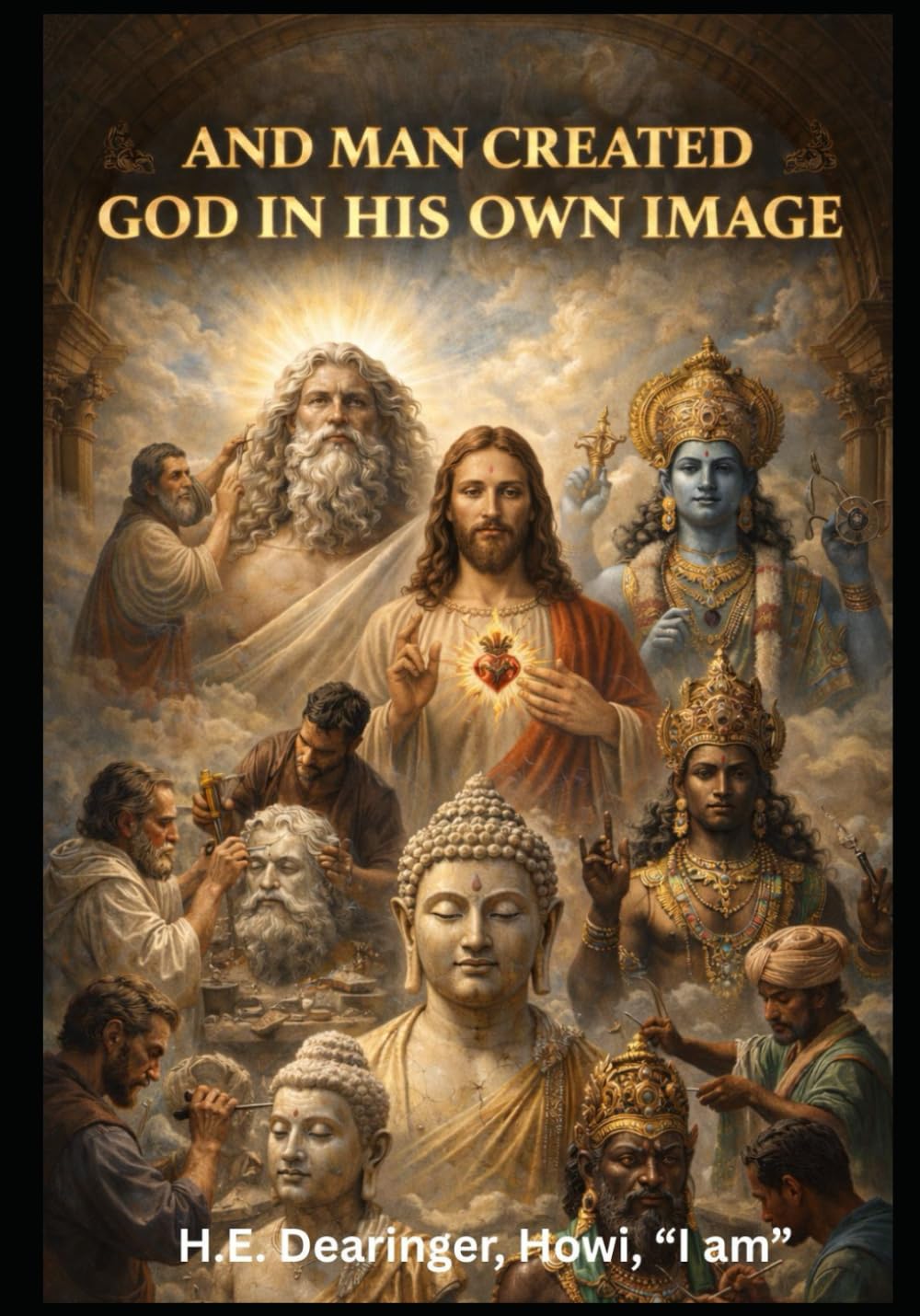



For millennia, billions of people have spoken of The God in deeply human terms. Abrahamic Scriptures describe The God as seeing, hearing, feeling, loving, regretting, remembering, commanding, forgiving , and responding . The God walks in gardens, hears prayers, forms covenants, expresses emotion, and enters relationship. These expressions are familiar, almost intimate. But why? Is The God truly like us or do we describe The God in human language because we know no other way? And Man Created God in His Own Image takes readers on a sweeping but, thoughtful exploration of one of the most enduring mysteries of modern religion: the relationship between divine revelation and human perception . Drawing from the Holy Bible including both Old and New Testaments, and the Qur’an, this work traces how Judaism, Christianity, and Islam all portray The God through metaphor, emotion, action, and personality. Through careful analysis and accessible prose, this book examines : How Abrahamic Scriptures use human traits to describe the divine . How language shapes belief and spiritual imagination . How cultural experience influences humanity’s understanding of The God . How the Abrahamic Religions balance metaphors with transcendence . Whether humanity projects itself onto The God or The God reflects itself through humanity. Rather than reducing The God to a human construct or placing The God beyond reach , this work invites readers into the space between certainty and mystery, where faith grows. This is not simply a book of answers. It is a book of questions that have shaped civilizations, guided prophets, challenged thinkers, and formed the spiritual identities of billions. Thoughtful, reverent, and intellectually bold, And Man Created God in His Own Image provides a profound reflection on how humans search for The God and also, how The God reaches back toward humanity. “All ‘things’ come from some ‘thing’ that came from no ‘thing.” “ Truth is not diminished by the questions we ask of it ; instead, it is revealed through them .” H. E. Dearinger – (Howi, “I am”)