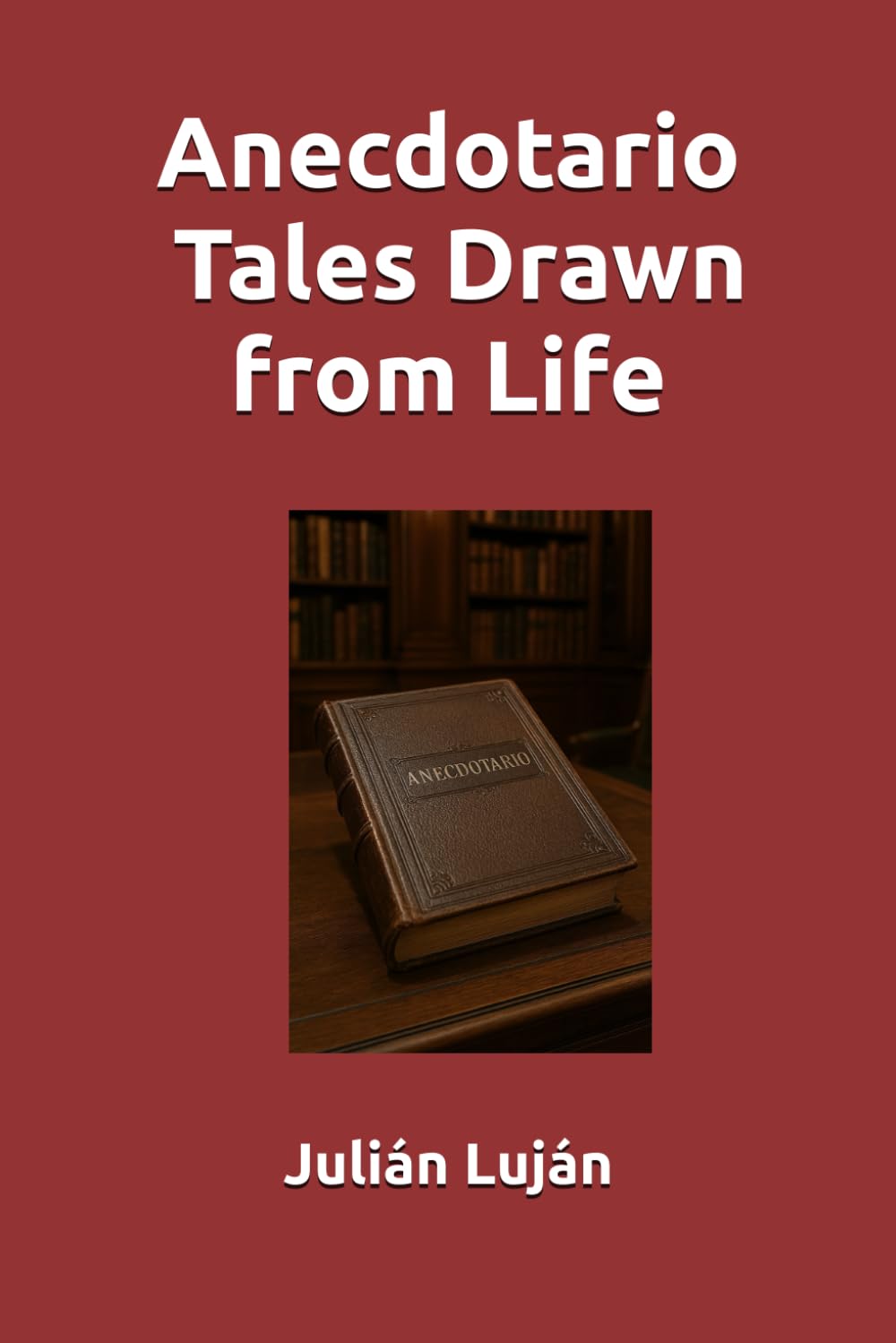



“Anecdotario: Tales Drawn from Life ” can be described as a small book in form, yet deep in humanity. It is a collection of brief narratives—almost flashes of lived experience—born from close observation of everyday life. Rather than pursuing grand plots or elaborate fiction, the book dwells in what seems ordinary: chance encounters, half-remembered stories, modest scenes in which human character reveals itself naturally and without pretense. Each anecdote works as a moral and emotional window . Through simple situations, the author exposes irony, tenderness, contradiction, and quiet sorrow. There is gentle humor, a touch of melancholy, and a constant sense that life as it is actually lived speaks more truthfully than any grand invention. The tone is measured and reflective , almost philosophical. The narration avoids overt judgment, allowing the reader to uncover the implicit meanings on their own. The style favors clarity and restraint, as if every word understood that it must never overshadow the human experience it conveys. In essence, Anecdotario: Tales Drawn from Life is a book that listens to life and then translates it into short, resonant stories, where the everyday becomes meaningful and the fleeting acquires lasting depth. It is a quiet read—one that does not shout, yet lingers, like a story told at dusk that stays with you long after the voice has faded.