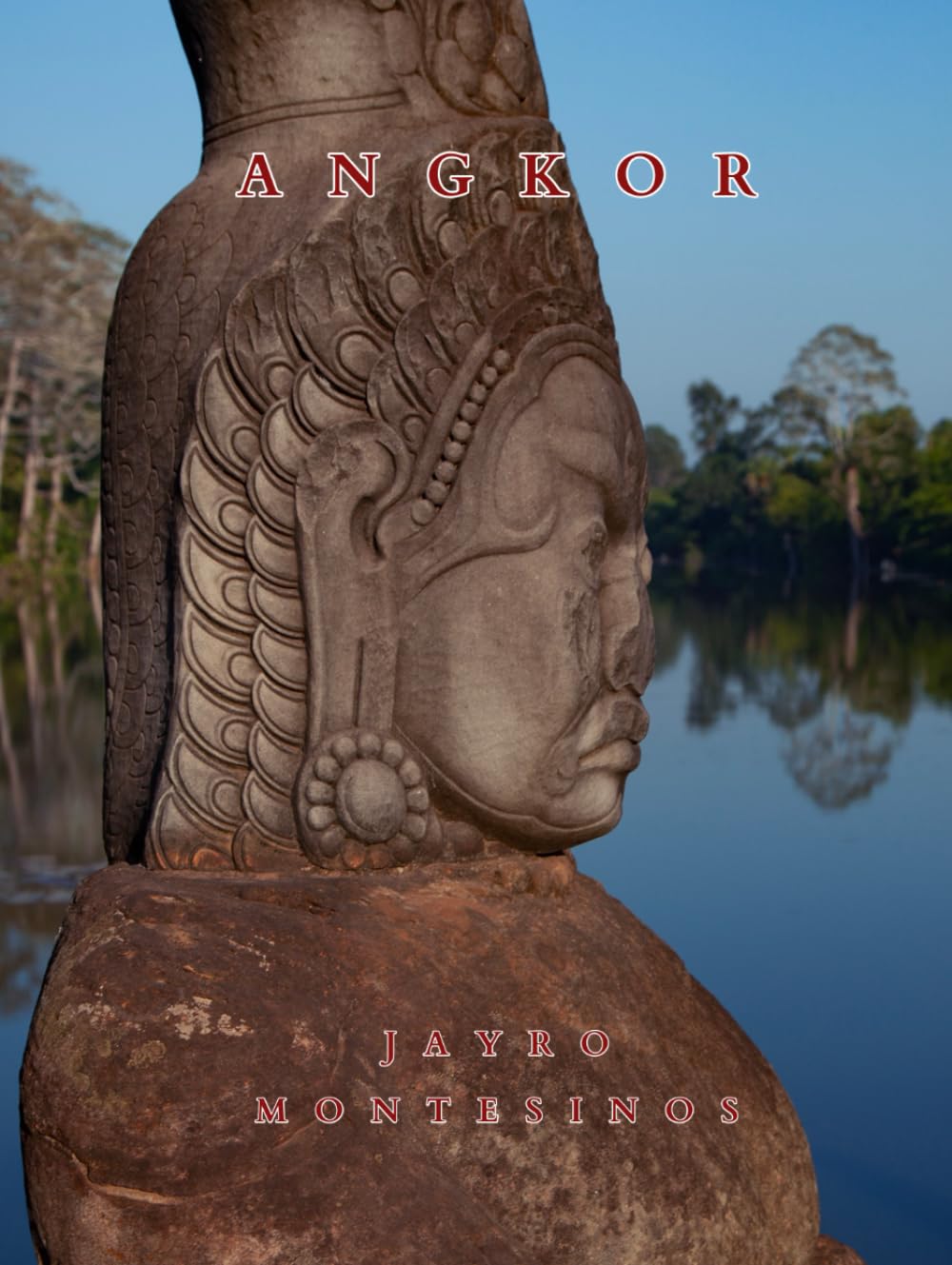
Angkor: "Ancient Cambodian Khmer Empire temples.": English Color Edition, Photographic Trip, MORE THAN 300 PHOTOGRAPHS
$63.99
by Jayro Montesinos



The temples of Angkor were not "discovered" in the traditional sense, as they were always known to locals. However, in terms of global recognition, French explorer Henri Mouhot, in the 19th century , played a crucial role in publicizing the magnificence of Angkor to the Western world. Mouhot rediscovered the complex, documented it, and helped spark renewed interest in the archeology and history of the region. The Temples of Angkor are an unrivaled testament to the architectural and cultural grandeur of the Khmer civilization, and their exploration offers a fascinating window into Cambodia's past. The Angkor Temples form a vast archaeological complex in Cambodia, Angkor was the Khmer Empire's capital and home to a series of temples built between the 9th and 15th centuries. Below I provide general information on some of the most notable temples within the Angkor complex: HISTORICAL INTRODUCTION Deep in the dense Cambodian jungle, stands an imposing testament to architectural and spiritual greatness: the Temples of Angkor Wat. This monumental complex, whose construction dates back to the 12th century, stands as the architectural jewel of ancient Khmercivilization. Angkor Wat is not simply a temple; It is a tangible link to Cambodia's rich and complex history. It was during the reign of King Suryavarman II that Angkor Wat took shape on the horizon of the ancient Khmer Empire. Beginning around 1113 AD, this visionary ruler conceived a monument dedicated to the Hindu god Vishnu, which would not only serve as a temple, but also as a symbol of the empire's grandeur. Angkor Wat stands with incomparable majesty, with its five towers rising imposingly towards the sky, representing Mount Meru, the celestial abode of the gods in Hindu mythology. Over the centuries, Angkor Wat has undergone religious and cultural transformations, going from a Hindu temple to becoming an important Buddhist center. This change reflects Cambodia's rich and complex history, marked by the influence of various religious traditions. Despite the challenges of time and the ravages of nature, Angkor Wat has endured, emerging as an enduring symbol of the resilience and greatness of Khmer civilization. In this historical introduction, we delve into the fascinating narrative of Angkor Wat, exploring the mysteries of its construction, the spiritual wealth it holds, and its evolving role in Cambodian history. Through the pages of this book, we embark on a journey through the centuries, unraveling the secrets of this extraordinary monument that has stood the test of time to tell the eternal story of the Temples of Angkor Wat. Angkor Wat : Area: Angkor Wat, the best-known temple, occupies approximately 162.6 hectares. Significance and History : Built by King Suryavarman II in the 12th century, Angkor Wat is the largest and best-preserved temple in Angkor. Initially dedicated to the Hindu god Vishnu, it became an important Buddhist site. Bayon: Surface: The Bayón complex covers around 1 hectare. Significance and History: Built by Jayavarman VII at the end of the 12th century, the Bayon is notable for its numerous faces carved into the towers, which some suggest represent the king himself or Avalokiteshvara, a Buddhist deity. Ta Prohm : Surface: Covers approximately 57 hectares. Significance and History: Built in the 12th century, Ta Prohm is known for the way the jungle has reclaimed the temple over the years, with tree roots intertwining with the stone structures. It is an impressive example of the fusion between nature and architecture. Angkor Thom: Area: The fortified city of Angkor Thom covers around 9 km². Significance and History: Founded by Jayavarman VII, Angkor Thom is home to the Bayon and served as the last capital of the Khmer Empire. Its ornate walls and gates are notable architectural features.