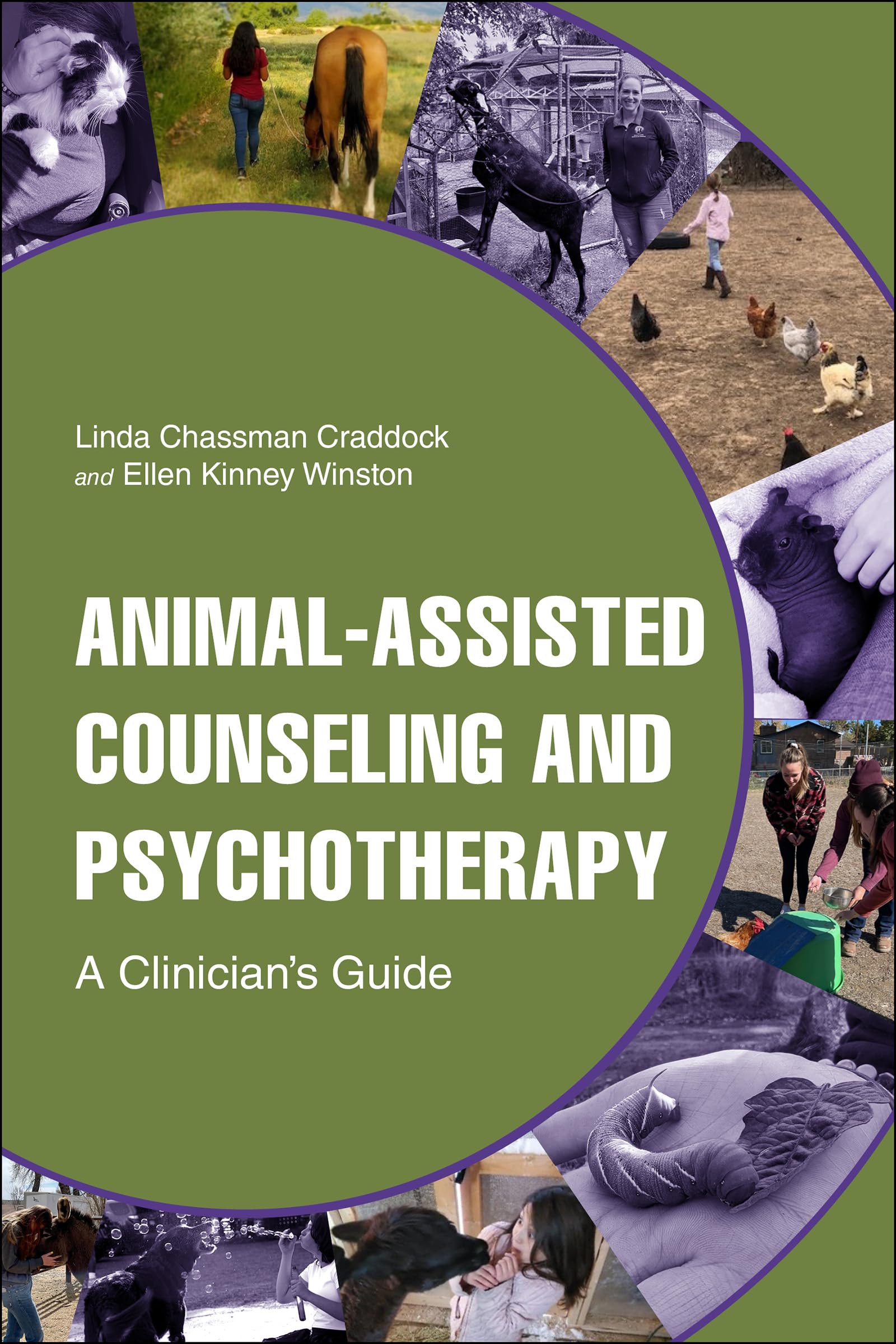
Animal-Assisted Counseling and Psychotherapy: A Clinician’s Guide (New Directions in the Human-Animal Bond)
$99.99
by Linda Chassman Craddock



Animal-Assisted Counseling and Psychotherapy: A Clinician’s Guide is an essential resource for clinical mental health professionals who are considering integrating animals into their work. This unique text provides in-depth information and examples of how to provide treatment with real clients, describing hundreds of interventions, while also addressing essential legal and ethical issues. Written with compassion and consideration for both animals and humans, Animal-Assisted Counseling and Psychotherapy (AACP) explores working with varied and unique therapy animals, the application of training skills, and how animals can be powerfully incorporated into treatment with children, teenagers, adults, couples, and families. A thorough reference on integrating animals into professional practice, this book gives clinicians the tools to spark their creativity as they embark on the amazing journey of AACP. " Animal-Assisted Counseling and Psychotherapy: A Clinician?s Guide is a wonderful blend of research and practical application for any mental health practitioner wishing to incorporate ethical, welfare-minded AACP into their practice." — Lori Kogan , Professor of Clinical Sciences, College of Veterinary Medicine and Biomedical Sciences, Colorado State University " Animal-Assisted Counseling and Psychotherapy: A Clinician?s Guide contains a wealth of information and discussion of issues that must be considered and that will be very useful to anyone setting up an AACP practice, as well as doing so in a model similar to the one described, which I have not seen in any other book. The book covers information and discussion about legal and ethical issues; general principles and specifics of AACP work with various types of animals as well as with specific animals; logistics and challenges surrounding their care; and so much more. It is refreshing to read about work with a variety of animals in the same clinical setting, as well as understanding the contribution of the animals? natural behavior to the therapy process. In addition, the authors relate to working with different ages of clients and also with couples and families. I found the graphics at the end of the book to be especially fascinating, stimulating the clinician?s mind to be open to the many possibilities afforded by AACP that will further the goals of treatment and lead to their success in helping the client." — Nancy Parish-Plass , editor of Animal-Assisted Psychotherapy: Theory, Issues, and Practice Linda Chassman Craddock’s first animal partner was her cat, Norman, who in 1995 showed how he could calm and challenge clients with difficult trauma in a unique and compassionate way. Her experience as a clinician and educator led to cofounding Animal Assisted Therapy Programs of Colorado (AATPC) in 2010, where she now serves as executive director. Her passion for animal rescue has, over the years, provided permanent homes for dozens of animals at the AATPC therapy farm, Barking C.A.A.T. Ranch. Chassman Craddock has presented and trained internationally on the topic of animal-assisted psychotherapy. Ellen Kinney Winston worked in animal welfare and mental health settings, where she noticed significant overlap in her work with both humans and animals. She envisioned bringing them together in a mutually beneficial way and was able to fulfill that dream in 2010, with the help of her rescue dog, Sasha, when she cofounded Animal Assisted Therapy Programs of Colorado (AATPC). Kinney Winston currently works as AATPC’s training director, overseeing, and educating mental health professionals internationally through the organization’s certificate program.