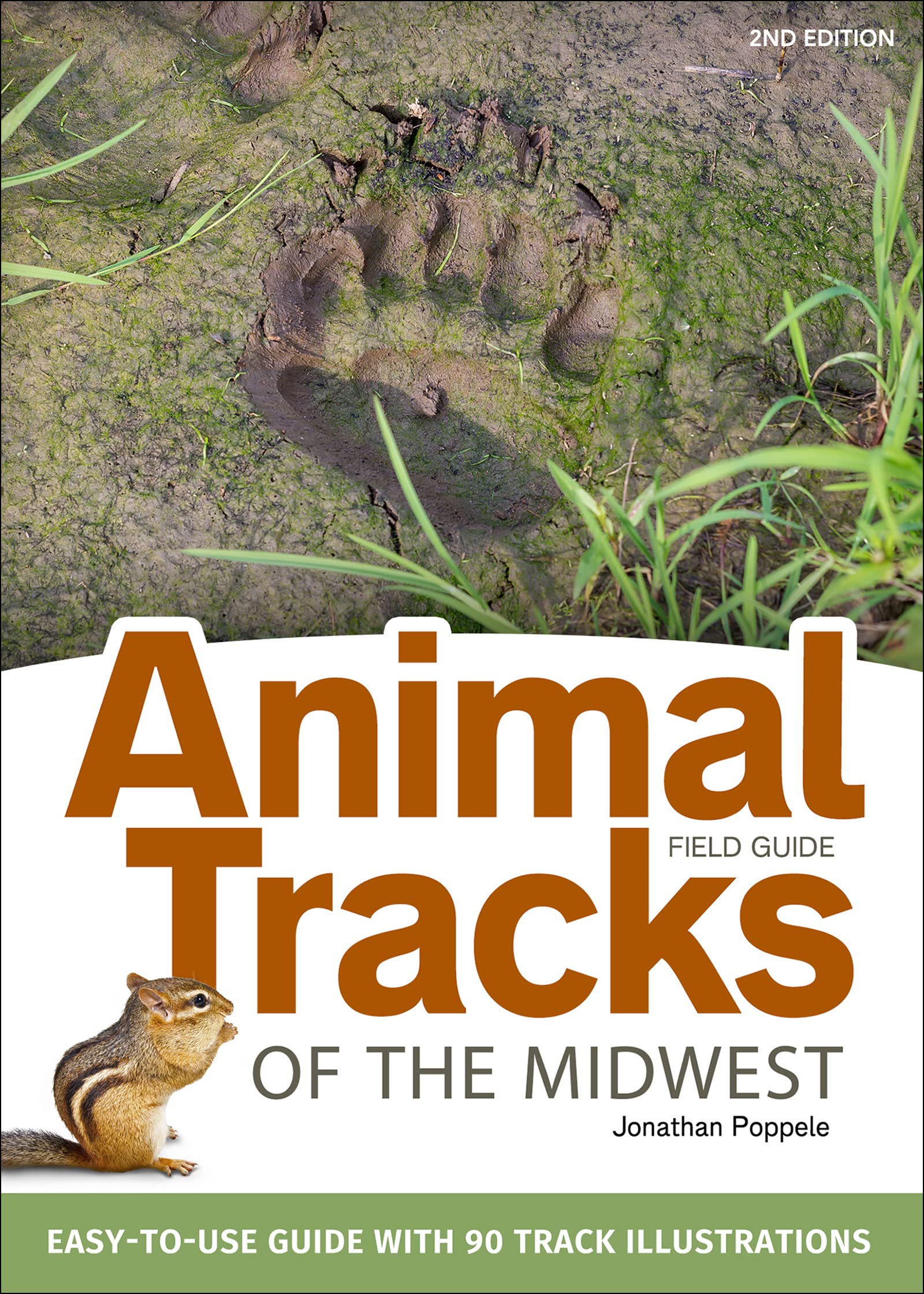
Animal Tracks of the Midwest Field Guide: Easy-to-Use Guide with 55 Track Illustrations
$11.99
by Jonathan Poppele



Tracking Made Easy―from the Backyard to the Backwoods You’ve seen animal tracks while hiking, camping, or even in your backyard. Now learn what made them. Animal Tracks of the Midwest Field Guide by expert tracker Jonathan Poppele features the tracks of more than 95 species of mammals found in Illinois, Indiana, Iowa, Kansas, Kentucky, Michigan, Minnesota, Missouri, Nebraska, North Dakota, Ohio, South Dakota, and Wisconsin. This new edition spotlights more species―including common birds and reptiles―as well as updated track illustrations, photographs, and information. Book Features: Animals of the Midwest: More than 95 mammal species, plus common birds and reptiles - Designed for your success: Realistic track illustrations and quick identification tips - Fact-filled information: Scat photos and descriptions of other signs that animals leave behind - Accessible and informative: Easy enough for beginners yet detailed enough for experienced trackers - Gait illustrations: Depictions and descriptions for each animal, from walking to trotting and hopping to bounding Species are organized into groups, based on similarities in track appearance and then by track size. So it’s easy to find the tracks in the book once you see them in nature. Bring this handy guide on your next outing, and leave a book at the cabin. You’ll be surprised how often you encounter animal tracks―and how much you can learn from them! “Fantastic track drawings, accurate information, and a very smart organization method.” ―Jonah Evans, NatureTracking.com Jonathan Poppele is a naturalist, author, and educator who works to help people connect more deeply to themselves, to others, and to the natural world. He earned a master’s degree in Conservation Biology from the University of Minnesota and taught at the U of M for many years before leaving to focus on his own projects. An avid outdoorsman and student of natural history, Jon is the founder and director of the Minnesota Wildlife Tracking Project. Jon is also Head Instructor of the Center for Mind-Body Oneness in Saint Paul, Minnesota, where he teaches meditation, mindfulness, and the peaceful martial art of Ki-Aikido. Red Fox Vulpes vulpes Quick ID Tips: Typical canine track showing four toes, claws and a triangular heel pad - Heavily furred foot often makes pads appear less distinct than other canids - Shows a distinctive bar across the heel pad of the front track Common throughout most of the Midwest, red foxes adjust well to human development. Their precise, narrow trails can often be found crossing wilderness trails, farmland and even urban golf courses. Front Track Length: 1 3/4" – 2 1/2", Averaging: 2"; Width: 1 1/2" – 2 1/8", Averaging: 1 3/4" Four toes, with claws usually showing. The bottom of the foot is heavily furred. A triangular palm pad protrudes sharply though the hair and often leaves a straight or boomerang-shaped “heel bar,” unique to the red fox. Furred foot may make toe and palm pads appear small and indistinct, greatly exaggerating the negative space between pads. Hind Track Length: 1 1/2" – 2 1/2", Averaging: 1 7/8"; Width: 1 1/4" – 1 7/8", Averaging: 1 1/2" Four toes with claws usually showing. Like the front foot, the hind foot is heavily furred, but the palm pad does not protrude as sharply and rarely leaves a “bar” in the track. Often indistinct, the palm pad usually looks like a tall, narrow triangle, or sometimes a dot. Similar to front track, but usually narrower and more delicate-looking. Gaits Typically trots in a direct register or side trot. Direct register trots may leave an extremely narrow trail with all tracks in a single nearly straight line. Lopes or gallops when chasing or fleeing. Often walks when in deep snow, but may bound, leaving a series of whole-body imprints. Habitat Prefers a mixture of cover and open space. Adapts readily to human presence and is common in cropland, suburban areas, and even urban areas with enough brush or woods. Favors mixed habitat of brushland and fields. Other Signs Scat: One or more long droppings ranging from 3/8" – 3/4" in diameter and 3" – 6" long. Structure varies with diet. Often contains bone fragments. In summer, scat may include grasses, fruit seeds and insect remains. Often deposited at trail junctions or on raised surfaces. Easily confused with gray fox or coyote scat, though coyote scat is usually longer. Dens: Found on open ground or areas with sparse cover and a good view of the surroundings, dens are often enlarged woodchuck or badger dens. The main entrance measures about 8" – 9" in diameter and is usually marked with a fan of excavated earth. Tracks, hair and a distinctive red fox odor are usually evident near the main entrance. Odor: Red fox urine has a distinctive, pungent odor similar to a skunk. Caches: Red foxes store excess food in holes covered by dirt or leaves, which are usually well disguised and difficult to find. Activity Active year-round. Predominantly nocturnal,