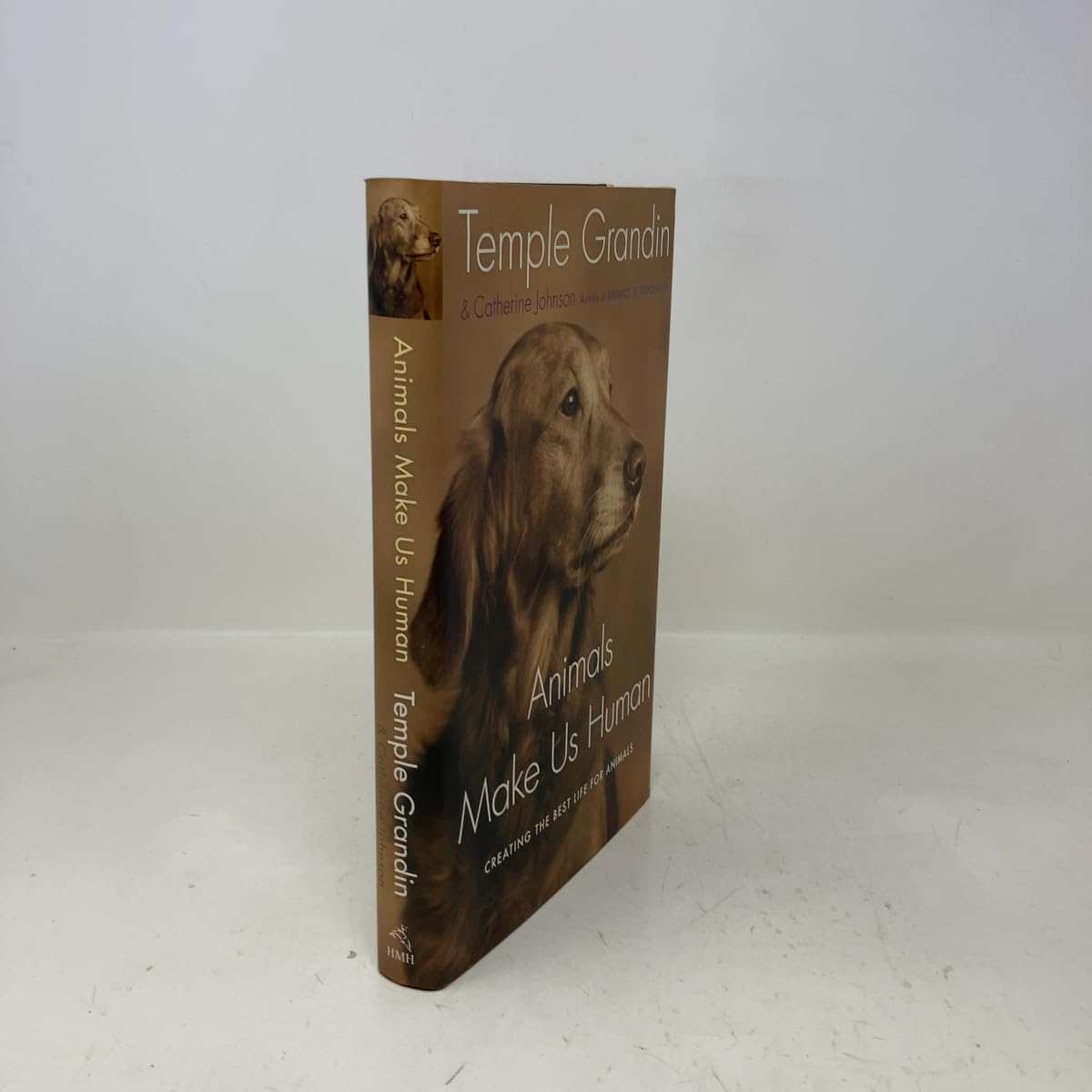



The best-selling animal advocate Temple Grandin offers the most exciting exploration of how animals feel since The Hidden Life of Dogs. In her groundbreaking and best-selling book Animals in Translation, Temple Grandin drew on her own experience with autism as well as her distinguished career as an animal scientist to deliver extraordinary insights into how animals think, act, and feel.Now she builds on those insights to show us how to give our animals the best and happiest lifeâ on their terms, not ours. Itâ s usually easy to pinpoint the cause of physical pain in animals, but to know what is causing them emotional distress is much harder.Drawing on the latest research and her own work,Grandin identifies the core emotional needs of animals.Then she explains how to fulfill them for dogs and cats, horses, farm animals, and zoo animals.Whether itâ s how to make the healthiest environment for the dog you must leave alone most of the day, how to keep pigs from being bored, or how to know if the lion pacing in the zoo is miserable or just exercising,Grandin teaches us to challenge our assumptions about animal contentment and honor our bond with our fellow creatures. Animals Make Us Human is the culmination of almost thirty years of research, experimentation, and experience. This is essential reading for anyone whoâ s ever owned, cared for, or simply cared about an animal. Product Description How can we give animals the best life--for them? What does an animal need to be happy In her groundbreaking, best-selling book Animals in Translation , Temple Grandin drew on her own experience with autism as well as her experience as an animal scientist to deliver extraordinary insights into how animals think, act, and feel. Now she builds on those insights to show us how to give our animals the best and happiest life--on their terms, not ours. Knowing what causes animals physical pain is usually easy, but pinpointing emotional distress is much harder. Drawing on the latest research and her own work, Grandin identifies the core emotional needs of animals and then explains how to fulfill the specific needs of dogs and cats, horses, farm animals, zoo animals, and even wildlife. Whether it's how to make the healthiest environment for the dog you must leave alone most of the day, how to keep pigs from being bored, or how to know if the lion pacing in the zoo is miserable or just exercising, Grandin teaches us to challenge our assumptions about animal contentment and honor our bond with our fellow creatures. Animals Make Us Human is the culmination of almost thirty years of research, experimentation, and experience. This is essential reading for anyone who's ever owned, cared for, or simply cared about an animal. A Q&A with Temple Grandin, Author of Animals Make Us Human Q: In Animals Make Us Human , you discuss a wide range of animals, from dogs to pigs to tigers. Which animals do you enjoy studying and working with the most? A: I've worked with cattle the most, so I really enjoy cattle. I always liked to sit in the pen and let the cattle come around me and lick me--they're really peaceful animals when they're not afraid. But the thing about cattle is they're a prey-species animal and they get scared really easily--and I can relate to that because as a person with autism, fear is my main emotion. So I can relate to how cattle are always hypervigilant, looking for rapid movements, looking for little signs of things that might be danger. Q: How has autism helped you in your work with animals? A: I'm a total visual thinker. And you've got to think about it: animals don't think in language. If you want to understand animals, you must get away from language. Animals are sensory-based thinkers; they think in pictures, they think in sounds, they think in touches. There's no other way that their brains can store those memories. Q: How has your work affected the treatment of animals? A: I've been working on improving the treatment of cattle for years. When I started out in the seventies, people were incredibly rough and abusive with cattle. The thing that kept me going was that there were some really nice people who handled their cattle well, and their cattle had a great life, and so I could see that it was possible to handle animals right. And today many more people are now involved in teaching low-stress stockmanship and good cattle handling. When I started in the early seventies, I was a pioneer in the U.S. on this; nobody else was working on these things. Q: How will this book be useful to people working with cats and dogs in animal shelters? A: People often don't recognize emotions in these animals. I went to a very nice animal shelter recently that had group housing for cats that had tree-like things with platforms and cubbyholes for the cats to get in, and a very astute worker there noticed that you can have a situation where a cat seems very calm in a shelter, but he's not really sleeping,