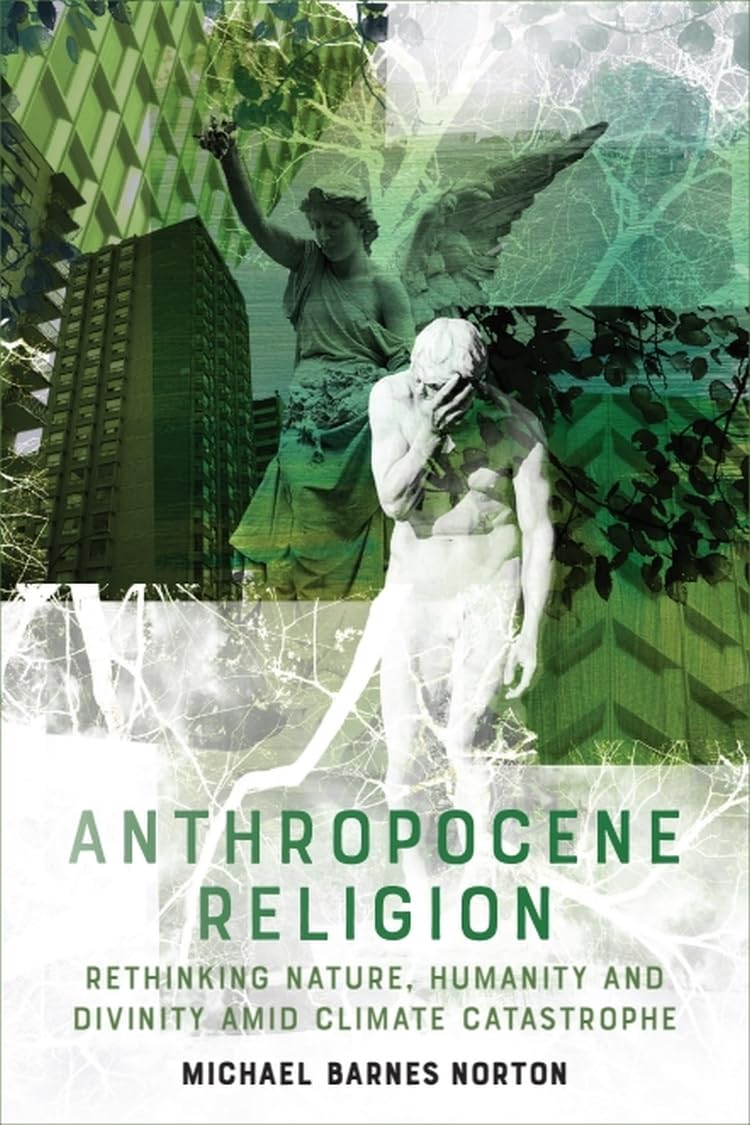
Anthropocene Religion: Rethinking Nature, Humanity and Divinity Amid Climate Catastrophe
$79.14
by Michael Barnes Norton



Anthropocene Religion argues that addressing a future, and present, shaped by worldwide catastrophic climate change involves not only radically rethinking the ideas of nature, and humanity’s place within it, inherited from Western modernity. It also demands a reconceptualization of the nature and role of religion. The advent of the Anthropocene simultaneously displaces the human from the centre of the world and erodes all sharp distinctions between the natural environment and the realm of human activity. Similarly, the Anthropocene renders untenable concepts of religion that rely on reference to realms, beings or forces that wholly transcend nature. It is, however, possible to understand both religion and its divine referents in worldly rather than transcendent terms, just as it is possible to understand nature as dynamic and creative. The Gaia hypothesis offers us a figure through which to approach these concepts in their interconnectedness. With engaging transdisciplinarity rather than off-putting panic or dogmatic demand, Michael Barnes Norton opens a fresh engagement of the complex, crucial interplay of three tricky and unavoidable concepts: the Anthropocene, nature and religion. -- Catherine Keller, Drew University Theological School A patient rendition of the literature on climate and religion, Anthropocene Religion brings a spectrum of thinkers into lucid dialogue about how to reorient (to) religion in the Anthropocene. Norton has a superb feel for the alchemy of ideas and has produced a book that doesn’t shy away from wading into of-the-moment debates in continental philosophy―and charting a new path forward. -- Donovan Schaefer, University of Pennsylvania This book challenges readers to rethink their own concepts of nature and religion as they experience global climate change. -- L. E. Sponsel ― CHOICE Anthropocene Religion significantly contributes to the growing literature in religion, humanities, and the environment. It offers timely and provocative thinking about some of our most fundamental concepts, challenging us to reevaluate our relationship with nature, the divine, and ourselves. This book is not just a call to action, but also a beacon of hope, inviting us to rethink our previous assumptions and offering new ways of understanding our place in the world in the face of the climate crisis. -- Ustadi Hamsah ― Worldviews Michael Barnes Norton is Associate Professor of Philosophy and Associate Dean of the College of Humanities, Arts, Social Sciences, and Education at the University of Arkansas at Little Rock.