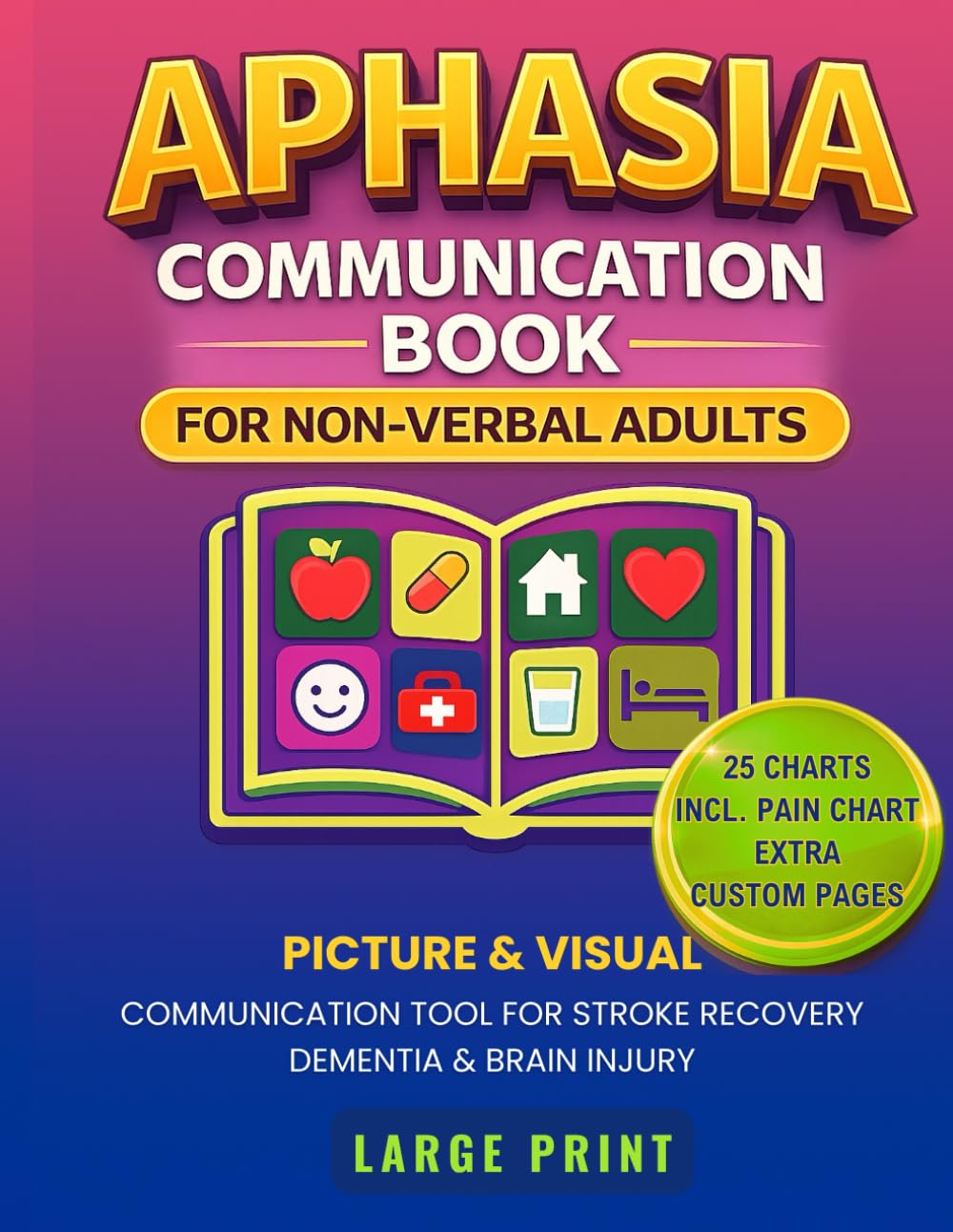
Aphasia Communication Book for Non-Verbal Adults (Large Print): Picture & Visual Communication Tool for Stroke Recovery, Dementia & Brain Injury (
$15.99
by Sparky Pages Studio



Aphasia Communication Book for Non-Verbal Adults Role in series: COMMUNICATION — dignity, expression, caregiver support DESCRIPTION When words are hard to find—or not possible at all—communication still matters. This large-print, picture-based communication book is designed to help non-verbal adults express needs, feelings, and choices with clarity and dignity. As the communication-focused title in The Aphasia Recovery Workbook Series , this book provides practical tools that reduce frustration and support independence for both users and caregivers. What you’ll gain Clear, easy-to-use picture charts for everyday communication - Reduced stress for caregivers and loved ones - A respectful, adult-focused alternative to clinical tools - Flexibility for home, rehab, or caregiving settings What’s inside 25 ready-to-use charts with over 200 common words and phrases - Special-purpose pages including pain scale and alphabet board - Quick-access communication cheat sheets - Customizable blank pages for personal needs and vocabulary Part of a complete recovery toolkit This book works powerfully on its own and even better alongside the other workbooks in the series. Many families use it together with speech or handwriting practice to support communication at every stage of recovery. Communication is more than words—it’s connection, dignity, and being heard. Add this communication book to your care routine and make everyday interactions clearer, calmer, and more human. Dear Reader, When words are difficult to find, or not possible at all, the need to be understood does not disappear. This book was created for those moments. For the moment someone wants to say, "I am in pain." Or "I am tired." Or "I need help." Or simply "yes," "no," or "not that." And for the family members, caregivers, and professionals trying their best to understand, this book was created for you too. Communication challenges after stroke, aphasia, dementia, brain injury, or brain surgery can be deeply frustrating for everyone involved. Not only because words are harder to access, but because everyday needs, preferences, and emotions still matter just as much as before. We wanted to create a tool that helps restore some of that connection in a way that feels clear, practical, and respectful. This communication book is designed to reduce pressure, not add to it. Large-print, picture-based pages, quick-access phrases, and simple visual choices make it easier to point, show, indicate, and express essential needs without relying only on speech. It is not meant to replace therapy, medical care, or personal support. It is meant to make daily life a little easier. A little clearer. A little more human. This book is the communication-focused title in the Aphasia Recovery Workbook Series. Some families use it on its own. Others use it alongside the speech, language, or handwriting books in the series to build a more complete support system during recovery. Please use it flexibly. Start with the pages that matter most right now. Add personal words, names, or routines in the customizable sections. Keep it nearby. Let it become a familiar tool, not a formal task. Communication is more than speech. It is choice, connection, dignity, and being heard. With care, Sparky Pages Studio Q: Who is this communication book designed for? This book is designed for non-verbal or minimally verbal adults who need extra support expressing needs, feelings, choices, and daily preferences after stroke, aphasia, dementia, brain injury, or brain surgery. Q: Is this book only for aphasia after stroke? No. While it is especially useful for adults with aphasia after stroke, it may also help people with dementia, traumatic brain injury, brain surgery recovery, or other conditions that affect speech and communication. Q: How is this book meant to be used? It is meant to be used as a practical visual communication tool. Users can point to pictures, words, pain scales, letters, or simple phrases to help express themselves more clearly in daily situations. Q: Is this a workbook or a communication aid? This book is primarily a communication aid rather than an exercise workbook. Its main purpose is to support everyday expression, reduce frustration, and make communication easier in real-life situations. Q: Can caregivers use this book with a loved one? Yes. Many caregivers, spouses, adult children, and rehab professionals use this book to support calmer, clearer daily communication with a loved one. Q: What kinds of communication tools are included? The book includes large-print picture charts, common words and phrases, special-purpose pages such as a pain scale and alphabet board, quick-access tools, and customizable pages for personal needs. Q: Is this book easy to use at home? Yes. It was designed to be practical for home, caregiving, rehab, and everyday support settings without requiring special training. Q: Can this help reduce frustration during caregivi