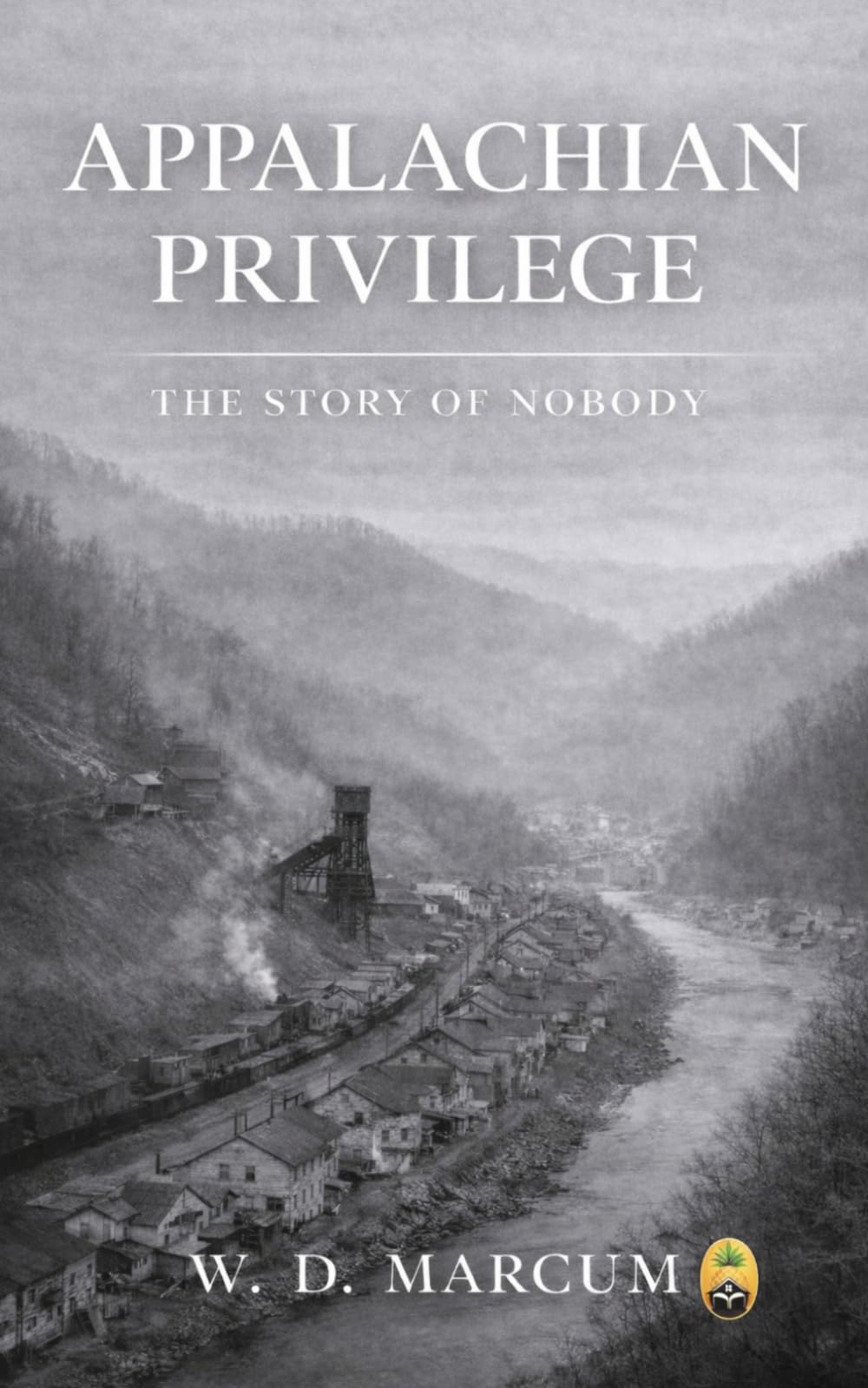



Appalachian Privilege – The Story of Nobody by W. D. Marcum What does “privilege” mean in a place where survival is the highest achievement—and escape is statistically rare? In Appalachian Privilege – The Story of Nobody , W. D. Marcum delivers a sweeping, unsentimental account of growing up in southern West Virginia, where coal defined life expectancy, schools prepared children to endure rather than advance, and entire communities were organized around extraction and abandonment. Blending memoir with deeply researched interlude essays, the book examines how Appalachia became both indispensable to the nation and invisible within it. Marcum traces his childhood through coal camps, strike-shuttered schools, normalized injury, and constant fear of loss—before widening the lens to confront the systems that shaped those experiences: the Battle of Blair Mountain, the opioid epidemic, environmental and health collapse, educational neglect, government assistance without power, and the quiet erasure of Appalachian history itself. This is not a story of triumph framed as destiny. It is an honest examination of survivorship bias—how the rare person who “gets out” is used to justify the suffering of those who never could. Marcum’s own departure through military service and education is presented not as proof of meritocracy, but as evidence of how interruption, access, and structure determine outcomes far more than character ever could. Clear-eyed, historically grounded, and morally restrained, Appalachian Privilege – The Story of Nobody refuses caricature and pity alike. It stands as a record for the people whose lives powered the country, whose names were never preserved, and whose stories were never meant to last.