Arab Modernism(s): Cities, History, and Culture (Planning, History and Environment Series)
$200.00
by Yasser Elsheshtawy



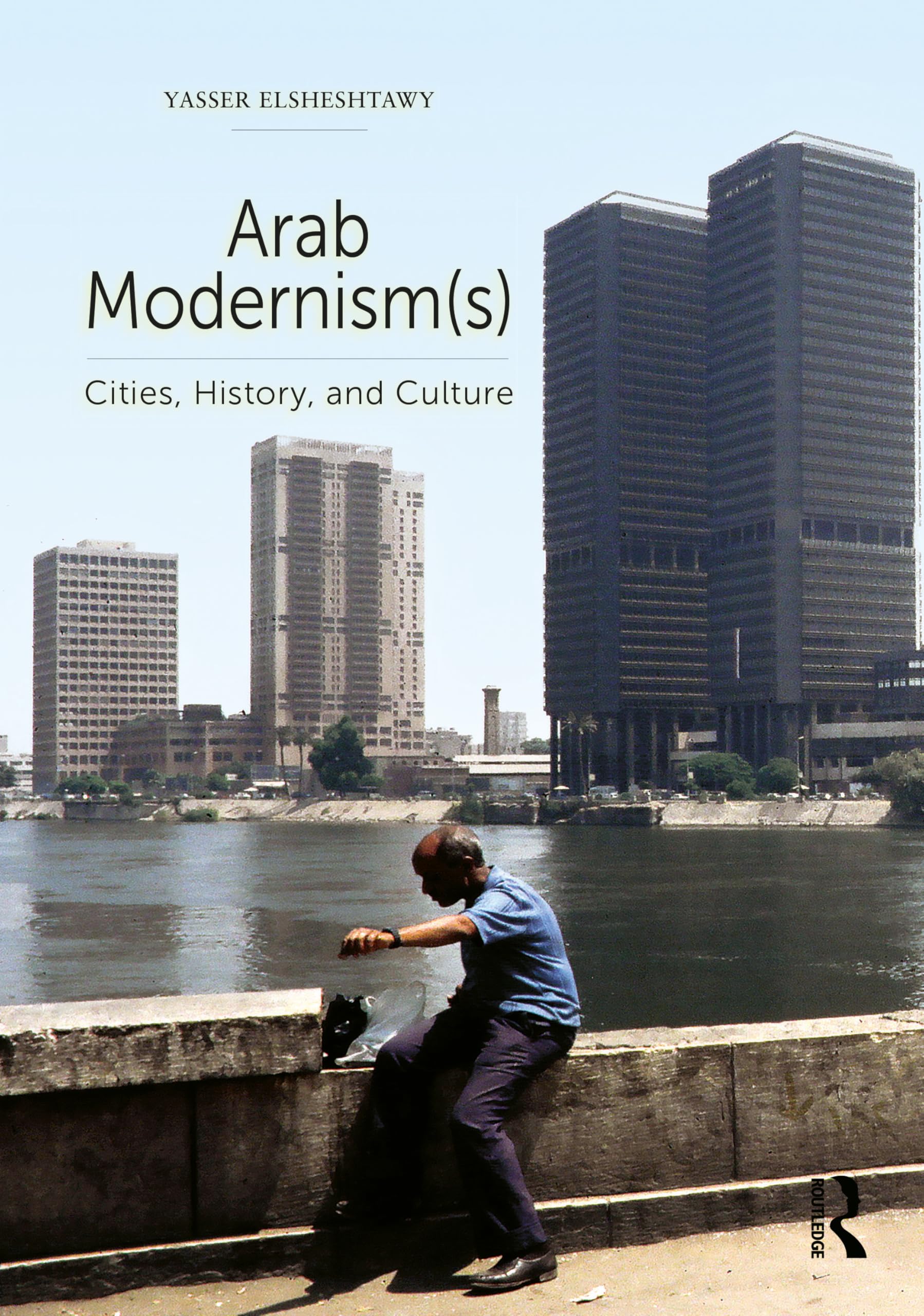
Arab Modernism(s) is an exploration of how the Arab world encountered modernism – sometimes inadvertently, sometimes deliberately – and how those encounters continue to shape the built environment of its cities today. Adhering to his late father’s belief that ‘cities are nothing without people’, Yasser Elsheshtawy writes not just about the buildings, but the lives lived in and around them. His narrative weaves together personal anecdotes and works of fiction and film, thus providing a textured backdrop to his central theme: the evolution of modernism in Arab cities. Following the introduction, the next ten chapters each focuses on a different city or town, moving from Hassan Fathy’s Gourna to Cairo, Algiers, Rabat and Casablanca, Amman, and Beirut and then to the Gulf cities of Riyadh, Kuwait, Doha, and Abu Dhabi and Dubai. The book closes with a Coda – a tribute to the author’s father, Hassan Elsheshtawy. Visit the author’s dedicated Arab Modernism(s) website at: https://www.yasserelsheshtawy.com/arab-modernisms To view blog posts by Yasser Elsheshtawy on Blogged Environment use the following web address: https://www.alexandrinepress.co.uk/blogged-environment Arab Modernism(s): Cities, History and Culture is a most welcome culmination of Yasser Elsheshtawy’s decades-long foray into the architecture and urbanism of Arab cities, past, present and future. As one of the leading scholars on this subject, Elsheshtawy successfully brings together his thoughtful critical toolbox to re-examine the region’s multi-varied encounter with modernity. With great agility, Elsheshtawy moves from the Arab world’s old cities to the region’s new centers of power, engaging with themes that cut across the region: the contrast between informal settlements and high-profile developments, the ongoing role of colonial legacies on spatial hierarchies and social fabrics, the role of international architects in gentrification and cultural erasure or the contested realm of memory and preservation, amongst other. The result is a crucial contribution that finally undoes assumed notions around modernity, tradition and identity. This book is a must read for anyone interested in Arab cities and a testament to Elsheshtawy’s unique capacity to offer multi-layered depths of understanding as well as passion for the complex legacies and possible futures of Arab cities. Amale Andraos , Professor and Dean Emeritus, Columbia GSAPP. Yasser Elsheshtawy’s Arab Modernism(s): Cities, History, and Culture provides a lively and incisively argued study that contributes important new thinking to debate about the global impact of architectural modernism. Compared with the prevailing scholarly bias towards Europe and North America, the author offers a pioneering account of how the Arab world encountered, absorbed, and refashioned modernism and how those encounters have continued to shape the built environment. Weaving together an impressive grasp of architectural theory and practice with personal anecdotes and insights from literary fiction and films, Elsheshtawy presents a kaleidoscopic survey of the heritage and lived experience of architectural modernism in cities from north Africa, the Middle East and the Gulf. In doing so, the narrative highlights significant issues that include the relationship of modernism to cultural identity, colonial legacies, oil wealth and globalization, commodification, spatial inequality, marginalization of migrant workers, sustainability, and urban resilience. Case studies highlight numerous little-known projects from across the region alongside celebrated schemes such as Hassan Fathy's Gourna Village at Luxor and Le Corbusier’s Plan Obus in Algiers. Its final chapter supplies a moving tribute to the author's father Hassan, whose architectural work bridged modernist ideals and regional traditions. It is a fitting conclusion to a book that is intellectually rigorous but always deeply personal. John R. Gold , Honorary Research Fellow, University College London. Establishing the broader Middle East as the domain of his inquiry, Yasser Elsheshtawy’s new book takes stock of the highly variable modernist influences on the cities and conurbations of the region. Algiers, Riyadh, Beirut, Doha, Cairo, and more – the book walks readers through the abandoned projects, the grandiose aspirations so typical of the modernist era, the aging infrastructures around which many of these cities once blossomed, and the glistening new skylines that have burst forth on the Arabian Peninsula in recent decades. With Elsheshtawy, readers travel into these cities, meander their streets and byways, connect with those cities’ durable histories, and gauge the seams and interstices where urban public life often takes shape. The built landscapes that are the legacy of modernism are his entry point, but Elsheshtawy’s focus is, as always, on the people who inhabit these urban spaces. This remarkably ambitious undertaking arrives at the perfect juncture