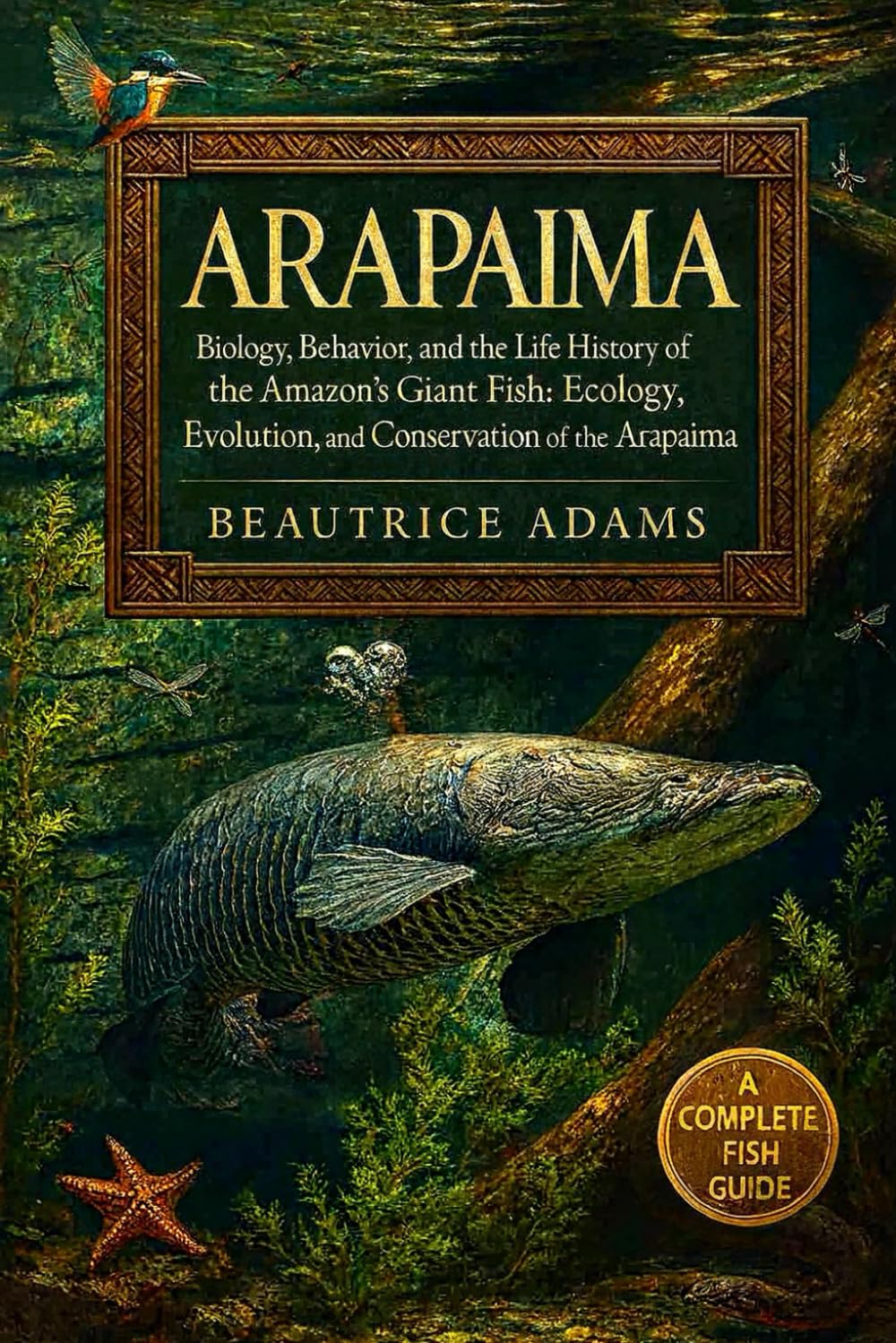
Arapaima: Biology, Behavior, and the Life History of the Amazon’s Giant Fish: Ecology, Evolution, and Conservation of the Arapaima
$14.34
by Beautrice Adams



The Arapaima ( Arapaima gigas ), one of the largest freshwater fish in the world, embodies both the grandeur and fragility of the Amazon Basin’s aquatic ecosystems. This book provides a comprehensive exploration of the biology, behavior, ecology, and conservation of this Amazonian giant, offering readers a detailed understanding of a species that has fascinated scientists, indigenous peoples, and ecotourists alike. Beginning with the historical and cultural significance of the Arapaima, the book traces its role in indigenous folklore, spiritual symbolism, and early scientific discovery. The evolutionary origins of the species are examined in depth, highlighting its position within the Osteoglossidae family and the adaptations that have allowed it to thrive in the dynamic floodplain and riverine environments of South America. The book delves into anatomical and physiological features that define the Arapaima’s extraordinary life history, including its skeletal structure, musculature, scales, and most notably, its modified swim bladder that enables efficient air-breathing. These adaptations support its growth into a megafish capable of dominating complex freshwater habitats, while simultaneously revealing trade-offs in terms of energy demands and vulnerability. Detailed chapters on feeding ecology, daily behavior, communication, and cognition reveal the Arapaima’s sophisticated survival strategies. From predatory techniques and prey selection to acoustic signaling, tactile interaction, and problem-solving behaviors, the species demonstrates remarkable intelligence and adaptability. Life history and reproductive strategies are explored thoroughly, highlighting courtship displays, nest construction, parental care, juvenile development, and growth patterns, all of which are intimately tied to seasonal hydrological cycles. The book also addresses the ecological pressures and threats that Arapaima faces, from natural predation to human-induced challenges. Overfishing, habitat destruction, pollution, and climate change are examined alongside behavioral adaptations that allow the species to mitigate risk and maintain population viability. A final focus on human interactions and conservation underscores the delicate balance between sustainable use and ecological preservation. Indigenous knowledge, fisheries, ecotourism, and media representation demonstrate both the cultural and economic significance of the Arapaima, while strategies for habitat restoration, community-based management, and climate-adaptive conservation are presented as pathways toward ensuring the species’ survival. Ultimately, Arapaima is more than a story of a single species. It is a window into the complexity of Amazonian freshwater ecosystems , the interplay between humans and wildlife, and the challenges of conserving biodiversity in a changing world. The book offers scientific insight, cultural context, and practical conservation perspectives , making it an essential reference for ecologists, researchers, students, and anyone fascinated by the natural marvels of the Amazon.