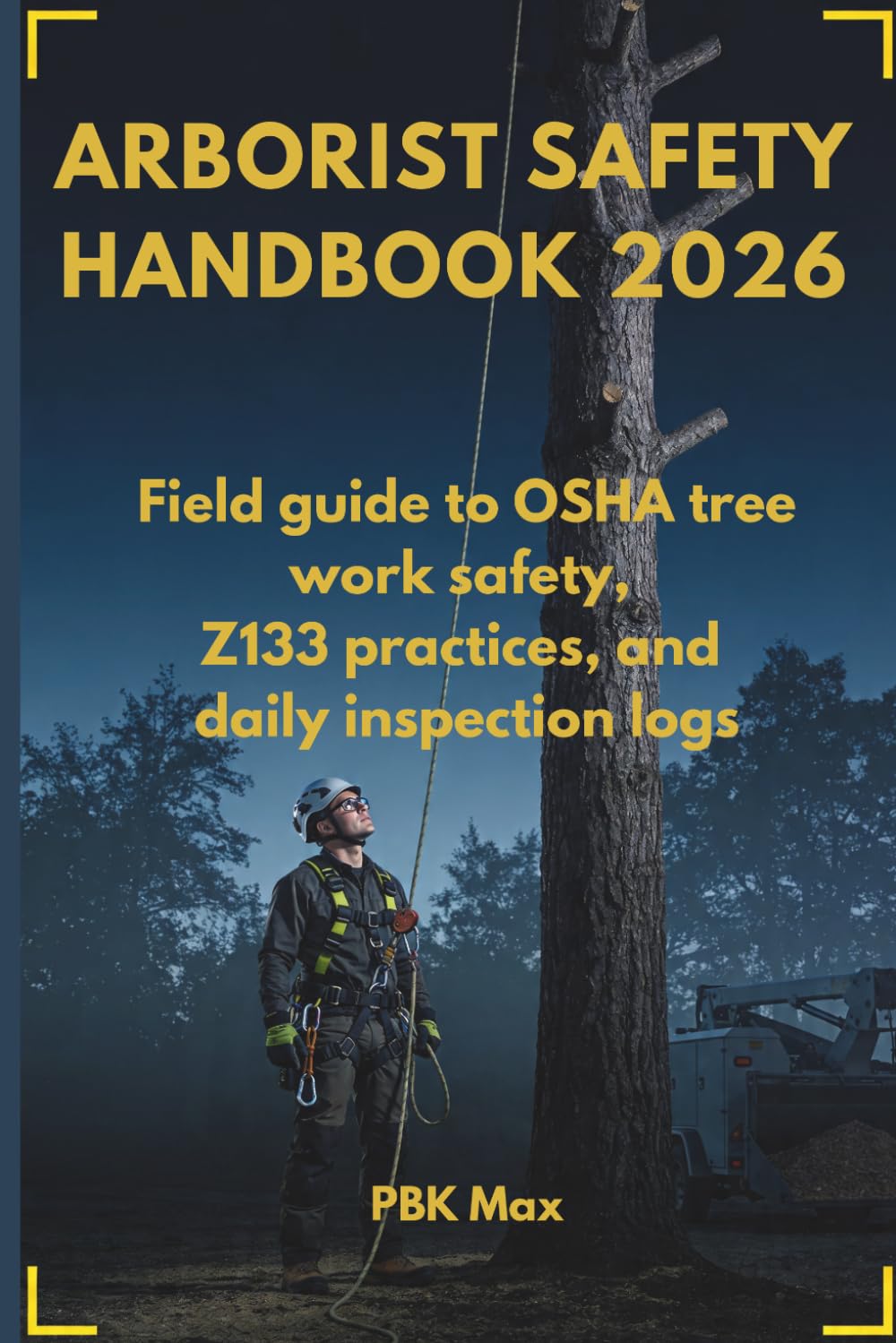



Tree work is real work: heights, heavy wood, sharp saws, traffic, and power lines. One bad decision can change a life. Arborist Safety Handbook 2026 is written for new and working tree care crew members who want clear, practical safety guidance they can actually use on real jobs. This book is for: • New ground workers who are just starting in tree work. • Climbers who want to tighten up their safety habits. • Working arborists and crew leaders who need simple tools to train and remind their teams. What this book will help you do: • See the main hazards on a tree job before they surprise you. • Plan jobs more clearly so the crew knows what is happening next. • Use OSHA and Z133 ideas in simple, everyday language. • Keep better records of your work, your gear, and your training. Inside, you’ll find: • Real-world tree work hazards in plain English Common risks on tree jobs, falling branches and drop zones, falls from trees, ladders and lifts, chainsaw cuts and kickback, power lines, traffic, and weather. • Planning and communication for safer jobs Simple five-step job planning, example site walks, traffic and public safety, job briefings that actually happen, and clear crew roles and talk. • OSHA basics and safety systems made simple What OSHA expects, basic worker rights, incident and near-miss thinking, job briefings, work zones, and ladder safety explained so everyone on the crew can follow. • Climbing, chainsaw and rigging decision guides Before-you-climb habits, tie-in points, moving in the tree, chainsaw stance and movement, avoiding one-handed cuts and bad habits, and choosing when to rig and when to drop. • Crew behaviour, money, and staying employed How not to be “that new guy”, showing up ready, listening more than talking, making the climber’s job easier, and understanding how tree work pay really works so you can stay and grow. • Professional logs, forms, and inspection pages – Money and job security checklist, first-day prep sheet, and a 30-day log of where you worked. – Gear and skills snapshot, job notes, and crew/company contact pages. – Incident and near-miss report templates for learning from close calls. – Daily work logs you can keep in the truck. – Mini-logs for climbing and PPE gear, rigging gear, and vehicles, chippers, and machines. – Training and safety meeting records, toolbox talk attendance, and personal training cards. This is not a school textbook. Keep it in the truck, in the shop, or in your bag. Use it before the job, during the job, and after the job. This handbook will not remove all danger, and it does not replace formal training or your company’s safety rules. But it can help you slow down, think more clearly, and make safer choices so that more tree workers go home safe at the end of the day.