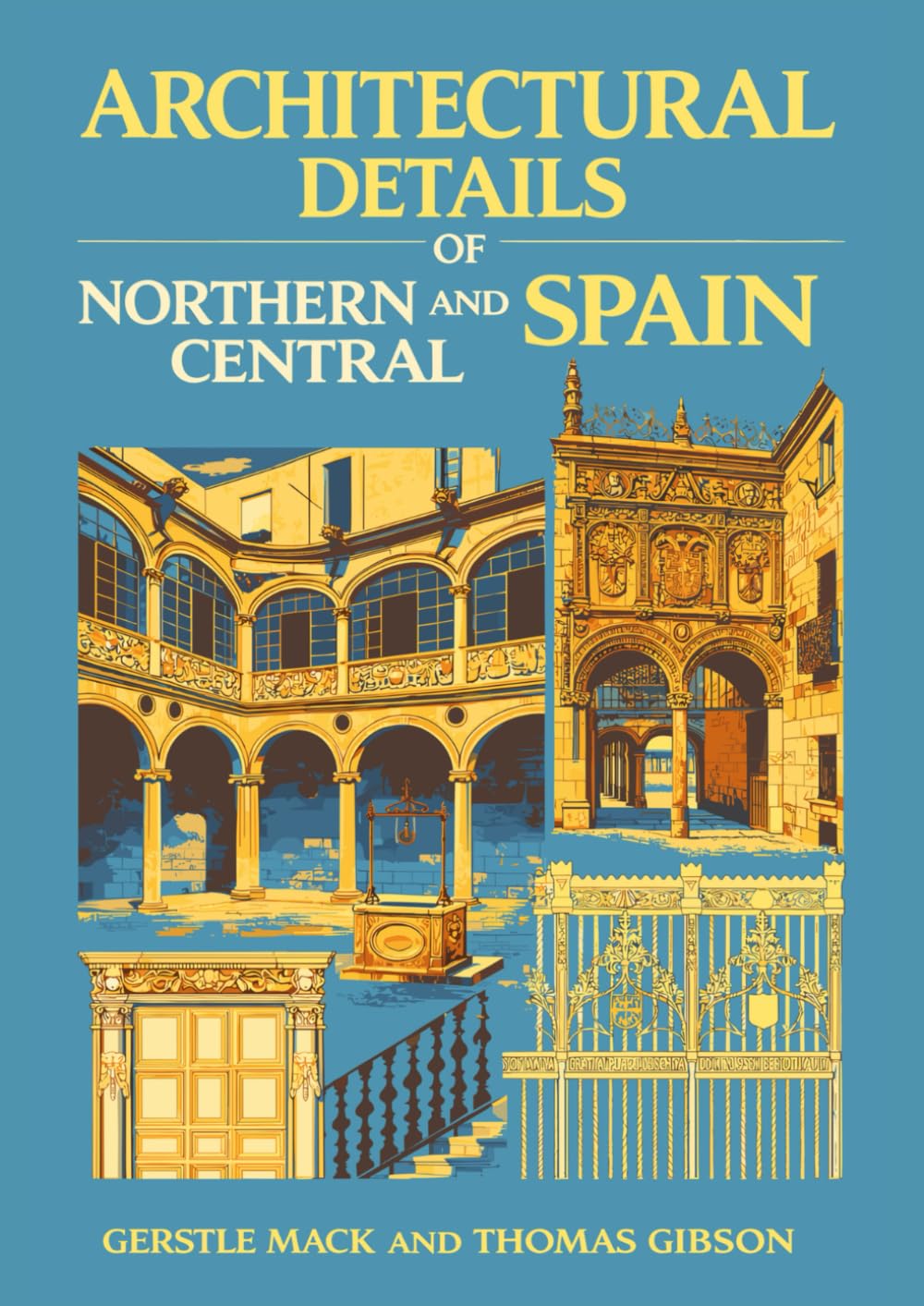
Architectural Details of Northern and Central Spain: One Hundred and Four Measured Drawings Fifty Five Photographs
$19.95
by Gerstle Mack



A Masterwork of Architectural Documentation from Spain's Golden Age In 1930, architect Gerstle Mack and photographer Thomas Gibson published this extraordinary reference work documenting the secular architecture of northern and central Spain—a companion to their celebrated 1928 volume on southern Spain. Architectural Details of Northern and Central Spain captures the rich diversity of domestic and civic buildings across Castile, León, Galicia, Aragón, Navarre, Catalonia, and the Basque regions through 104 measured drawings and 55 photographs . This volume focuses exclusively on secular architecture —the palaces, town houses, civic buildings, and farmhouses that reveal daily life and regional identity in ways cathedrals cannot. Each architectural element is documented with both precise measured drawings at standard architectural scales and atmospheric photographs capturing the texture, weathering, and patina that "inevitably escape the draftsman's scale and compass." What's Inside: Façades: Baroque town houses in Haro with ornate balconies and scrollwork, eighteenth-century León façades in yellow limestone, Salamanca's sixteenth-century Plateresque masterpieces with heraldic shields, and distinctive Basque wooden galleries from Santillana - Patios: Renaissance courtyards with Corinthian columns (León, Burgos), Gothic mixtilinear arches (Salamanca's Casa de las Conchas), Mallorcan pink marble arcades (Palma), and multi-tiered granite cloisters (Segovia) - Ironwork ( rejería ): Elaborate window grilles, balconies, and gates showing Spanish blacksmiths' mastery of hammered, chiseled, and twisted metal with polychrome painting and gilding - Doorways and Wood Doors: Carved portals with Renaissance ornament, heraldic programs, and regional variations in timber construction - Ceilings: Mudéjar artesonado (intricately joined wooden ceilings with geometric patterns) representing Islamic-Christian synthesis Published at the height of America's Spanish Colonial Revival movement, this book served practicing architects seeking authentic precedents while creating a permanent scholarly record of Spain's endangered architectural heritage. Mack—an MIT-trained architect who would later become a renowned art historian—combined Beaux-Arts precision with connoisseur's appreciation, producing a reference work that remains invaluable nearly a century later. Who Should Read This Book: Architects and designers working in historical styles, architectural historians studying Spanish Renaissance and Medieval traditions, preservationists restoring period buildings, students of decorative arts and applied design, metalworkers and woodworkers seeking authentic Spanish precedents, travelers planning cultural tours of Spain's UNESCO World Heritage cities, and collectors of rare architectural reference works. Why It Matters: This volume documents regional architectural traditions—Basque timber construction, Castilian stone urbanism, Catalonian Gothic, Mallorcan courtyards—that reflect Spain's complex history as a cultural crossroads. The buildings span from Medieval Gothic through sixteenth-century Plateresque to eighteenth-century Baroque, showing the layering of Islamic, Christian, and classical traditions unique to Spanish architecture. Many documented structures were later damaged in the Spanish Civil War, making this photographic and measured record increasingly precious for historians and preservationists worldwide.