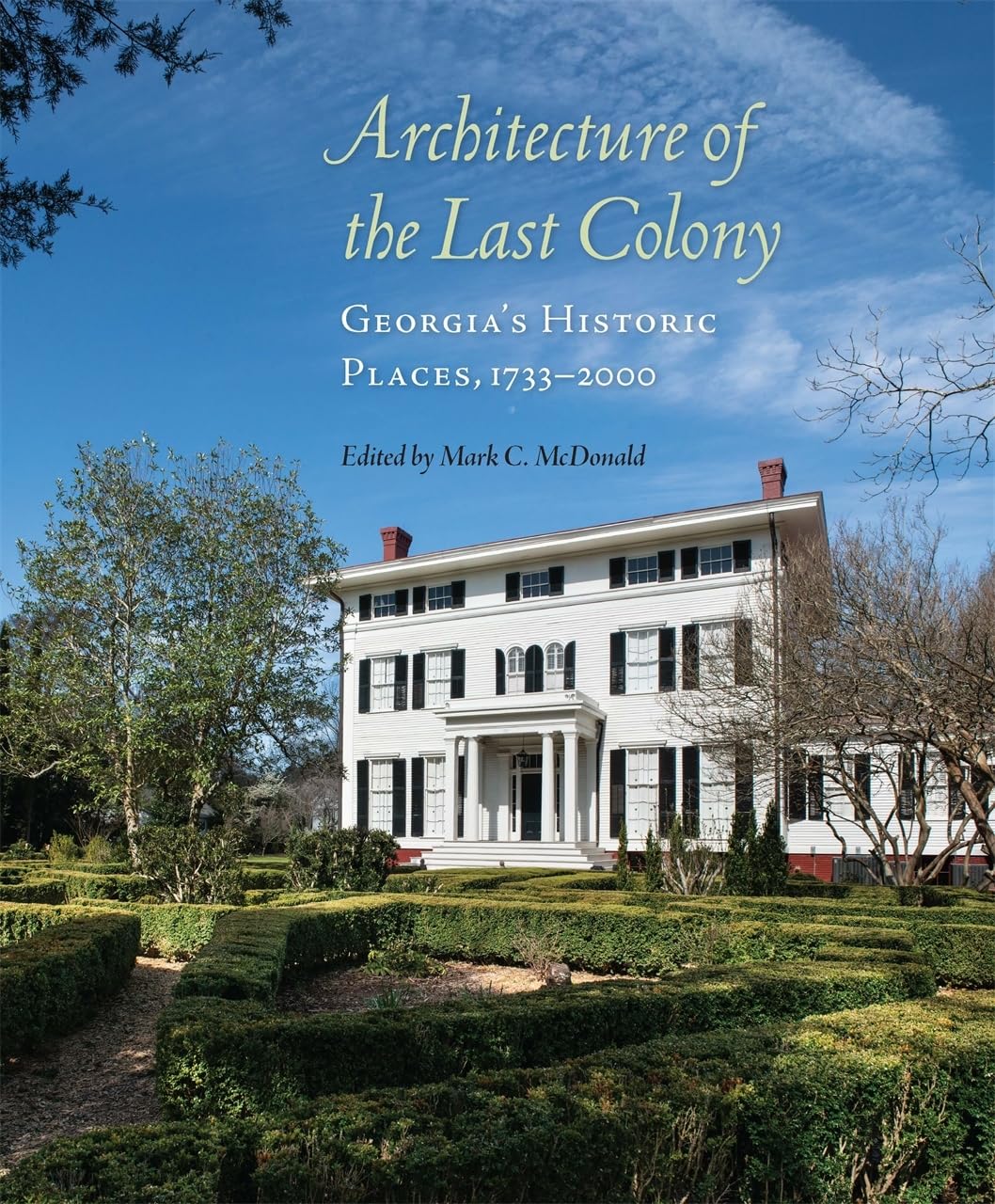
Architecture of the Last Colony: Georgia's Historic Places, 1733–2000
$40.99
by Mark C. McDonald



Architecture of the Last Colony surveys the most important extantbuildings in the state of Georgia, focusing on structures that showcase successful historic preservation practices and techniques. Richly illustrated with full-color, large-format photographs of these structures along with descriptions of their architectural significance, this book tells the story of how Georgia’s built environment reflects its growth from 1733 to the present. While numerous books about Georgia architecture feature buildings that have been lost to demolition, this volume focuses on extant structures that readers can visit and observe for themselves. The buildings range in style from the folk-art structures of St. EOM’s Pasaquan and Howard Finster’s Paradise Gardens to the suburban Craftsman bungalows of Leila Ross Wilburn to the lavish antebellum mansions of Savannah and Athens, Georgia. Noted architectural photographers, including Brian Brown, Diane Kirkland, James Lockhart, Charlie Miller, and John Tatum, provide the companion photographs. The six chapters in the book, written by architectural historians with subject-matter expertise, are organized chronologically and by architectural style, covering the earliest buildings in Georgia up through significant contemporary structures of the twentieth century. These buildings tell a diverse story that shows how nationally significant architects and Native Americans, pioneer, female, and African American architects have all contributed to Georgia’s built environment. A stunningly beautiful compendium distinguished by lush photography and informative, polished prose. No lover of Georgia's historic architecture should miss this book! -- John S. Sledge ― author An Ornament to the City: Old Mobile Ironwork On the occasion of the Georgia Trust for Historic Preservation's fiftieth anniversary, it is important to remember and pay tribute to those who have labored to build the places that are central to Georgia's communities and economy. This book provides motivation and a call to action to keep preserving so that future generations can continue to learn and make informed decisions for the future. -- Laura McCarty, president, Georgia Humanities Building on classic treatments such as Nichol’s The Architecture of Georgia , this 'landmark' publication is the first volume to tell the full story of Georgia’s architectural, social, and landscape history from first settlement to today, framed within the context of historic preservation. It’s a must read for not only every preservationist but every Georgian -- James K. Reap, professor of historic preservation, College of Environment & Design, University of Georgia A stunningly beautiful compendium distinguished by lush photography and informative, polished prose. No lover of Georgia's historic architecture should miss this book! On the occasion of the Georgia Trust for Historic Preservation's fiftieth anniversary, it is important to remember and pay tribute to those who have labored to build the places that are central to Georgia's communities and economy. This book provides motivation and a call to action to keep preserving so that future generations can continue to learn and make informed decisions for the future. Building on classic treatments such as Nichol’s The Architecture of Georgia , this 'landmark' publication is the first volume to tell the full story of Georgia’s architectural, social, and landscape history from first settlement to today, framed within the context of historic preservation. It’s a must read for not only every preservationist but every Georgian A comprehensive, illustrated architectural history of Georgia A comprehensive, illustrated architectural history of Georgia Mark C. McDonald has served as president and CEO of the Georgia Trust for Historic Preservation since June 2008. He has more than thirty-seven years of professional involvement in historic preservation and has served as the executive director for three preservation organizations in the Southeast, including the Historic Salisbury Foundation in North Carolina, the Mobile Historic Development Commission in Alabama, and the Historic Savannah Foundation. He lives in Atlanta, Georgia. ROBIN B. WILLIAMS has taught at the Savannah College of Art and Design since 1993, chairing Architectural History since the founding of the department in 1996. His teaching and research interests include the history of modern architecture and the modern city. He is the lead author of the guidebook Buildings of Savannah , which won the Best Guidebook Award from SESAH in 2018. His publications on the history of street and sidewalk pavements include "The Global Spread of Street Pavement Materials and Technology, 1820–1920,” which received the Best Essay in an Edited Volume Award from SESAH in 2023. For more than ten years, Williams served on Savannah’s Historic District Review Board and Historic Preservation Commission. He currently lives in Savannah, Georgia.