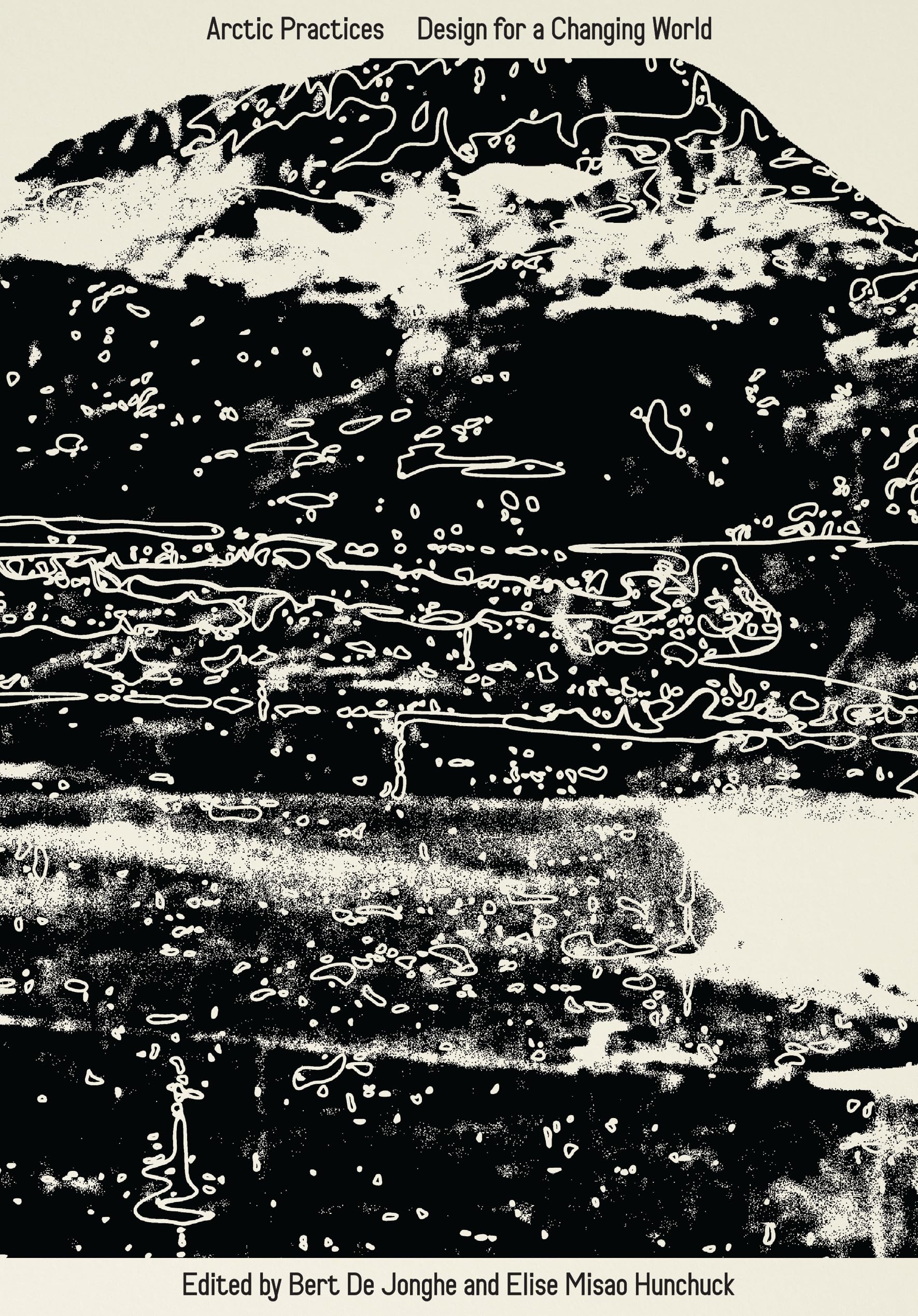



Arctic Practices: Design for a Changing World is an edited volume framing plural understandings of an accelerated and amplified environment, the Arctic. Developed as a timely contribution to literature on Arctic design, this publication covers 33 chapters and features 45 contributors, including designers, educators, artists, photographers, and filmmakers. Among this cohort, some are Indigenous, some are residents, and some are visitors to the Circumpolar North. But all generously share their ways of designing with or approaching, translating, seeing, or inhabiting changing Arctic landscapes. The contributions shared in Arctic Practices respond to colonial histories, foreground Indigenous livelihoods, and demonstrate how Arctic design practices are adapting to new and changing climatic contexts. In the past, Arctic design (e.g., Arctic architecture, landscape architecture, and urbanization) has been dominated by colonial and nation-state interests, often influenced by design perspectives more appropriate to southern landscapes. Western-centric narratives and design paradigms that suffered from limited understandings of the internal dynamics, unique climatic conditions, and diversity of different people and cultures were often projected and forced—sometimes violently—onto the many different peoples and regions of the Circumpolar North. Arctic Practices believes that designers (and others) can only move forward by first acknowledging the past; this includes taking seriously the responsibility to avoid committing the mistakes of those who came before them. The stories and images shared in these pages were gathered by deliberately seeking out many different forms of contributions and media in order to more adequately respond to the remarkably rich and varied histories of the world’s northernmost regions. The collection of works found in Arctic Practices has taken great care to manifest design projects, pedagogies, and artistic interventions that both critique the discipline’s troubled history while also, in most cases, introducing speculative ways forward into an uncertain planetary future. This polyvocal assembly is an offering to begin to learn and unlearn so that we may share meaningful design interventions across northern lands, seas, and ice. Bert De Jonghe is a Belgian landscape architect, a Lecturer in Landscape Architecture at Harvard University’s Graduate School of Design (GSD), the founder of Transpolar Studio, and a Doctor of Design candidate at Harvard GSD. He specializes in landscape architecture, urbanism, and design research in the Arctic regions. He has worked as a designer at a range of landscape architecture practices worldwide, including in Belgium, South Africa, and Norway, and as a research assistant at Harvard GSD's Office for Urbanization. Also, he's been fortunate to serve in several teaching positions, including University Lecturer at the Arctic University of Norway in Tromsø and Teaching Fellow, Teaching Assistant, and Research Tutor roles at Harvard GSD. He has been invited to be a critic/reviewer in numerous design courses and studios, including at Harvard GSD, Northeastern University, and Yale University. Elise Misao Hunchuck , MLA is a spatial researcher, editor, curator, writer, and educator. Based between Berlin and Milan, her transdisciplinary practice brings together architecture, landscape architecture, ecology, and media studies to research sites in Canada, the US, Japan, China, and Ukraine. She documents, studies, and archives the co-constitutive relationships between plants, animals, and minerals by employing text, images, and cartographies. Elise is currently a visiting adjunct assistant professor at Columbia University’s Graduate School of Architecture, Planning, and Preservation (New York, US) in the M.S. Advanced Architectural Design (AAD) program (2021–present). “Urban plans and architectural designs for Greenland’s capital have transformed radically over the last century, reflecting changes in the country’s politics and colonial status. Greenland’s cities have continuously been formed through urban policy and planning comparison with southern towns and settlements. However, a post-colonial comparison allows for critical comparison within the Arctic region and emerging conceptions of an Arctic capital. Studies of Arctic cities also promise to add new and critical perspectives to a post-colonial urban theory. Despite promises of a new comparative urbanism, reductivist and climate-centric approaches that insist on exceptionalism are still evident in the international architectural and urbanism discourse in the Arctic.” – Peter Hemmersam