Arctic Schoolteacher: Kulukak, Alaska, 1931–1933 (Volume 59) (The Western Frontier Library Series)
$21.95
by Abbie Morgan Madenwald



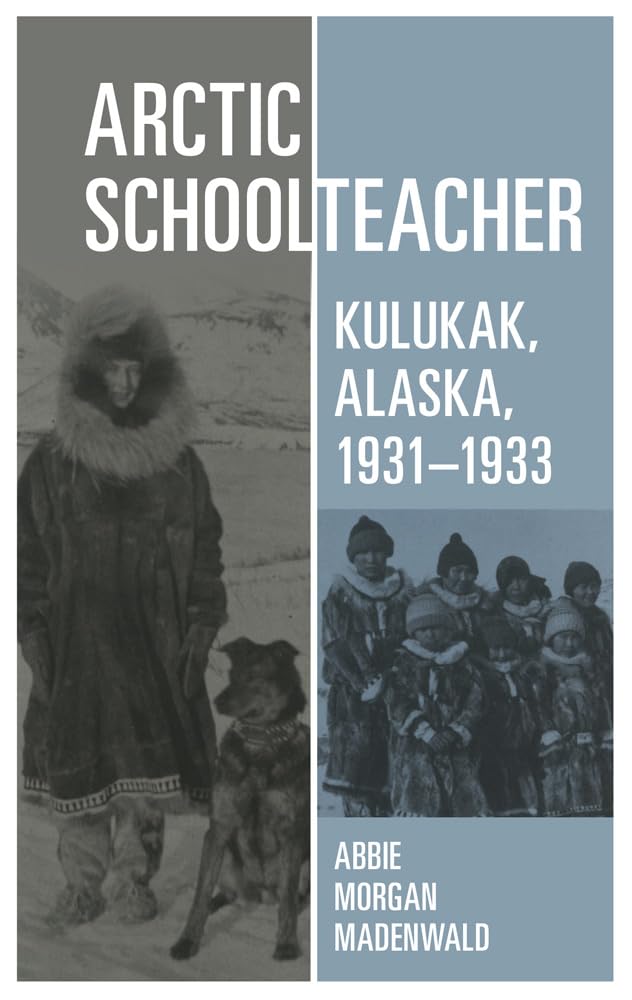
When Abbie Morgan arrived with her husband Ed in the Alaskan village of Kulukak in 1931 to teach school, many of the Eskimos had never before seen a white woman. Kulukak could be reached by boat when the approach was not frozen over and by dogsled when ice made travel by boat impossible. Arctic Schoolteacher is the story of Abbie’s Alaskan experience, from the detailed planning necessary for taking a year’s worth of provisions to an isolated village to her departure from Alaska in 1933. In colorful, descriptive prose, she tells of the difficulty of travel and communication in the Far North, the magnificent physical environment, and the children to whom she devoted her time. When Abbie Morgan arrived with her husband Ed in the Alaskan village of Kulukak in 1931 to teach school, many of the Eskimos had never before seen a white woman. Kulukak could be reached by boat when the approach was not frozen over (but only by passing through dangerous reefs off Cape Constantine with an experienced Eskimo navigator) and by dogsled when ice made travel by boat impossible. Life in the little village on Bristol Bay, where people lived in sod houses and subsisted on food from the sea and reindeer meat, was a challenge for Abbie both physically and emotionally, and she met that challenge with courage, humor, and love for the people she had come to teach and who in turn helped her survive in the harsh and beautiful northern environment and, finally, to cope with the unexpected tragedy of Ed's crossing the River of Tears. Arctic Schoolteacher is the story of Abbie's Alaskan experience, from the detailed planning necessary for taking a year's worth of provisions to an isolated village to her departure from Alaska in 1933. In colorful, descriptive prose, she tells of the difficulty of travel and communication in the Far North, the magnificent physical environment, and the children to whom she devoted her time. The personalities of the villagers come alive. Aspects of the Eskimo way of life are illustrated in anecdotes - some humorous, some poignantly sad - telling of the enormous amount of work needed to maintain a dog team; the Eskimo belief in carayaks (spirits); vegetable-gathering, fishing, and hunting practices; and the finely tuned navigational skills of those who travel by boat. Abbie was remarkable for the degree to which she overcame the prejudices of her time and forher determination and resiliency. The pragmatism of the Depression era, the flavor of Alaska when it was still a territory, and the heartfelt dedication of a teacher to her students are qualities that shine through in her writing. Abbie Morgan Madenwald received most of her education at Washington State College, and spent many years teaching school. She wrote travel articles for several magazines. Used Book in Good Condition