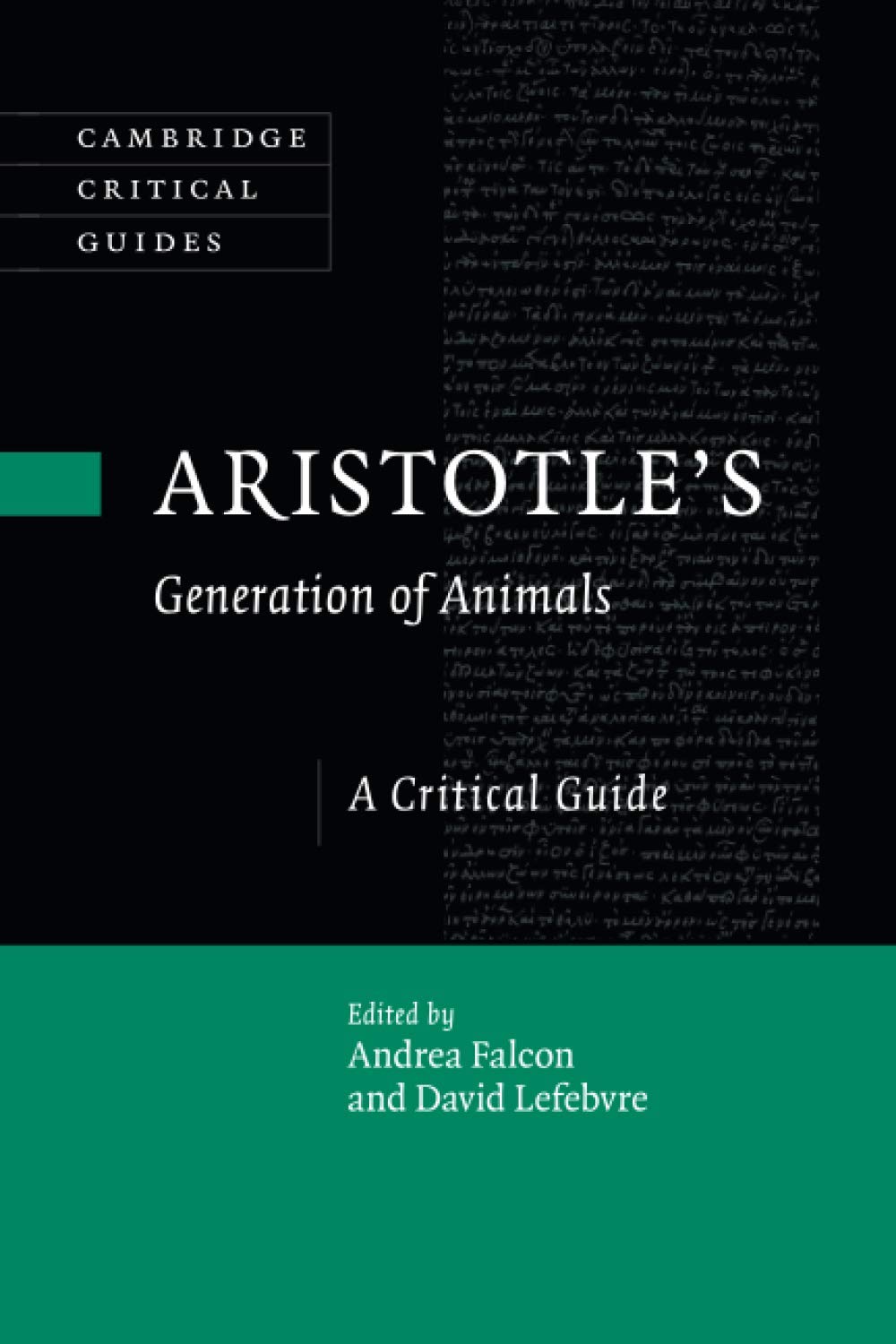



Generation of Animals is one of Aristotle's most mature, sophisticated, and carefully crafted scientific writings. His overall goal is to provide a comprehensive and systematic account of how animals reproduce, including a study of their reproductive organs, what we would call fertilization, embryogenesis, and organogenesis. In this book, international experts present thirteen original essays providing a philosophically and historically informed introduction to this important work. They shed light on the unity and structure of the Generation of Animals, the main theses that Aristotle defends in the work, and the method of inquiry he adopts. They also open up new avenues of exploration of this difficult and still largely unexplored work. The volume will be essential for scholars and students of ancient philosophy as well as of the history and philosophy of science. Historically and philosophically informed introduction to the embryological, zoological, and medical views presented in this sophisticated and challenging text. Andrea Falcon is Associate Professor in the Department of Philosophy at Concordia University, Montréal. He is the author of Corpi e Movimenti. La fortuna del De caelo nel mondo antico (2001); Aristotle and the Science of Nature: Unity without Uniformity (Cambridge, 2005); Aristotelianism in the First Century BCE: Xenarchus of Seleucia (Cambridge, 2012); and Aristotelismo (2017). He is the editor of the Brill's Companion to the Reception of Aristotle (2016). David Lefebvre is Professor of Philosophy at the Université Clermont Auvergne (UCA) in Clermont-Ferrand. His publications include a new translation of Aristotle's Generation of Animals (2014), and he is co-editor of Dunamis. Autour de la puissance chez Aristote (2008) and La Métaphysique de Théophraste. Principes et apories (2015) and author of DYNAMIS. Sens et Genèse de la notion aristotélicienne de puissance (2017).