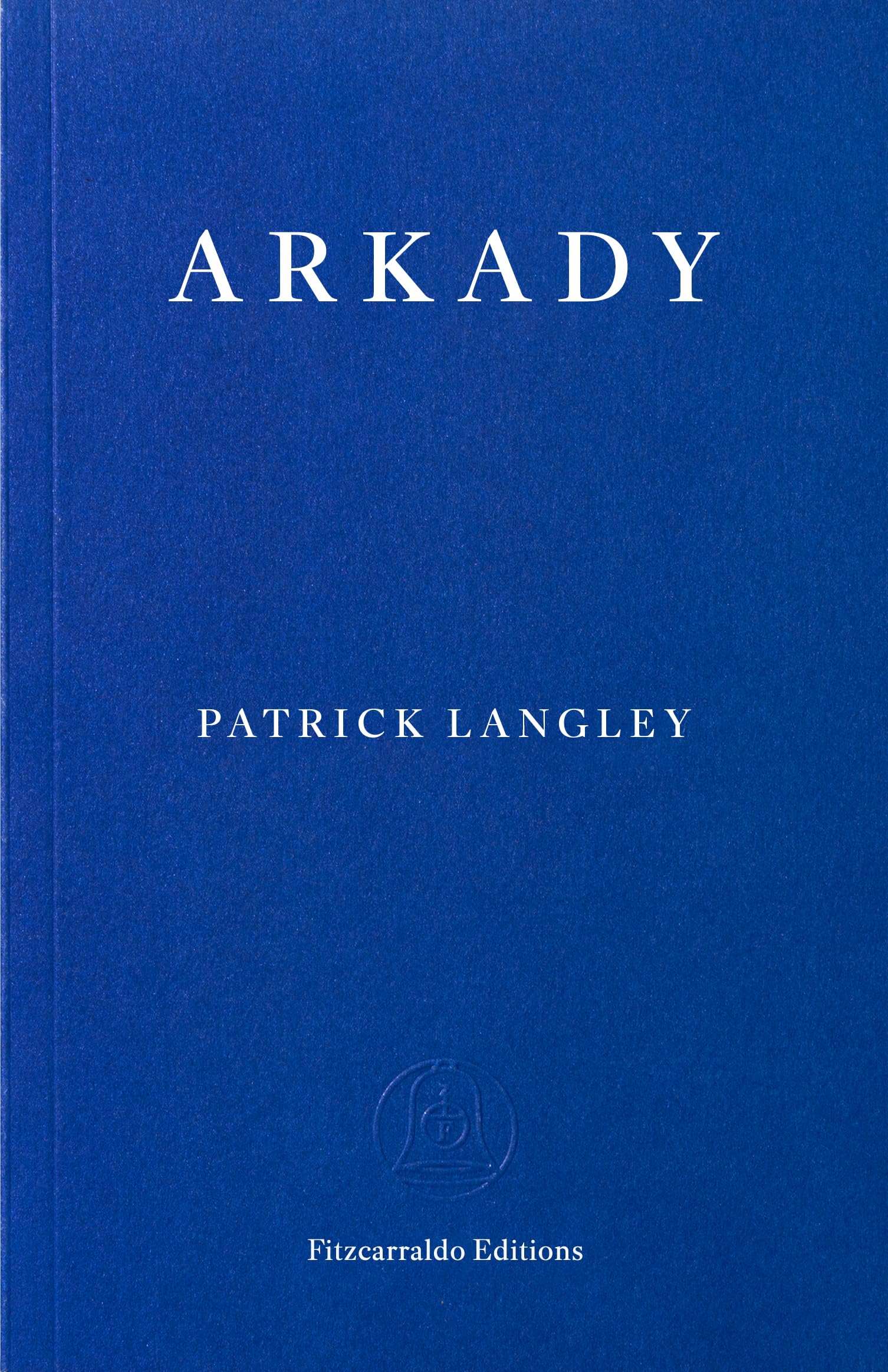



Brothers Jackson and Frank live on the margins of a big urban sprawl. From abandoned tower blocks to gleaming skyscrapers, their city is brutal, beautiful and divided. As anti-government protests erupt across the teeming metropolis, the brothers sail in search of the Red Citadel and its promise of a radical new way of life. A striking portrait of the precarity of modern urban living, and of the fierce bonds that grow between brothers, Patrick Langley's debut Arkady is a brilliant coming-of-age novel, as brimming with vitality as the city itself. ‘Thick with smoky atmosphere and beautifully controlled - this is a vivid and very fine debut.’ ― Kevin Barry, author of City of Bohane ‘A distinctly post-Brexit novel, Arkady is set in an unnamed city that both is and isn’t London, thick with the atmosphere of the riots of 2011, and the stricken, devastated aura of the days after the Grenfell fire. It is oblique, and bleak: it is never quite clear what has happened or is happening, what is it about our world that has finally broken or overflowed.... But there is always a flutter of hope in the dark, and in Arkady it dwells in the unshakeable brotherly love between the novel’s two heroes, Jackson and Frank [whose] relationship is so beautifully etched ... Arkady suggests that we’ll build our own arcadias out of the dreams that haunt us, both threatening and protective.’ ― Lauren Elkin, The Guardian ‘ Arkady raises questions about what happens after capitalism finally collapses.... It’s difficult not to think of JG Ballard throughout, but Langley’s unforgiving urban scapes also recall the sound of dubstep pioneer Burial or early pirate-station grime. The prose crackles with energy as the narrative follows the constant movement by placing the reader on a well-oiled tracking dolly, often zooming out to remind us of the bigger picture. Langley is a highly visual writer and Arkady an assured allegorical debut about a near-future Britain that is potentially only a recession or two away.’ ― Ben Myers, New Statesman ‘[A] timely evocation of social strife at a time of increasing political polarisation. The novel’s preoccupation with the invisible socio-economic topography of the city (“maps of ownership, maps of property, maps of power”) will resonate with anyone who has pondered the vexed question of gentrification and housing inequality.... Langley’s bleak vision of a city effectively at war with its inhabitants – on behalf of the property moguls and financial speculators who own it – is a pointed extrapolation of the present state of things.’ ― The Irish Times ‘I haven’t been able to stop thinking about [ Arkady ] – such a tender, hopeful tale of brotherhood and belonging, set against vividly imagined urban topographies. I haven’t read anything like it in ages.’ ― Sophie Mackintosh, author of The Water Cure Patrick Langley’s first novel, Arkady , was longlisted for the RSL Ondaatje Prize and the Deborah Rogers Writers Prize. The Variations is his second novel. “The man lies flat on the sand, legs outstretched, arms at rest. His eyes are closed but his mouth is open, slack lips parted on the dark red muscle of his tongue. In the sockets of his eyes, the flesh is patterned with shades of lavender, ash, and sulphur, the soft meat swollen and deeply bruised. Weeds, sprouting from a slope of shingle, form a crooked halo around his head. Their bony trunks pierce a tangle of rust-coloured seaweed, which is shrivelled-up, jewelled with salt. Jackson inspects the plants. The brittle canes are hung with rattling seedpods, spiked with thorny leaves and needles pale as bone. Harsh gusts quicken the churning waves. The dry weeds shiver, hiss. Jackson turns to his younger brother, who is standing a short way further down the beach. ‘Is he really dead?’ Frank asks. His voice is thin, distant. ‘I don’t know,’ Jackson replies. ‘Is he breathing?’ ‘Doesn’t look like he’s breathing.’ ‘We need a mirror.’ Dawn is breaking on the estuary, wads of cloud soaked in colourless light. Black hair sprawls across Frank’s forehead, reaching into his eyes. Squinting at the rain, he looks askance at Jackson. ‘A mirror?’ ‘You’re meant to hold one up to his mouth,’ says Jackson. ‘See if you get condensation. That’s how you know for sure.’ He clutches himself, a reflex. He is cold to his marrow. ‘Says who?’ Jackson shrugs. ‘Can’t remember.’ The shoreline is wind-scoured, blasted, bleak. Old battlements hunker down the sand, obsolete defences that resemble totems now, crumbled by age and weather. Their innards are riddled with nets of wire and mottled with luminous algae. Frank runs a hand through his wet black hair. Raindrops leap and seethe as they hit the sand. ‘We don’t have a mirror,’ says Frank. He folds his arms, copying Jackson, to preserve what little warmth is left in his shivering body. ‘We don’t need a mirror.’ He recoils a few inches, snarling. ‘Look at him,’ he says. ‘Look.’”