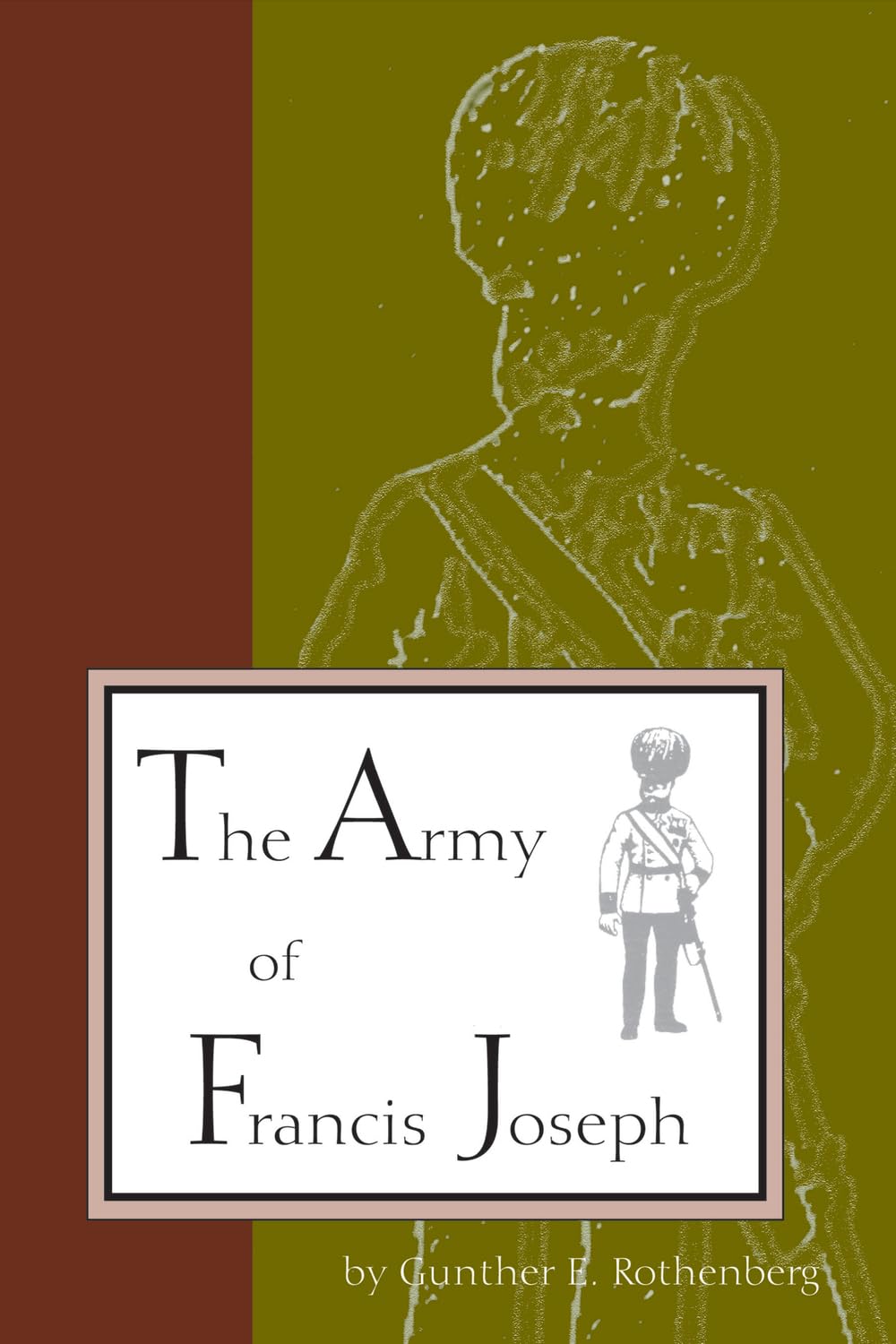



The army was perhaps the most important single institution in the multinational empire of the Hapsburgs. The Austro-Hungarian dynasty survived through the military power it could command, and the rise and fall of the fortress of the Hapsburgs were mirrored accurately in the state of its military establishment. It was in the army alone, with its common language, ideals, and loyalty, that the concept of a great empire headed by an emperor was even partially translated into reality. But in an age of nationalism, the army alone could not save the multinational state. Tradition and circumstance cast it into the role of a loyal servant the Emperor Francis Joseph and his dynasty, a role which proved inadequate to deal with the problems of the age. Rothenberg's work is the first analytical, full-length study of the army of Francis Joseph throughout its history from 1815-1918. He considers campaigns, battles, and leaders, but places his main emphasis on analyses of the overall developments in the military establishment, its role in foreign and internal policy, and above all on its struggle against the disintegration of the empire under the strain of growing national division. The originality of the work lies, above all, in its comprehensiveness and synoptic approach. There is nothing comparable to it in English . . . and no single volume in any language, to my knowledge, which would attempt to examine the role of the military against the background of political, diplomatic, economic, and social history. That Professor Rothenberg succeeded is attributable to his thorough familiarity with the Austrian archives and the immense literature relevant to his topic. I found the author’s working method meticulous, his scholarship sound, and his line of argumentation impeccably logical.” (George Barany) “The first full-length study in English of the last century of the Imperial and Royal Austrian Army, one of the few supranational institutions holding the empire together and a fighting force whose performance in World War I was far stronger than generally credited.” Army (East Central Europe) “This is a judicious and well-expressed addition to the growing literature on Francis Joseph’s era.” The American Historical Review (Armed Forces and Society) “As the only monograph covering the last 100 years of Hapsburg military history, this book is an important source of discussion of tactics, leaders, weapons, and politics of the empire. Choice (Slavic Review) “For the student, Rothenberg’s book fills a long-standing gap in English-language military studies. For soldiers, it raises interesting questions of politics and professionalism . . . . It will probably remain the standard work on its topic for years. Military Review (Military Review) “The scholarly authority and shrewdness of judgement that [he] brings to bear upon these problems makes this the best one-volume treatment of its subject in any language.” Slavic Review (Choice) “The study reflects many years of research and a uniquely comprehensive knowledge of all the pertinent Viennese sources.” Armed Forces and Society (The American Historical Review) “[It] should become a basic reference both for the student of the Hapsburg Empire and for the military historian . . . . Rothenberg has produced an important, thoughtful study.” East Central Europe (Army) Gunther Rothenberg is the world's leading authority on the Napoleonic Wars. He served with the British, Israeli and United States Military and was Professor of History at Purdue University. He was the leading English-speaking historian of warfare in the German-speaking lands. His many distinguished works include The Army of Francis Joseph and The Hapsburg Military Frontier . Used Book in Good Condition