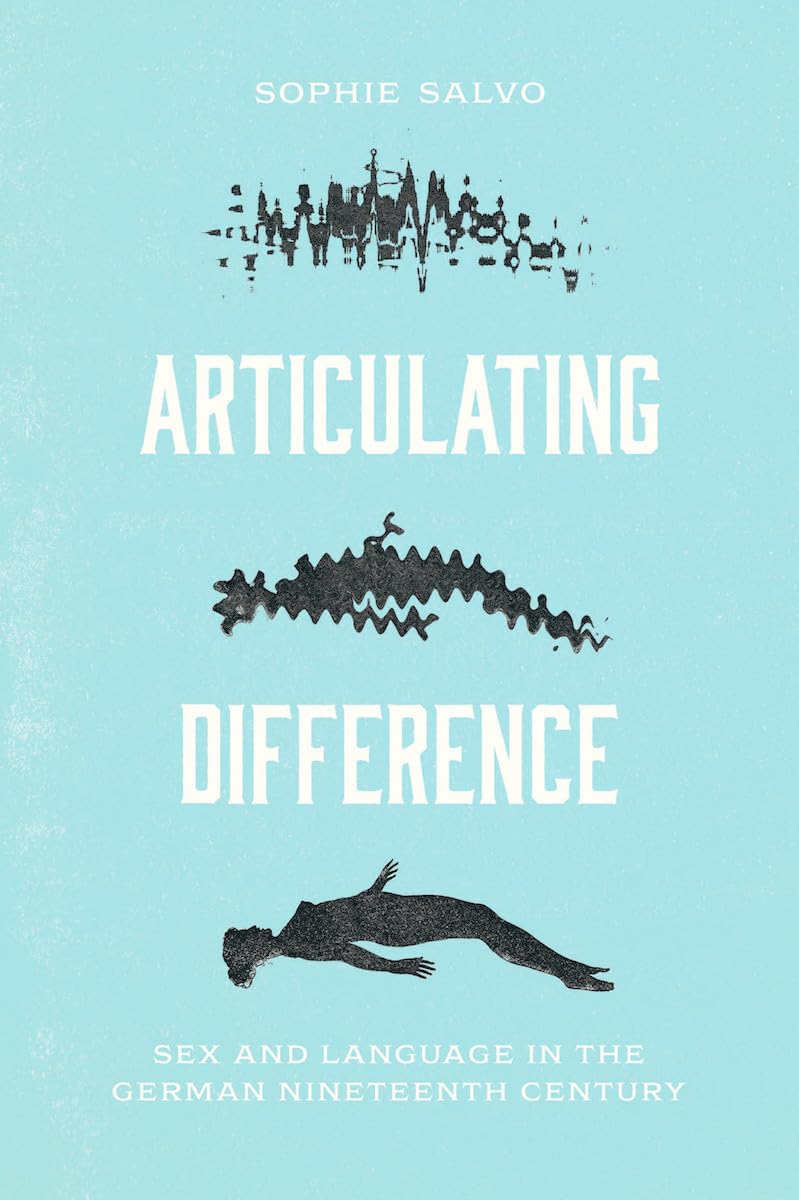
Articulating Difference: Sex and Language in the German Nineteenth Century
$30.00
by Sophie Salvo



Enriches contemporary debates about gender and language by probing the histories of the philosophy and sciences of language. Drawing on a wide range of texts, from understudied ethnographic and scientific works to canonical literature and philosophy, Sophie Salvo uncovers the prehistory of the inextricability of gender and language. Taking German discourses on language as her focus, she argues that we are not the inventors but, rather, the inheritors and adapters of the notion that gender and language are interrelated. Particularly during the long nineteenth century, ideas about sexual differences shaped how language was understood, classified, and analyzed. As Salvo explains, philosophers asserted the patriarchal origins of language, linguists investigated “women’s languages” and grammatical gender, and literary Modernists imagined “feminine” sign systems, and in doing so they not only deemed sex-based divisions to be necessary categories of language but also produced a plethora of gendered tropes and fictions, which they used both to support their claims and delimit their disciplines. Articulating Difference charts new territory, revealing how gendered conceptions of language make possible the misogynistic logic of exclusion that underlies arguments claiming, for example, that women cannot be great orators or writers. While Salvo focuses on how male scholars aligned language study with masculinity, she also uncovers how women responded, highlighting the contributions of understudied nineteenth-century works on language that women wrote even as they were excluded from academic opportunities. “Successfully ties together feminist theory and literary-critical practice, using the former to strengthen the latter and arriving at incisive critiques that have the potential to inform current debates.” ― German Studies Review “ Articulating Difference recovers an underappreciated chapter in the relationship between language and gender. . . . Salvo tackles these issues with insightful readings of passages in a language that eschews theoretical jargon and is, therefore, accessible to a wide audience including undergraduates.” ― Choice “How does gender come to language? In this brilliant and lucid study, Salvo traces the ideas of gender that have informed ethnographic, philosophical, and philological theories of language since the eighteenth century. As wide-ranging as it is detailed, as patient as it is surprising, the story Salvo tells will have you look at current debates about gender and language with new eyes.” -- Adrian Daub, author of The Dynastic Imagination: Family and Modernity in Nineteenth-Century Germany “ Articulating Difference presents the first book-length study of the phantasmatic role of the feminine for historical linguistics in Germany and Western Europe more broadly, thus filling a significant gap in the scholarship. It is witty, exceptionally well researched, and politically acute. Salvo has made a major contribution to our understanding of gender in a crucial domain of German intellectual and literary history.” -- Barbara N. Nagel, author of Ambiguous Aggression in German Realism and Beyond: Flirtation, Passive Aggression, Domestic Violence “ Articulating Difference recovers an underappreciated chapter in the relationship between language and gender. . . . Salvo tackles these issues with insightful readings of passages in a language that eschews theoretical jargon and is, therefore, accessible to a wide audience including undergraduates.” ― Choice “How does gender come to language? In this brilliant and lucid study, Salvo traces the ideas of gender that have informed ethnographic, philosophical, and philological theories of language since the eighteenth century. As wide-ranging as it is detailed, as patient as it is surprising, the story Salvo tells will have you look at current debates about gender and language with new eyes.” -- Adrian Daub, author of The Dynastic Imagination: Family and Modernity in Nineteenth-Century Germany “ Articulating Difference presents the first book-length study of the phantasmatic role of the feminine for historical linguistics in Germany and Western Europe more broadly, thus filling a significant gap in the scholarship. It is witty, exceptionally well researched, and politically acute. Salvo has made a major contribution to our understanding of gender in a crucial domain of German intellectual and literary history.” -- Barbara N. Nagel, author of Ambiguous Aggression in German Realism and Beyond: Flirtation, Passive Aggression, Domestic Violence Sophie Salvo is assistant professor in the Department of Germanic Studies at the University of Chicago, affiliated with the Center for the Study of Gender and Sexuality.