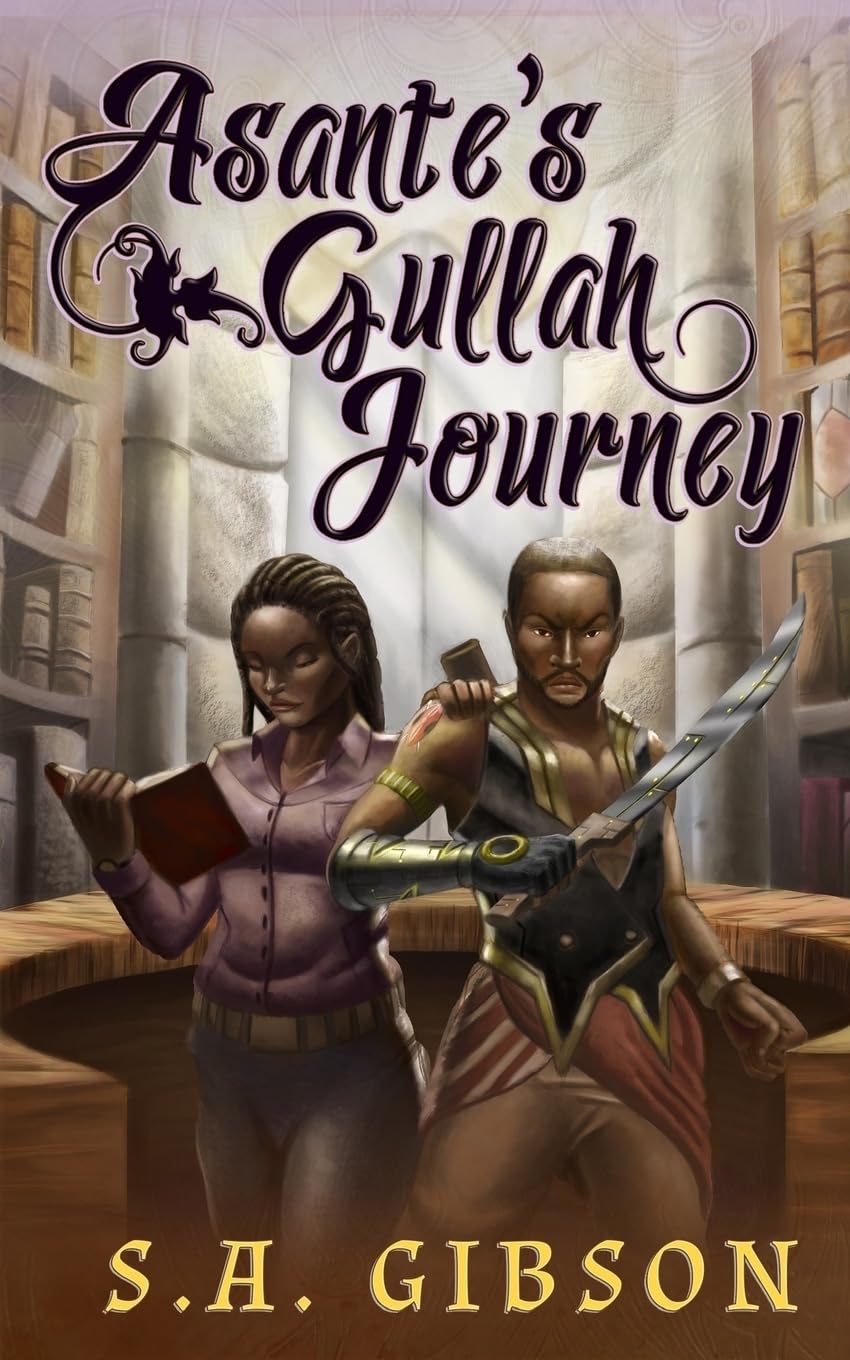



Nefarious land grabbers threaten family farms in the Gullah Lowcounty. It falls to Beneda to bring her people through this chaos. She appeals to the Libraries, those with power in this technology free world. Joined by Librarian-swordsman Asante, Beneda pulls her community together as her grandmother did generations ago. Within this tale of swords and soul, doing what's right leads to threats unimaginable. Asante's Gullah Journey is a young adult adventure novel that will appeal to lovers of action, futuristic fiction, post-apocalyptic tales, sword & soul, and archery conflict. African Asante's sword and Gullah Beneda's bow are joined in this post-apocalyptic setting, for family, birthright, and oh so much more. What does the term "woodpunk" mean for you? I use the term woodpunk to describe a society where wood is used for most buildings, utensils, and transportation. This would follow the stoneage and predate a steampunk society. Although I imagine some iron and steam can also be used in this world. I believe this represents the technology of society during much of the time of modern humans. From the beginning of using tools, humans found many uses for wooden implements. Clubs, bows and arrows, staffs, wagons, wheels, and thousands of other tools were made from wooden products. What about Science Fiction resonates with you? For me, Sci-Fi supplies a grand sense of wonder combined with escapism from the world of today. Space opera gives a broad perspective and scope of vision about the universe. I get to think about how societies might work and try out odd and intriguing ideas about the human condition. And, I consume these stories to help me escape my concerns in school and home. I want to think even more about Sci-Fi as a way to imagine what would happen if things were different, and how people would react under different conditions. These stories can span the universe for young and old readers. What was your inspiration for Asante's Gullah Journey? I'm interested in history, primitive societies, and how differing groups of people communicate. One story of linguistic difference I heard was about the Gullah language of former slaves in the Carolinas. It fascinated me to imagine what would happen if those Gullah speakers survived into the future when modern technology is lost. I think their old farming, fishing, and animal husbandry skills would be lifesavers for them. This gave me the basis for a story about librarians and farmers in this future world. What is your favorite part of the entire writing process? I love spending time researching. My dream job involves studying the back-stories and origins of events and artifacts in the world. Each day finds me immersed in following meandering internet pathways leading to new information. Whenever I can, I try to impart ideas and descriptions of the wondrous things I have learned into my stories. This aspect of writing makes the work of creation worth the effort for me. When it comes to your writing process, are you more of an architect or a gardener? In my writing, I combine the architect and gardener approaches. Starting with an interesting concept, I start brainstorming a potential plot.Then, ask myself where are the interesting points of conflict going to occur during the story. This results in a rough and lightly filled in outline for the whole book. However, once I start writing, I find that the characters assert themselves and the story changes in small ways.Some characters become more important, while others transform into minor characters. I still consider it the same story, even if it has changed. Did Asante's Gullah Journey turn out the way your expected, or did the story even surprise you when it was finished? Like most stories, Asante's Gullah Journey took on a life of its own. I would say the conclusion of the story was expected, but the events along the way changed. An interesting aspect of writing these stories is that the characters and events exert a mysterious force to redirect the writing process. I struggle with the changes, but often I will accept that the characters know better than me, and so they win. And, I hope the readers win too. What did you learn during the process of writing this book? It's fun that I have to learn so much in writing my stories. One interesting tale of the development of the Gullah language was the possible role of rice production in isolating the Gullah slaves. Those plantations in the Carolina Lowcountry were devoted to rice production. The flooding of fields for rice growing led to infestations of malaria-bearing mosquitoes. Each summer's abandonment of the Lowcountry by landowners may have contributed to Gullah slaves keeping their own language and building a strong cultural identity in that disease haunted land.