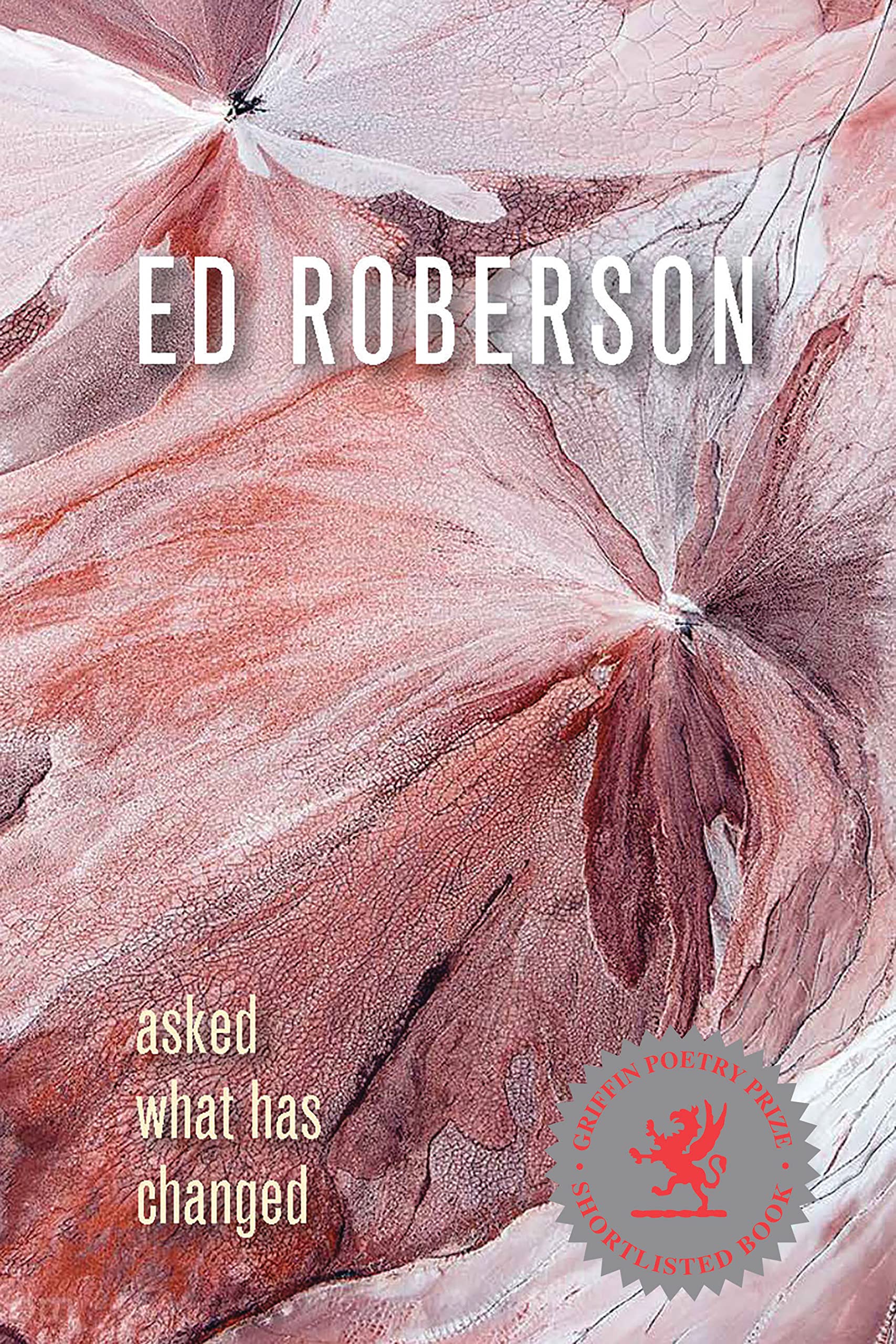



Black ecopoet observes the changing world from a high-rise window Finalist for Griffin International Poetry Prize, given by The Griffin Trust for Excellence in Poetry, 2022 Award-winning poet Ed Roberson confronts the realities of an era in which the fate of humanity and the very survival of our planet are uncertain. Departing from the traditional nature poem, Roberson's work reclaims a much older tradition, drawing into poetry's orbit what the physical and human sciences reveal about the state of a changing world. These poems test how far the lyric can go as an answer to our crisis, even calling into question poetic form itself. Reflections on the natural world and moments of personal interiority are interwoven with images of urbanscapes, environmental crises, and political instabilities. These poems speak life and truth to modernity in all its complexity. Throughout, Roberson takes up the ancient spiritual concern―the ephemerality of life―and gives us a new language to process the feeling of living in a century on the brink. Morello's Venice startled to hear the doctor say this would be the last time he would see it, a person used to keeping things alive talking terminus ― even more startled when he returned to hear him say it wasn't there there were terrible rains bookings cancelled. when late he arrived, everything was gone. his wife had a cold. they bundled together in blankets. he refilled my prescription to restore my soul. "Just as William Blake was able to descry an entire world in a kernel of sand, Roberson is ever alert to affinities between the small and the vast, the fleeting and the cosmic."―James Gibbons, Hyperallergic "These poems imbued with issues of climate and racial justice bristle with sound, word play, the everyday and the exotic, and numerous moments of beauty...His lyric [work]―contemplative, revelatory, deftly specific, painfully truthful, and sonically and formally dense―reminded me at times of Gwendolyn Brooks, Arthur Sze, and Susan Tichy."―Tracy Zeman, Colorado Review "Through inventive language that moves with the sonic beauty and unpredictability of lake breakers, or wheeling swallows, Ed Roberson's Asked What Has Changed is a challenging and urgent interrogation of and reckoning with the history, violence, and revelatory inevitability of interconnectedness between humans and nonhumans."―Evie Shockley, Lit Hub "Ed Roberson's Asked What Has Changed answers this question with characteristically keen observations and dancing syntax. From his current vantage point, twelve stories above Lake Michigan and eight decades into an African American life, Roberson's view encompasses what is both the mark of his apartment's 'luxury' status and the 'source of Chicago's smelly tap water.' Another breathtaking contribution to his inquiry into how black aesthetics can sharpen our understanding of local and global ecosystems, this work teaches us not simply to look, but to see."―Evie Shockley, author of Renegade Poetics: Black Aesthetics and Formal Innovation in African American Poetry "Ed Roberson new book stands tall here as has his whole body of meditative, subtle poetry many years. Roberson is one of our great under-sung American poetic masters with a complex poetry of humanity, history, witness, playfully skewed syntax, ecological gnosis and a crystalline vison of evolutionary possibilities. We need this book always, and right now. Bravo."―Anne Waldman, author of Trickster Feminism "In Asked What Has Changed , Ed Roberson sits by the window of his high-rise , knowing that "we might not be fast eno ugh/to out distance events ," and sees what was and 'wasn't here before the hurricane.' He is a witness to the terrible beauty of our irreversible changing world."―John Yau, Recipient of the 2018 Jackson Prize in Poetry ED ROBERSON (Chicago, IL) is a contemporary, award-winning poet, Distinguished Artist-in-Residence at Northwestern University, and the author of To See the Earth Before the End of the World.