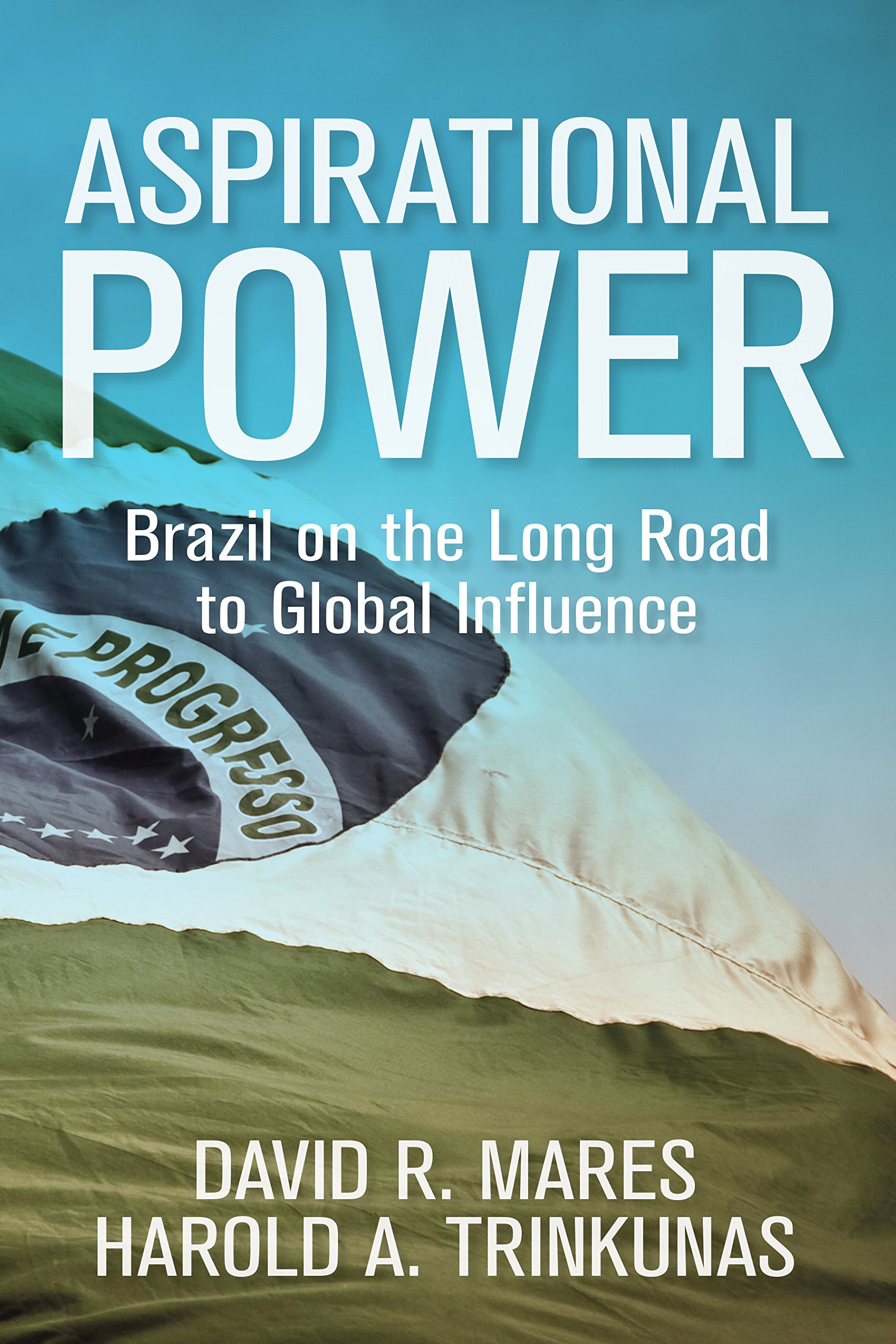
Aspirational Power: Brazil on the Long Road to Global Influence (Geopolitics in the 21st Century)
$32.01
by David R. Mares



As the largest country in South America by land mass and population, Brazil has been marked since its’ independence by a belief that it has a potential to be more than merely a very large country. Set apart from the rest of the hemisphere by culture, language and history, Brazil has also been viewed by its neighbors as a potential great power, and at times, a threat. But even though domestic aspirations and foreign perceptions have held out the prospect for Brazil becoming a major power, the country has lacked the capabilities particularly on the military and economic dimensions to pursue a traditional path to greatness. Aspirational Power examines Brazil as a rising power. It explains Brazil’s predilection for soft power through a historical analysis of Brazil’s three previous attempts to achieve major power status, each of which shaped its present strategy. Though Brazil’s efforts to rise have fallen short it will continue to try to overcome the obstacles to its rise, whether those obstacles are domestic or international. “Choice Reviews “Mares and Trinkunas have produced an insightful and highly readable overview of Brazil's foreign relations. Doubly framed against Brazil's specific aspirations (the country is neither a rule maker nor a rule taker, but a rule shaper) and the dilemmas facing all emerging powers in the 21st century, the book successfully links together both the foundational myths of Brazilian foreign policy and the specific objectives that drive it today. In equal parts accessible and sophisticated, the book displays a contextually sensitive understanding of Brazilian politics and policymakers” ―Timothy J. Power, University of Oxford Brazil has long aspired to grandeza greatnessand to take its place among the major powers that influence and shape the international order. It has served more times on the United Nations Security Council than any other country except for the permanent members, and it seeks a permanent seat of its own. Since the founding of the UN in 1945, the Brazilian military has participated in forty-six of sixty-five UN peacekeeping missions, and Brazilian officers currently lead UN operations in three countries. During the 2008 global financial crisis, Brazil&;s role in the G-20 contributed to reforming the International Monetary Fund. And together with its partners in the BRICS, Brazil has proposed alternative models for managing global order such as the New Development Bank. By history and by design, Brazil emphasizes soft power in pursuit of a more democratic international order based on sovereign equality among nations. Soft power is based on the attraction of a country&;s domestic institutions. Between 2000 and 2014, Brazil had a great story to tell: its economy grew to become the seventh largest in the world. The middle class grew by 50 percent, and poverty fell by half. Yet, in 2015, Brazil was rocked by a major corruption scandal involving the national oil company and entered its worst recession in eighty years. In 2016 its president, Dilma Rousseff, was impeached. Brazil&;s effort to consolidate its claim to great power status fell short. Aspirational Power , examines the domestic sources of Brazil&;s international influence and how it attempts to use its particular set of capabilities to influence the global order. It explains how periodic domestic crises undermine Brazil&;s aspirations to major power status, and it makes concrete recommendations on how Brazil can better develop and deploy its power to achieve its aspirations. The largest country in South America by land mass and population, Brazil has been marked since its independence by a belief that it has the potential to play a major role on the global stage. Set apart from the rest of the western hemisphere by culture, language, and history, Brazil has also been viewed by its neighbors as a potential great power and, at times, a threat. But even though domestic aspirations and foreign perceptions have held out the prospect for Brazil becoming a major power, the country has historically lacked the capabilitiesparticularly on the military and economic dimensionsto pursue a traditional path to greatness. Aspirational Power examines Brazil as an emerging power. It explains Brazil&;s present emphasis on using soft power through an analysis of Brazil&;s past attempts to achieve major power status. Though these efforts have fallen short, this book suggests that Brazil will continue to try to emerge, but that it will only succeed when its domestic institutions provide a solid and attractive foundation for the deployment of its soft power abroad. Aspirational Power concludes with concrete recommendations on how Brazil might improve its strategy, and why the great powers, including the United States, should respond positively to Brazil&;s emergence. The largest country in South America by land mass and population, Brazil has been marked since its independence by a belief that it has the potenti