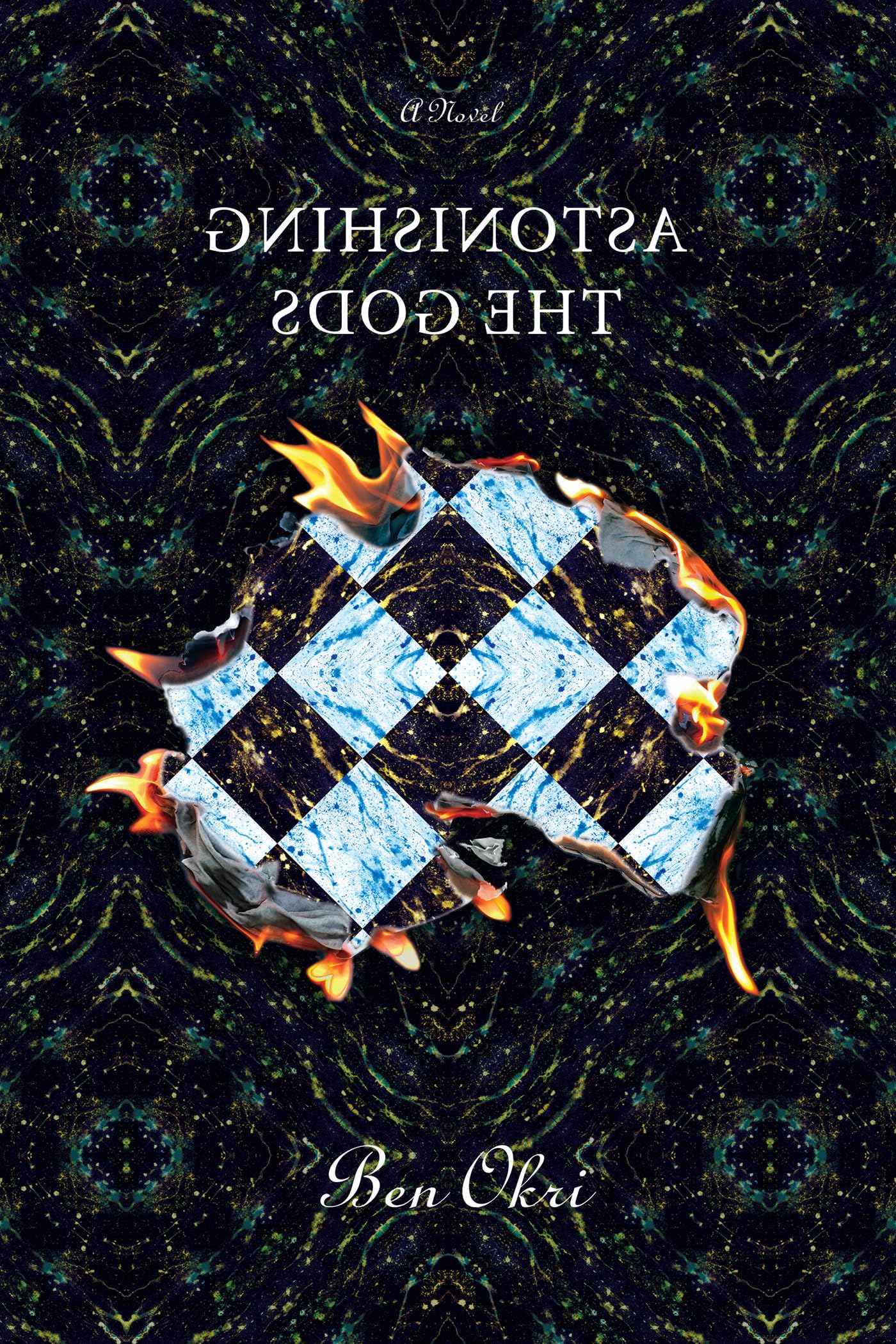



One of the BBC’s “100 Novels That Shaped Our World,” a much-needed fable that could change how we see ourselves and our reality, from the renowned Booker Prize–winning author. A young man finds himself among invisible beings who have built a world based on one principle: that we must repeat every experience until we live it fully for the first time. “Only then can we find what we didn’t seek and go where we don’t intend to go.” Ben Okri navigates the world at once as a writer, an artist, a musician, and a philosopher—in the process, he challenges our craving for the visual and the concrete. We read him not only with our eyes but also with our senses, our intuition. As his story unfolds we begin to inhabit the ineffable land that he creates, our imagination led to a place where what we once thought were fundamental truths are turned magically on their heads. In the difficult times we live in, in an age decimated by injustice and inequality, Okri brings unexpected insights as meaningful as they are transformative. “Maybe what seeks us is better than what we seek.” “Amazing. I think this is as close as you can get to reliving the experience of a bedtime story.” — The Guardian “Illuminating…The episodic structure and beautiful poetic language perfectly complement the hero’s journey. The narrative’s kaleidoscopic nature has a transformative effect on the reader, making it deserving of a cult classic status.” — Publishers Weekly “This slim but heady allegorical fable…will doubtless appeal to many of the readers who have made Paulo Coelho’s The Alchemist a perennial success…a sumptuous new wisdom text.” — Library Journal “Colorful and detailed yet somehow ethereal…a pithy allegorical novel about the power of the unseen.” — Foreword Reviews “A modern-day classic.” — Evening Standard “Beautiful. A new creation myth.” — Daily Telegraph “I just finished Ben Okri’s Astonishing the Gods and, quite frankly, I was awed. What a strange, unique, and enchanting book it is.” —Nick Cave, singer, songwriter, and coauthor of Faith, Hope and Carnage Ben Okri is a playwright, poet, novelist, essayist, short-story writer, anthologist, and aphorist. He has also written film scripts. His works have won numerous national and international prizes, including the Booker Prize for Fiction. His books include the eco-fable Every Leaf a Hallelujah , the play Changing Destiny , the genre-bending climate fiction Tiger Work , the poetry collections A Fire in My Head and Mental Fight , and the novels Astonishing the Gods , The Last Gift of the Master Artists , and Dangerous Love . In 2023 he received a knighthood for services to literature. One It is better to be invisible. His life was better when he was invisible, but he didn’t know it at the time. He was born invisible. His mother was invisible too, and that was why she could see him. His people lived contented lives, working on the farms, under the familiar sunlight. Their lives stretched back into the invisible centuries and all that had come down from those differently colored ages were legends and rich traditions, unwritten and therefore remembered. They were remembered because they were lived. He grew up without contradiction in the sunlight of the unwritten ages, and as a boy he dreamt of becoming a shepherd. He was sent to school, where he learnt strange notions, odd alphabets, and where he discovered that time can be written down in words. It was in books that he first learnt of his invisibility. He searched for himself and his people in all the history books he read and discovered to his youthful astonishment that he didn’t exist. This troubled him so much that he resolved, as soon as he was old enough, to leave his land and find the people who did exist, to see what they looked like. He kept this discovery of his recent invisibility to himself and soon forgot his dream of becoming a shepherd. But in the end he didn’t have to wait till he was old enough. One night when the darkness was such that it confirmed his invisibility in the universe, he fled from home, ran to the nearest port, and stole off across the emerald sea. He traveled for seven years. He did all the jobs that came his way. He learnt many languages. He learnt many kinds of silences. He kept his mouth shut as much as possible and listened to all the things that men and nature had to say. He traveled many seas and saw many cities and witnessed many kinds of evil that can sprout from the hearts of men. He traveled the seas, saying little, and when anyone asked him why he journeyed and what his destination was, he always gave two answers. One answer was for the ear of his questioner. The second answer was for his own heart. The first answer went like this: “I don’t know why I am traveling. I don’t know where I am going.” And the second answer went like this: “I am traveling to know why I am invisible. My quest is for the secret of visibility.” Those who w