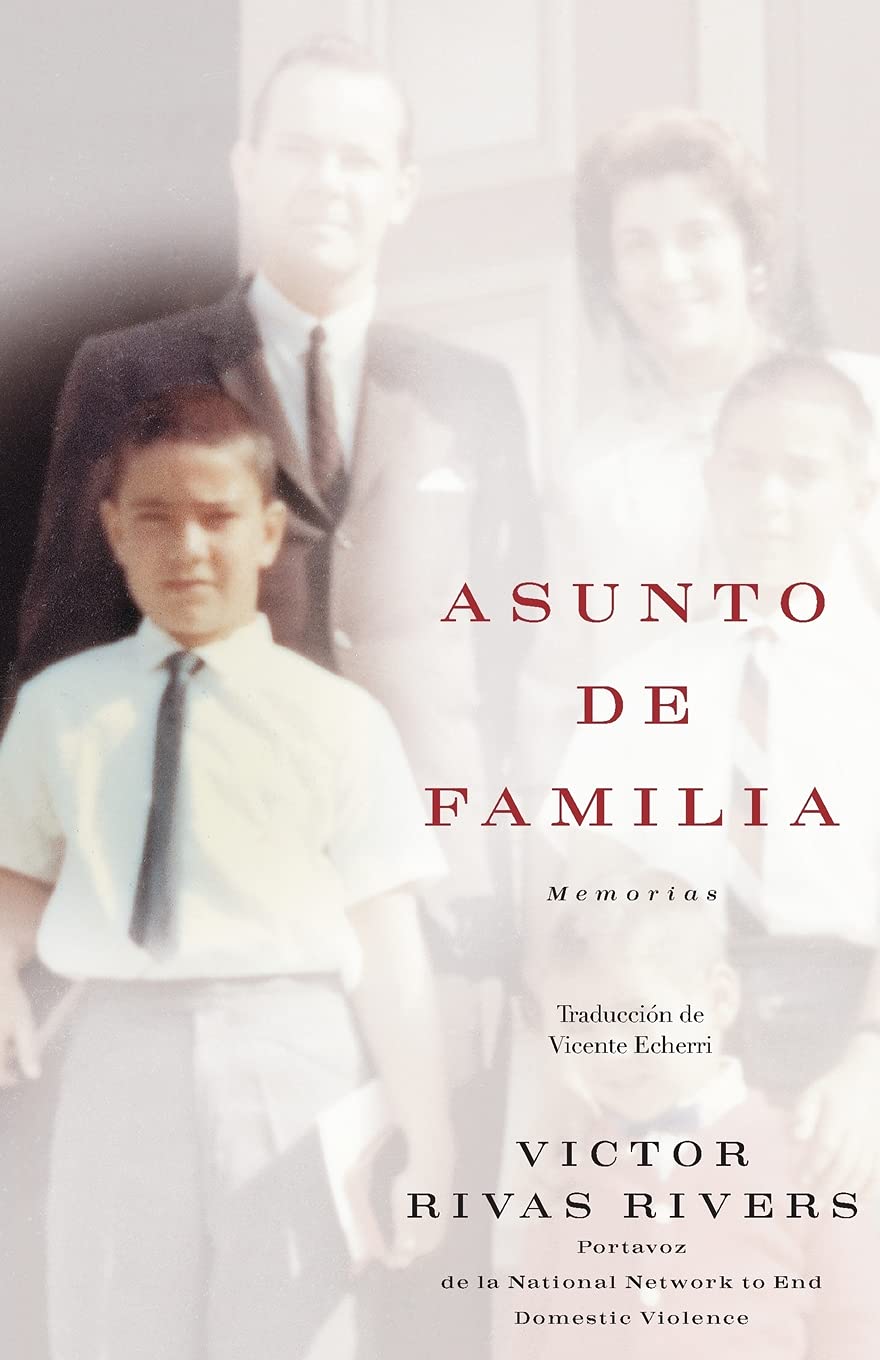
Asunto de familia (A Private Family Matter): Memorias (A Memoir)
$25.99
by Victor Rivas Rivers



Éste es un relato acerca de cómo el amor me salvó, en un momento en que la mayoría de la gente me daba por perdido. Así comienza Víctor Rivas Rivers esta magnífica crónica en que narra su fuga desde la zona de guerra de la violencia doméstica -- considerada con demasiada frecuencia como "un asunto de familia" -- y su trayectoria hacia la independencia, la recuperación y la renovación. En Asunto de familia, Víctor recuerda su época de joven iracundo que vivía bajo la tiranía y la cólera de su padre. El tempestuoso temperamento de su padre, Antonio Rivas García Rubio, a quien por su carácter apodaban El Ciclón, no sólo lo llevó a golpear a su esposa, sino a maltratar -- y finalmente a secuestrar -- a sus propios hijos. La manera en que Víctor logró obtener ayuda para su familia y una sanción legal contra su padre, así como sobreponerse a sus propios demonios, aprender a amarse a sí mismo y llegar a compartir su experiencia con otras víctimas y sobrevivientes de la violencia doméstica, constituye la esencia de esta obra profunda y conmovedora. "Una historia repleta de integridad, valor y humanidad: todas las cosas que representa Rivers." -- Andy García "Cautivante, poderoso y conmovedor...[este] auténtico relato de cómo un niño fue criado por una aldea de individuos tiernos y valerosos...nos inspira a todos...Magistralmente escrito." -- Melanie Griffith y Antonio Banderas "La contribución de Víctor al movimiento para erradicar la violencia doméstica es inigualable...Él es un ejemplo para los hombres y un rayo de esperanza para todas las víctimas de abusos." -- Lynn Rosenthal, directora ejecutiva de la National Network to End Domestic Violenc Victor Rivas Rivers , a veteran actor who has starred in more than two dozen films (including The Mask of Zorro, The Distinguished Gentleman , and Blood In, Blood Out ), is the spokesperson for the National Network to End Domestic Violence. He lives in Los Angeles with his wife and son. Chapter 1:sancti spíritus (1955-1957) The multitude of palm trees of various forms, the highest and most beautiful I have ever met with, and an infinity of great and green trees; the birds in rich plumage and the verdure of the fields; render this country, most serene princes, of such marvellous beauty that it surpasses all others in charms and graces as the day doth the night in lustre. I have been so overwhelmed at the sight of so much beauty that I have not known how to relate it. -- Christopher Columbus, on Cuba, to King Ferdinand and Queen Isabella, 1492 Olga Angelica Lopez Ibarra was born prematurely on September 21, 1929, at 3 P.M. in a hospital in Havana. She was the size of a small Coca-Cola bottle, all of four pounds. With no neonatal units or incubators to nurture her into life, she began her existence much as she would live it -- in struggle. My mother, to me, was the embodiment of Cuba. She was a natural beauty, dark, exotic, proud, intelligent, opinionated, ironic with a sense of tragicomedy, but unspoiled; then later, like our island itself, conquered, exploited, oppressed. My father did his best to obliterate her; he broke her into many pieces, but she refused to be completely vanquished. She had native and Spaniard coloring but was a mix of other ethnicities, like Cuba, my homeland. Many of her memories and experiences were passed on in my cells, my DNA, or were told in fragments over the years, usually with her back to me as she bent over our various kitchen counters preparing countless numbers of meals, often, if Papi wasn't around, while her beloved Cuban music played on scratchy records or obscure radio stations. In public, my mother danced with an abandon and joy -- whether slow or fast, son or mambo -- that seemed to belong to someone else, but at home she wasn't allowed to dance, as though it might rouse her to counterrevolution against Papi. But music or not, she moved with a sensual grace to some internal Cuban beat, its core from African culture, with the rhythm of the claves -- two thick wooden sticks about a foot long -- keeping time. My mother had another distinctive quality that she kept secret. She had the gift of sight. She could read omens and feel the presence of ghosts. Her energy produced heat and caused still water left in drinking glasses to bubble up as in a boiling cauldron. She had innate healing powers that, had she been free to direct her own destiny, might have led her to become a licensed medical professional. These powers may have been strengthened in her earliest days when she struggled between life and death, "all eyes and hair" as her parents described her at birth. Pero con el ayudo de Dios -- but with the help of God (Mami's favorite phrase) -- baby Olga survived and was soon allowed to go home. Her father, a handsome, stern policeman by the name of Jose Manuel Lopez -- known as Manolo -- carried his firstborn out of the hospital in one of the oversized pockets of his suit jacket. In their modest