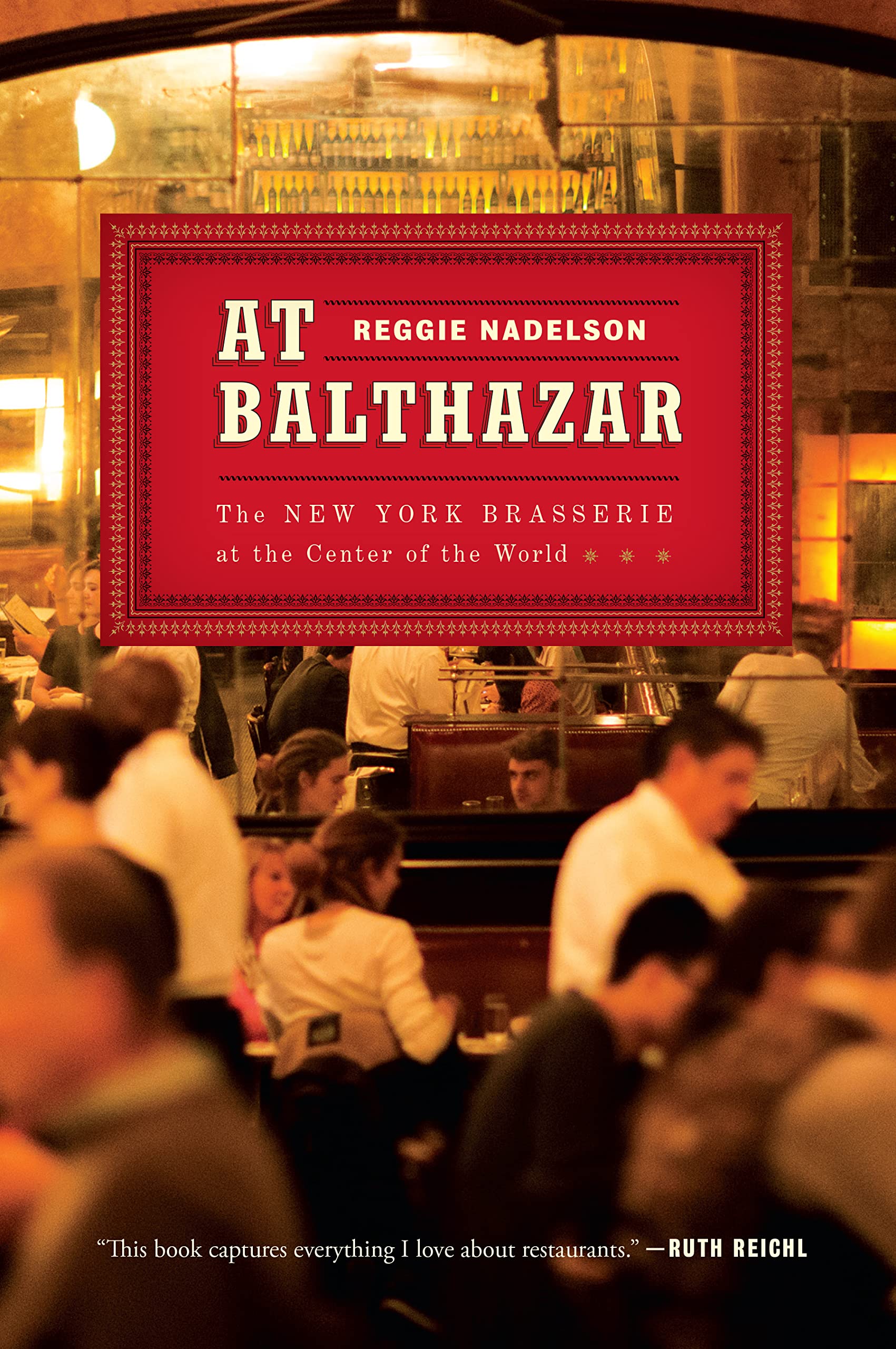



Explore the iconic and beloved restaurant Balthazar in this “beautiful New York love story. Nobody could have written it better than Reggie Nadelson, who captures the tastes and smells, the glamour, nitty-gritty, and the theater of the restaurant and of the city itself” (Nigella Lawson, award-winning chef and author). Balthazar has been a staple in the New York restaurant scene since it opened its doors in 1997. Frequented by celebrities and locals alike, it has evolved from an intimate French brasserie to a legendary New York institution, now more successful than ever as it serves about a half a million meals a year. MK Fisher Award finalist Reggie Nadelson was granted unrestricted access to owner and brilliant restaurateur Keith McNally, the restaurant, the kitchens, the present and past staff, the restaurant’s archives, and more. She follows the twenty-four-hour cycle of the SoHo hotspot and explores the history of both French brasseries and downtown Manhattan, weaving together a savory tale of design, economics, celebrity, and—of course—delicious food. Featuring stunning color photographs and ten new recipes from Balthazar chef Shane McBride, this beautifully designed book celebrates the rich history and continued success of this renowned restaurant. As New York Times bestselling author and chef Ruth Reichl insists, “There’s never been a restaurant like Balthazar and never a book just like this.” Reggie Nadelson lives in New York and has written for Travel & Leisure , Vogue , and Conde Nast Traveller . She has had columns at The Guardian , The Financial Times , and Departures , where she wrote a series about cooking with the great chefs, such as Heston Blumenthal and Ruthie Rogers. Her Departures piece about fish in Hawaii was a finalist for the MFK Fisher Prize at the James Beard Awards. Her series of mysteries have been published in a dozen countries, and her nonfiction book, Comrade Rockstar was made into a documentary by the BBC and bought by Tom Hanks for a feature film. Find out more from ReggieNadelson.com. At Balthazar Breakfast at Balthazar When I was a kid growing up in Greenwich Village in the 1950s, we sometimes ate out at Longchamps on Twelfth Street and Fifth Avenue, a couple of blocks from where we lived. I loved eating out. I loved restaurants. Longchamps was pink, it had natty Art Deco furniture, and it was French. There was French onion soup au gratin and a maître d’ in a tux. His name was Mr. Naigish. There were years when we had Thanksgiving at Longchamps. This gave my father quite a bit of pleasure. He invited the family. He paid. My pop, who wore bow ties and drank martinis, sometimes ordered wine as well. I’m sure it both impressed and pissed off his brothers—my uncles were rye-drinking kind of men, rye in the old sense, not rye made by hipsters in little hats—who had to trek in from Flatbush, from ancestral Brooklyn. What’s more, Mr. Naigish addressed my parents by name. This was my first inkling that to be a regular, to be known at a neighborhood restaurant, even regarded as friends, made you special. Over at the Steak Joint on Greenwich Avenue, Dan Stampler called my parents Sally and Sam. This was the thing I was crazy about, this feeling you were an insider in a singular little society. I was a fat, smart, nosy little girl, and God knows I liked the food, but I loved the people: the uptown crowd in suits and minks, slumming in the Village; local families out for spaghetti and meatballs; the artists, writers, and musicians arguing at coffee shops over immense slabs of pie and coffee. Even more interesting were the people who worked at restaurants, out front or behind the scenes: the singing waiters at Asti’s on Twelfth Street; the occasional real Frenchman at Charles French Restaurant; the one-armed waiter at Frank’s Pizzeria on Bleecker Street, his empty shirt sleeve pinned back, who tossed the pies with the brio of a juggler on The Ed Sullivan Show. Then there were the waitresses at Schrafft’s where my mother took me on special occasions for ham and Swiss on toasted cheese bread served by these plain Irish girls in hairnets and black uniforms. Some of them had been hired just off the boats, my mother said. It sounded like a kind of spooky religious order. I longed to ask about their lives, these women far away from home. Where did they live? Who were they? At the Coach House—it was located in an actual old coaching house on Waverly Place—black waiters in white gloves served dinner. The idea was that you were dining on all-American food in some theme park little version of another age, perhaps down south. It was unusual, too, in a city where if you went out to eat you generally ate French or Italian or maybe blintzes at Ratner’s. The fried chicken, the corn bread made in special black iron molds, and the black bean soup were all delicious. The owner, Mr. Leon Lianides, was imposing and, unless you were quite famous, a little intimidating.