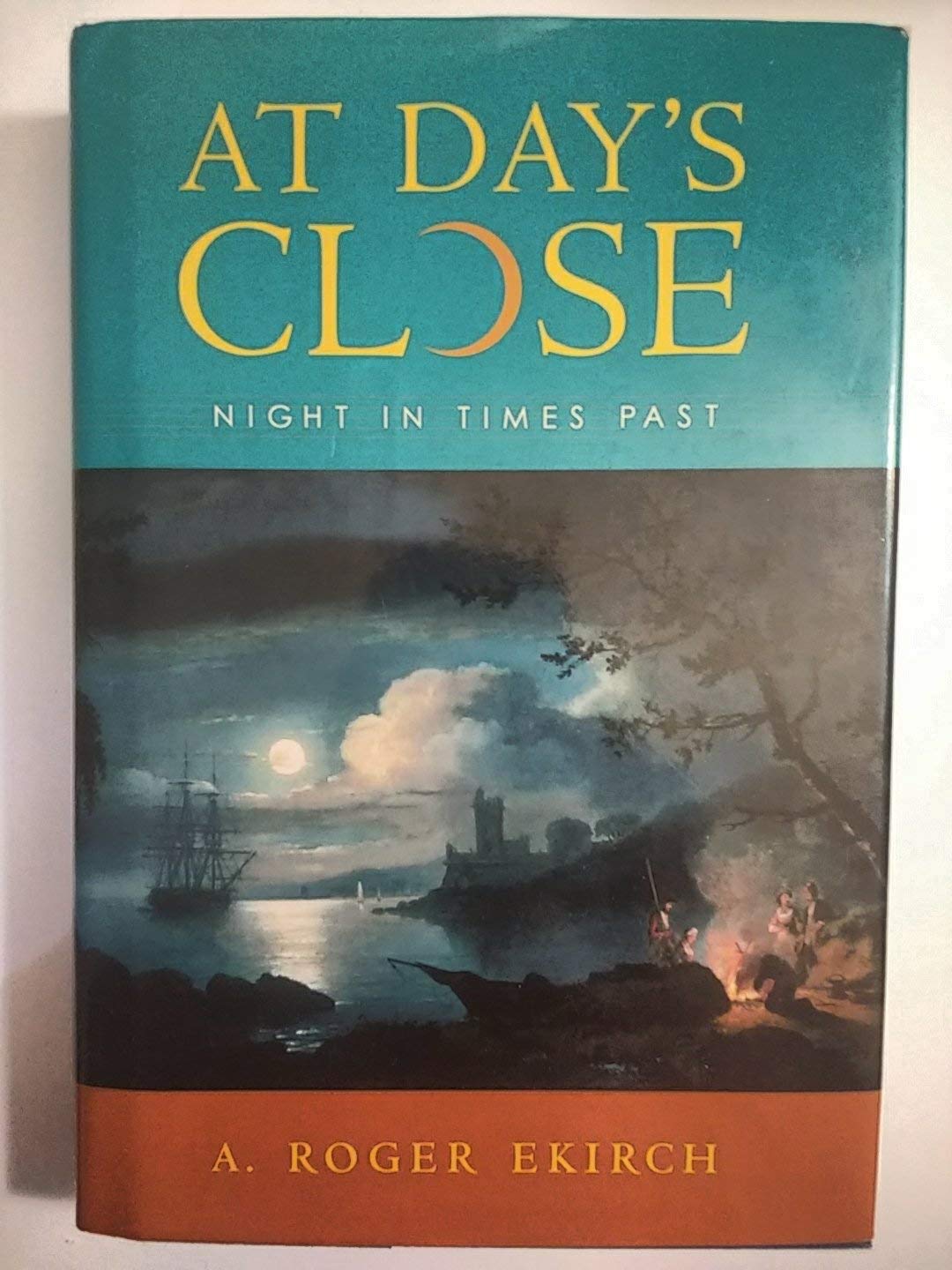



A portrait of how people lived in the pre-industrial age describes how a lack of electric lighting separated daytime and evening into more contrasting worlds, explaining how superstition, work, fire, crime, religion, slavery, and other factors were different before the advent of electric lighting. 15,000 first printing. *Starred Review* Historian Ekirch re-creates the ambience of the European nocturnal world prior to the advent of artificial lighting in a fresh and thought-provoking cultural inquiry. Drawing on works of literature, letters, diaries, and criminal court documents, and maintaining throughout an infectious sense of wonder, Ekirch ignites the reader's imagination with example-rich descriptions of humankind's "age-old fear of darkness" and belief that the night is the domain of demons, witches, and ghosts. Turning to science to document the fact that we are more prone to illness, accidents, and death at night, Ekrich then lists a plague of former nighttime hazards, including spooked horses, emptied chamber pots, fire, and the dastardly crimes of the time. He compares the rural night with the city night, night as endured by the poor and enjoyed by the wealthy, and discusses sleep habits, romance, storytelling, dreams, and the liberation under the stars of the otherwise oppressed and maligned, from slaves to gays and lesbians. As Ekirch so vividly evokes the old magic of true night, he casts a skeptical eye on our brightly lit, 24/7 life, in which the heavens are obscured and we sit enraptured before computer and TV screens, oblivious to nature. Donna Seaman Copyright © American Library Association. All rights reserved A can't-put-down volume
.Ekirch succeeds marvelously
research shines in every paragraph. -- Milwaukee Journal Sentinel A triumph of social history. Almost every page contains something to surprise the reader. -- Damian Thompson, Mail on Sunday An enthralling anthropology of the shadow realms of Western Europe from the late Middle Ages to the Industrial Revolution. -- John Leonard, Harpers Consistently entertaining
.an elegy for times past. -- Columbus Dispatch Ekirch paints his picture with affection as well as learning
[an] extraordinary book. -- Jonathan Ree, Evening Standard Engrossing, leisurely paced and richly researched
.A rich weave of citation and archival evidence. -- Publishers Weekly To a remarkable degree, he has reclaimed that portion of the circadian cycle which historians have traditionally neglected. -- Arthur Krystal, The New Yorker Wise and compendious
Ekirch's command of the material is impressive
It truly is a labour of love. -- Ian Pindar, The Guardian [A] richly researched and entertaining study....Perfect reading for insomniacs and star-gazers alike. -- Jonathan Spence, Yale University [Ekirch] carries us into the night, both literally and metaphorically
[a] truly valuable book. -- Decatur Daily A. Roger Ekirch is professor of history at Virginia Tech in Blacksburg. He and his family make their home on Sugarloaf Mountain outside Roanoke, Virginia. The world in which we live is, as the cliché has it, 24/7. Thanks mainly to artificial illumination, which A. Roger Ekirch correctly calls "the greatest symbol of modern progress," nothing ever has to stop. Businesses run 'round the clock, late shows featuring one comic or another keep people happily awake into the late hours, trucks pick up shipments and make deliveries. In Spain and Latin America, people sit down to dinner at 10 p.m. and stay at table into the early morning. Criminals still operate under cover of darkness, but there's plenty of street light from which they must flee, and law-enforcement officers have sophisticated equipment for spotlighting them. It's been thus for so many generations that we take it for granted: Night is when we go out, when we entertain, when we read, when -- of course -- we sleep. Yet in the long span of human history this is a relatively recent development. Not until "the period from 1730 to 1830," Ekirch argues in this interesting, original book, did the Western world undergo "such a sustained assault upon the nocturnal realm," and not until the 20th century and its near-universal use of artificial light did nighttime become what we know now. So At Day's Close is uncommonly welcome, for it covers ground that just about all others have ignored: "This book sets out to explore the history of nighttime in Western society before the advent of the Industrial Revolution. My chief interest lies in the way of life people fashioned after dark in the face of both real and supernatural perils. Notwithstanding major studies on crime and witchcraft, night, in its own right, has received scant attention, principally due to the longstanding presumption that little else of consequence transpired. 'No occupation but sleepe, feed, and fart,' to quote the Jacobean poet Thomas Middleton, might best express this traditional mindset. . . . Nighttime has remain