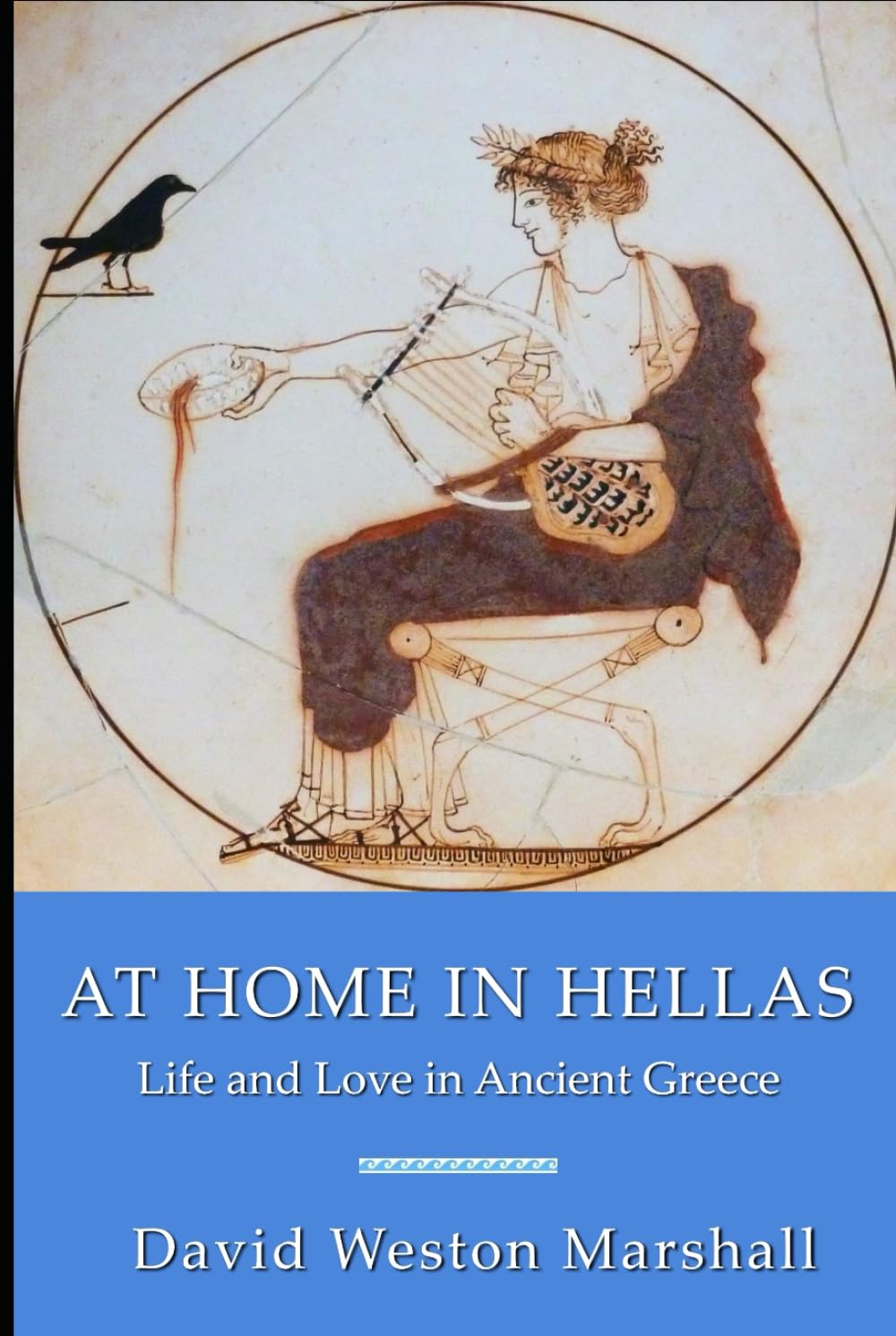



WAKE UP IN THE WORLD OF ANCIENT GREECE Walk with Hellenic men and women, young and old, through the trials and triumphs of daily life. Work with them to shepherd the flocks, farm the fields, craft the goods, trade the wares, and sail their ships to distant shores. Watch them prosper in times of peace and fight in furious wars. Witness their reverence for the natural world, celestial mores, and ancient wisdom that guides them to the height of Classical Culture. FEEL THE VITALITY—SAVOR THE WISDOM—EMBRACE THE IMPASSIONED SPIRIT Our modern world is well-aware of the astonishing impact of ancient Greek culture on western civilization, and the proliferation of that culture around the globe. Hellenic contributions are apparent in our social and economic systems, and in our political experimentations ranging from democracy to dictatorship. Hellenes absorbed eastern lore and formed the foundations of our science, philosophy, spirituality, ethics, literature, art, architecture, music, theater, and athletics. Their mythology continues to infuse our popular culture. The material items they left behind form the core of our museums. Even our daily vocabulary, with words like museum from the Greek word muse , reveals our indebtedness to the world they created three thousand years ago. Every school child knows the names of Achilles, Odysseus, Helen, Homer, Sophocles, Socrates, Plato, Aristotle, and other renowned persons of that vibrant civilization. But few know about the daily lives of the common people who worked and played, hoped and feared, lived and loved, much as we do today. Abundant information is available in the form of ancient literature and archeological evidence. But modern insight into lifeways is lacking. The purpose of At Home in Hellas is to reveal the daily lives of the ancient Greeks by presenting a wealth of factual information in the framework of a lively fictional narrative. Their story emerges in the context of actual historical and cultural settings, and focuses on Athens and Attica during the Hellenic (Classical) Era, 495-350 BC. Ancient eyewitnesses who left written records are quoted in the text to provide the reader with an authentic feel for Hellenic thought and expression. The narrative also features the tales of the forty-eight classical constellations, compiled from literature that spans nine hundred years from Homer (c. 750 BC) to Claudius Ptolemy (c. 150 AD). These timeless tales have captured the human imagination from prehistory to the present, and provide a compendium of Greek mythology, practical astronomy, philosophical speculation on the cosmos, and the fundamental moral beliefs of the Hellenes. Readers who wish to dig deeper into the true historical context of At Home in Hellas may use the maps, illustrations, endnotes, works cited, glossary, timeline, appendices, and index. About the Author: David W. Marshall, PhD, is a historian and Professor Emeritus at Texas Tech University. For four decades, he has researched the history of Archaic and Classical Greece in archives and museums throughout Europe and North America, and at more than two hundred Hellenic archeological and historic sites in Greece and surrounding countries. His broader studies of ancient and primitive cultures have led him to locations in seventy-seven countries and seven continents. In addition to academic publications, he is the author of Mountain Man: John Colter, the Lewis & Clark Expedition, and the Call of the American West (W.W. Norton, 2017), and Ancient Skies: Constellation Mythology of the Greeks (W.W. Norton, 2018).