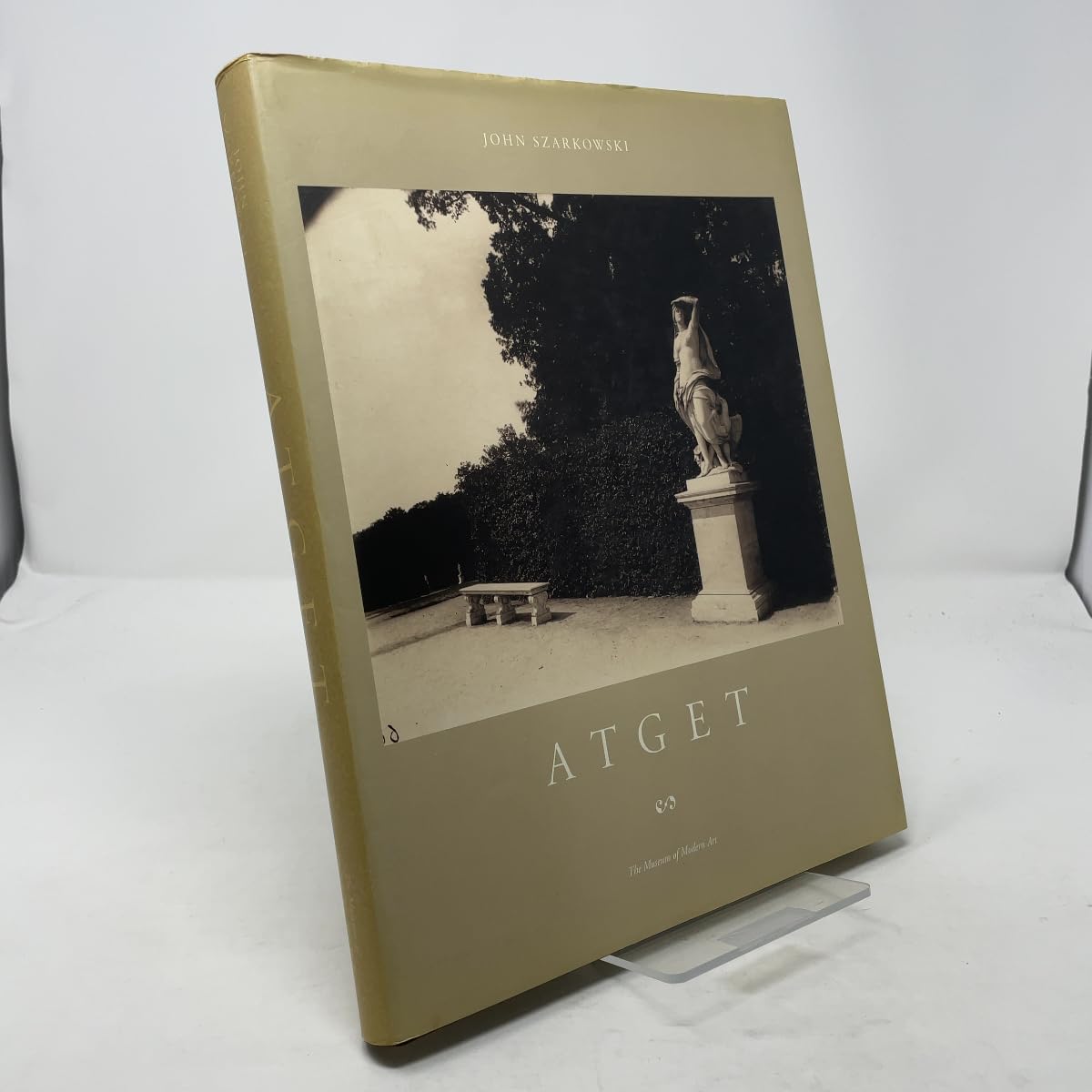



Eugène Atget (1857–1927) devoted more than 30 years of his life to a rigorous documentation of Paris, its environs and the French countryside, through more than 8,000 photographs. In the process, he created an oeuvre that brilliantly delineates the richness, complexity and character of his native culture. Atget’s uncompromising eye recorded the picturesque villages and landscape of France; the storied chateaux and the romantic parks and gardens of the ancien régime of Louis XIV; and, in post-Haussmann Paris, architectural details, private courtyards, shop windows, curious buildings and streets, and the city’s various denizens. Atget died almost unknown in 1927, although groups of his prints were included in various Paris archives. In 1925 Berenice Abbott discovered his work, and after his death she arranged to buy his archives with the help of art dealer Julien Levy; in 1968 that collection was purchased by The Museum of Modern Art. Originally published in 2000 and long unavailable, this classic, superbly produced volume surveys the collection through 100 carefully selected photographs. John Szarkowski, head of MoMA’s Department of Photography from 1962 to 1991, explores the unique sensibilities that made Atget one of the greatest artists of the twentieth century and a vital influence on the development of modern and contemporary photography. An introductory text and commentaries on Atget’s photographs form an extended essay on the remarkable visual intelligence displayed in these subtle, sometimes enigmatic photographs. Eug ne Atget was a commercial photographer who spent 30 years producing more than 8000 pictures of Paris and its surrounding countryside before his death in 1927, when American photographer Berenice Abbott purchased his archives. Though he was unknown during his lifetime, his place in photography continues to grow; at times, he seems to be the Gallic brother of Walker Evans. Was Atget's aim to produce a kind of travel guide to a part of France he revered or to capture the elegance of places, courtyards, and gardens for wealthy clients? We will never know, but both of these books sum up the mystery of his intent and the serenity of his camera eye by describing his work as "enigmatic." Szarkowski, who may be our best navigator through images of lightDhe was director of the department of photography at MoMA from 1962 to 1991Dcarefully gathers 100 photographs, taking us through a sepia-toned era where Atget's silence abounds as he lovingly describes what the photographer captured. The Getty book, part of the museum's "In Focus" series, is less ambitious and might serve as a small but representative introduction to the special legacy of Atget. Useful descriptions accompanying each picture will help students, but the black-and-white reproduction and the two-column text make the images seem colder and the book less inviting than Szarkowski's sepia and margin-to-margin text. Where budgets allow, Szarkowski's approach to Atget is recommended, with the Getty version a second choice.DDavid Bryant, New Canaan Lib., CT Copyright 2000 Reed Business Information, Inc. Used Book in Good Condition