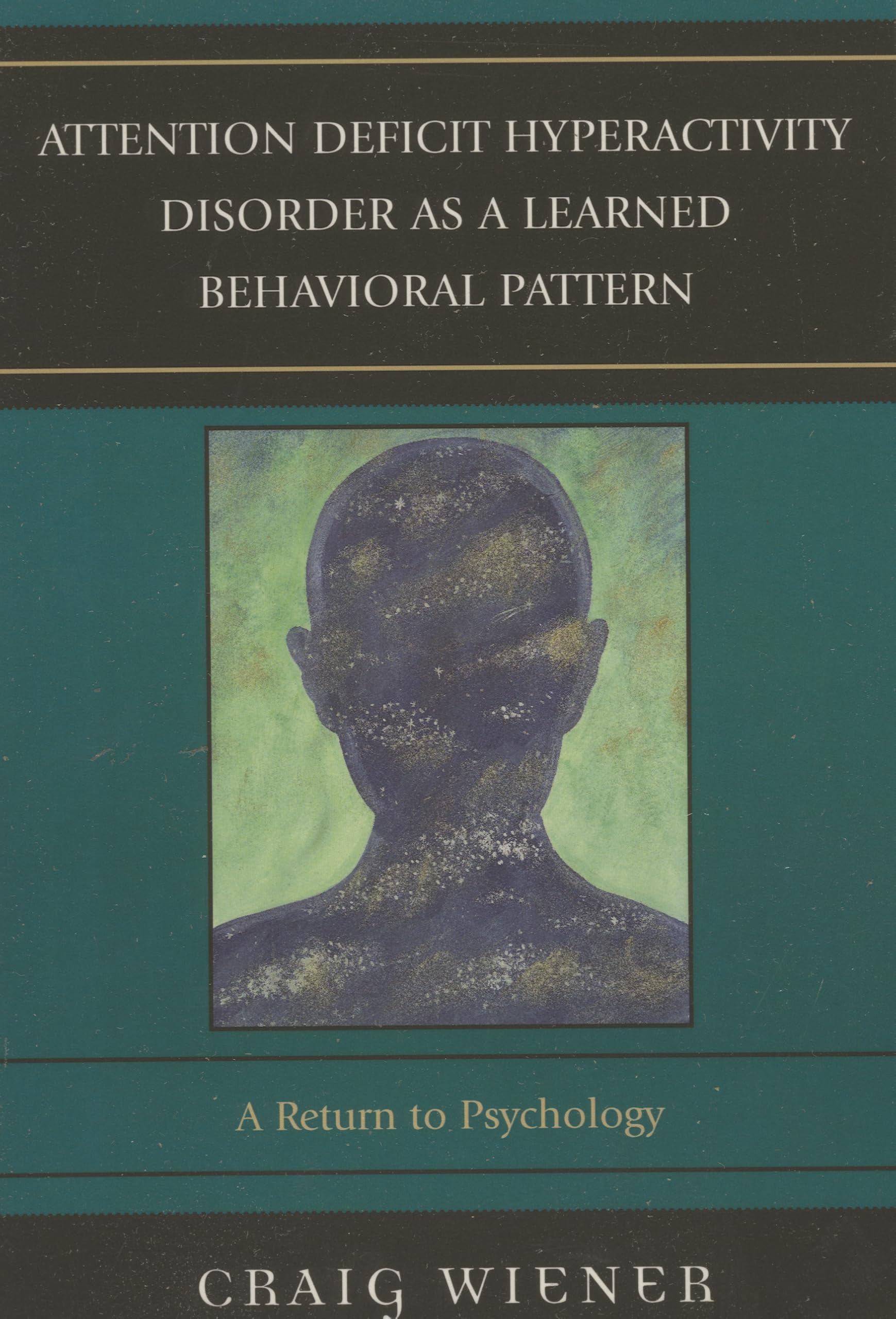
Attention Deficit Hyperactivity Disorder as a Learned Behavioral Pattern: A Return to Psychology
$54.99
by Craig Wiener



Attention Deficit Hyperactivity Disorder (ADHD) has become the province of geneticists, neuropsychologists, and physicians. Coursework has been designed to inform students, practitioners, and academicians about the neurobiological causes of the behaviors, and the necessity to medicate and stringently manage those who have been inflicted. While this general attitude may continue to prosper, there is, meanwhile, increasing concern that we are positing the existence of a medical problem when there are no biological markers or dysfunctions that reliably correspond with the behavioral criteria. Attention Deficit Hyperactivity Disorder as a Learned Behavior Pattern is a point-by-point analysis of the biological determinist's position and interpretation of empirical work that is now so prevalent. In that we are telling increasing numbers of children and adults that they have this genetically caused neurobiological delay, it is vital that we more closely examine that point of view. This work familiarizes the reader with the content included in most ADHD textbooks, and brings to light the problems and contradictions evident with traditional perspective. ADHD is alternatively understood within a learning paradigm; a conceptual framework that has a long-standing tradition in the field of Psychology. The proffered challenges to biological determinism will stimulate rich discussion and counterpoint in both classroom and clinical settings, and have relevance for other diagnostic categories. A less medicinal intervention that encourages self-reliance and collaborative interacting is proposed as an alternative to address the shortcomings of traditional ADHD treatments. Craig Wiener is a licensed Psychologist and faculty member in the Department of Family Medicine and Community Health at the University of Massachusetts Medical School. He received his doctorate degree in Education from Clark University in 1979. Since that time, he has been working with hundreds of individuals diagnosed as ADHD in his private practice, and at Family Health Center of Worcester, where he has functioned as Clinical Director of Mental Health Services since 1993. This current work provides the conceptual basis for his second book: Attention Deficit Hyperactivity Disorder as a Learned Behavioral Pattern: A Less Medicinal More Self-reliant/Collaborative Intervention. Used Book in Good Condition