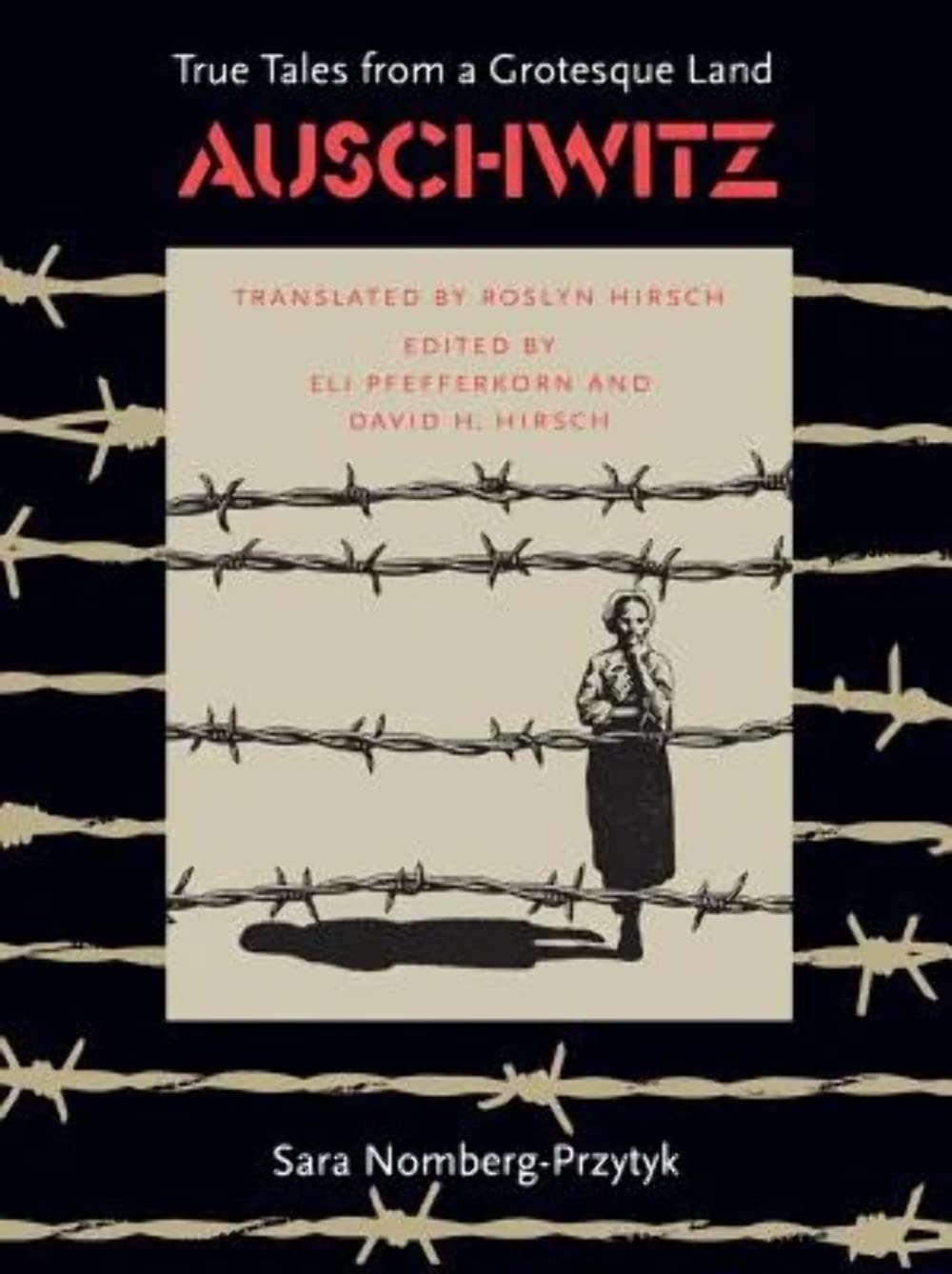



“From the moment I got to Auschwitz I was completely detached. I disconnected my heart and intellect in an act of self-defense, despair, and hopelessness.” With these words Sara Nomberg-Przytyk begins this painful and compelling account of her experiences while imprisoned for two years in the infamous death camp. Writing twenty years after her liberation, she recreates the events of a dark past which, in her own words, would have driven her mad had she tried to relive it sooner. But while she records unimaginable atrocities, she also richly describes the human compassion that stubbornly survived despite the backdrop of camp depersonalization and imminent extermination. Commemorative in spirit and artistic in form, Auschwitz convincingly portrays the paradoxes of human nature in extreme circumstances. With consummate understatement Nomberg-Przytyk describes the behavior of concentration camp inmates as she relentlessly and pitilessly examines her own motives and feelings. In this world unmitigated cruelty coexisted with nobility, rapacity with self-sacrifice, indifference with selfless compassion. This book offers a chilling view of the human drama that existed in Auschwitz. From her portraits of camp personalities, an extraordinary and horrifying profile emerges of Dr. Josef Mengele, whose medical experiments resulted in the slaughter of nearly half a million Jews. Nomberg-Przytyk’s job as an attendant in Mengle’s hospital allowed her to observe this Angel of Death firsthand and to provide us with the most complete description to date of his monstrous activities. The original Polish manuscript was discovered by Eli Pfefferkorn in 1980 in the Yad Vashem Archive in Jerusalem. Not knowing the fate of the journal’s author, Pfefferkorn spent two years searching and finally located Nomberg-Przytyk in Canada. Subsequent interviews revealed the history of the manuscript, the author’s background, and brought the journal into perspective. “The unusual attention to the details of human character that emerged under the cruel and extreme conditions of the death camp sets [this book] apart from the many important and moving books written by other survivors.”— New York Times Book Review “There is much to learn here, about Auschwitz and the range of human behavior.”―Ruth R. Wisse, McGill University “The astonishing power of this series of portraits, vignettes, and tales . . . resides in the fact that in the midst of unimaginable treachery, deceit, and cunningly contrived evil, there still existed among the prisoners life-giving remnants of decency, courage, fortitude, and hope.”—Robert McAfee Brown, author of Elie Wiesel: Messenger to All Humanity “The astonishing power of this series of portraits, vignettes, and tales . . . resides in the fact that in the midst of unimaginable treachery, deceit, and cunningly contrived evil, there still existed among the prisoners life-giving remnants of decency, courage, fortitude, and hope.”—Robert McAfee Brown, author of Elie Wiesel: Messenger to All Humanity Sara Nomberg-Przytyk died in Canada in 1990. Roslyn Hirsch and David Hirsch have also translated and edited Ghetto Kingdom: Tales of the Lodz Ghetto and, with Eli Pfefferkorn, Justyna’s Narrative , by Gusta Davidson Draenger. Auschwitz True Tales from a Grotesque Land By Przytyk Sara Nomberg University of North Carolina Press Copyright © 1986 Przytyk Sara Nomberg All right reserved. ISBN: 9780807841600 Chapter One ALIENATION I lay on the lowest bunk of a three-decker bed, wrapped in ablanket. I was not cold. I was not hungry. I had drunk enoughcold water to quench my thirst. I had gotten rid of the lice. Youmight say that I felt happy. Around me people were asleep. Aray of hope crept into my heart. Maybe here, in Stutthof, Iwould manage to last through the war. After three nights andthree days of a terrible trip in a stifling, closed freight car, withoutfood or water, we had stopped suddenly in a pine forest. A coldsnow mixed with rain was falling, but the trees were green, andthe leaves made a rustling noise. It had been two years since I lastsaw a tree. There were no trees in the ghetto and none in theBialystok prison, and maybe because of that their aroma andrustling struck me as being unusual. On the very first evening I drank water?simple, cold water?fromthe sink. But I had been dreaming about one drop for threedays and nights of travel in the closed freight car, during whichtime my tongue had dried out like a piece of leather. I kept hearinga terrible hum in my temples, and one thought kept goingthrough my mind, that I might die before having had a drink ofwater. Right after our arrival, a Polish kapo from Poznan took us tothe toilet, where there were sinks with running water. I could nottear myself away. It had a taste of heaven, and to this very day Ican still feel that taste in my mouth. We were the first Jewishtransport to arrive in Stutthof, a motley crew who shared noth