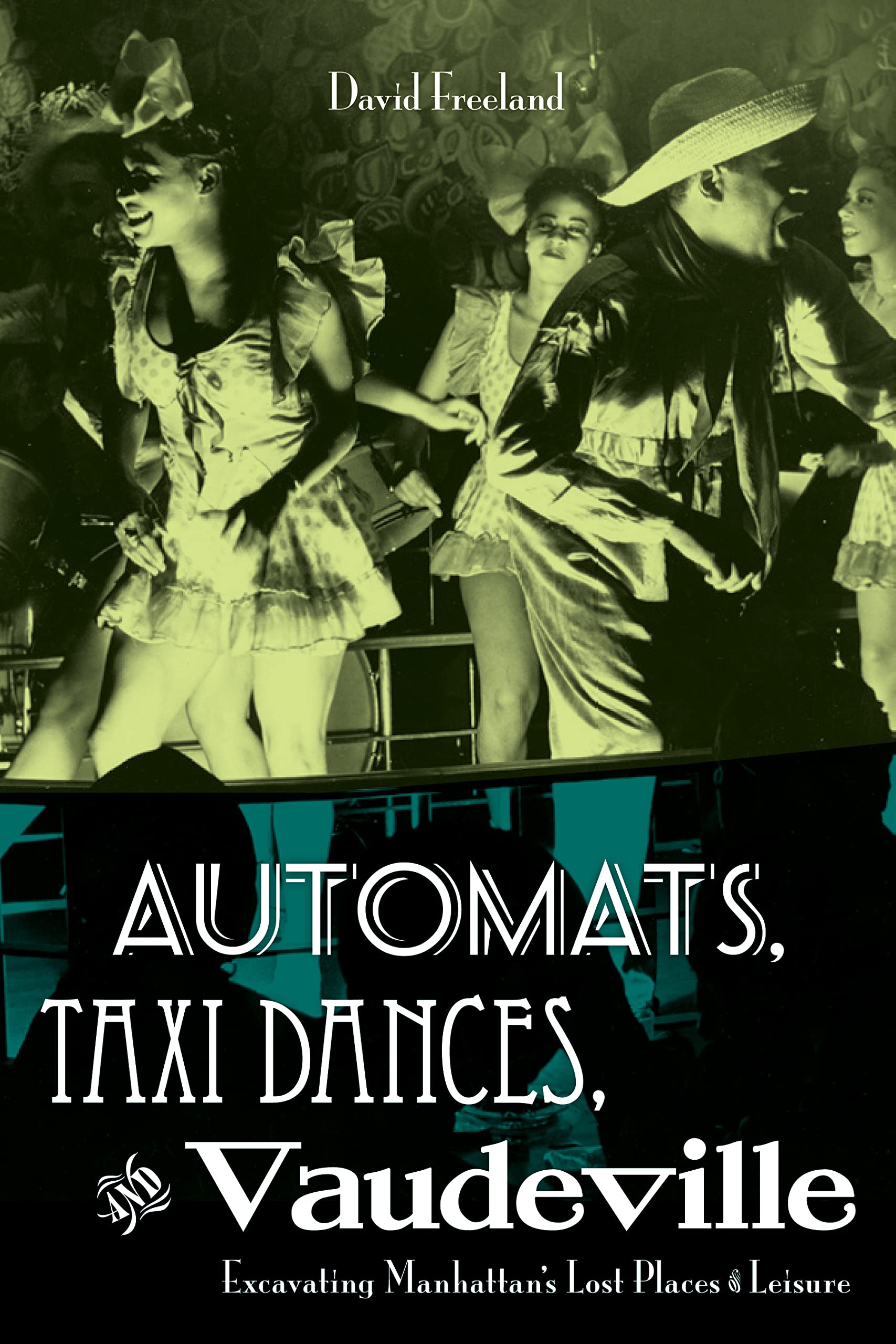
Automats, Taxi Dances, and Vaudeville: Excavating Manhattan’s Lost Places of Leisure
$97.77
by David Freeland



Winner of the Publication Award for Popular Culture and Entertainment for 2009 from the Metropolitan Chapter of the Victorian Society in America Named to Pop Matters list of the Best Books of 2009 (Non-fiction) From the lights that never go out on Broadway to its 24-hour subway system, New York City isn't called "the city that never sleeps" for nothing. Both native New Yorkers and tourists have played hard in Gotham for centuries, lindy hopping in 1930s Harlem, voguing in 1980s Chelsea, and refueling at all-night diners and bars. The slim island at the mouth of the Hudson River is packed with places of leisure and entertainment, but Manhattan's infamously fast pace of change means that many of these beautifully constructed and incredibly ornate buildings have disappeared, and with them a rich and ribald history. Yet with David Freeland as a guide, it's possible to uncover skeletons of New York's lost monuments to its nightlife. With a keen eye for architectural detail, Freeland opens doors, climbs onto rooftops, and gazes down alleyways to reveal several of the remaining hidden gems of Manhattan's nineteenth- and twentieth-century entertainment industry. From the Atlantic Garden German beer hall in present-day Chinatown to the city's first motion picture studio—Union Square's American Mutoscope and Biograph Company—to the Lincoln Theater in Harlem, Freeland situates each building within its historical and social context, bringing to life an old New York that took its diversions seriously. Freeland reminds us that the buildings that serve as architectural guideposts to yesteryear's recreations cannot be re-created—once destroyed they are gone forever. With condominiums and big box stores spreading over city blocks like wildfires, more and more of the Big Apple's legendary houses of mirth are being lost. By excavating the city's cultural history, this delightful book unearths some of the many mysteries that lurk around the corner and lets readers see the city in a whole new light. "The richness of the New York stories he presents, in elegant prose, is more abundant than the actual brick and mortar that remain. His is a guidebook to the citys history, to what it has bequeathed us, even as much may be lost." ― Library Journal "Exceptionally well-written and researched, this volume will satisfy anyone curious about New York, or the way a modern metropolis builds and rebuilds itself to reflect the times." ― Publishers Weekly, starred review "Reading this book is like going on a walking tour with a really knowledgeable guide, who knows not only what building to point out but also what stories lurk behind the front door." ― The New Leader "With an archaeologists eye and a storytellers wit [Freeland] roams from Chinatown to Harlemconcentrating on scenes of the citys nightlife a century ago during the vaudeville era but also reaching back into the nineteenth century as he summons up forgotten neighborhoods and personalities who gave old New York its raffish vigor." ― Wall Street Journal "Freelands affectionate, detail-packed tome about Manhattans forgotten pleasure centersfrom dance halls to gambling densadds a lyrical song to the cacophony. Organized geographically and for the most part chronologically, the book explores eight neighborhoodsChinatown, Chatham Square, the Bowery, the East Village, Union Square, the Tenderloin, Harlem and Times Squarevia their entertainment centers, with the added hook that physical remnants of these historical hot spots still exist." ― Time Out New York David Freeland is a writer who specializes in music history and popular culture. He is a contributing writer to the weekly New York Press , and his articles and criticism have also appeared in music magazines including American Songwriter , Relix , and Goldmine . He is the author of Ladies of Soul , a history of under-recognized female vocalists from the 1960s, and wrote the introduction, supplementary articles, and over 100 entries for Schirmer’s reference work Baker’s Biographical Dictionary of Popular Musicians . He lives in New York City.