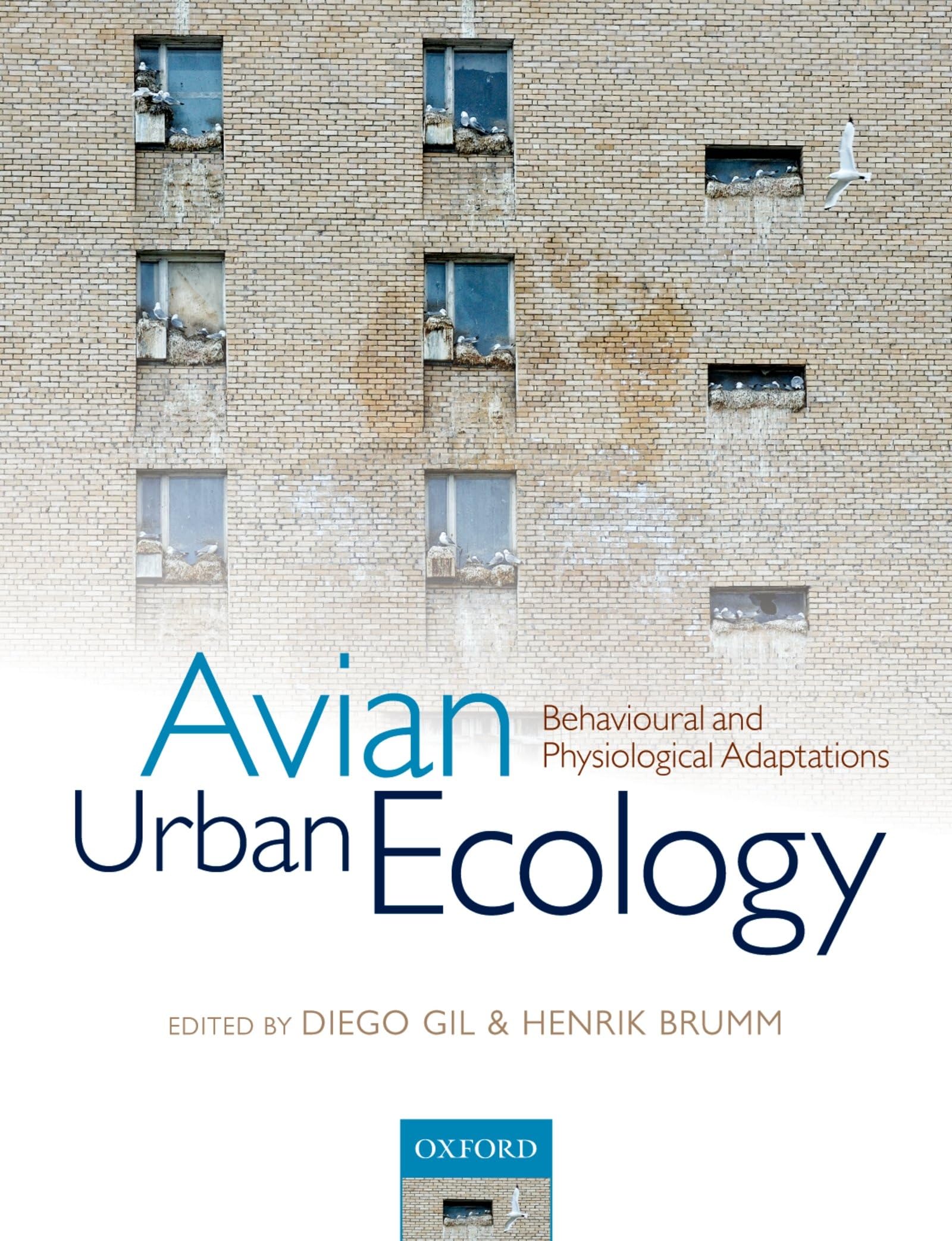



As natural habitat continues to be lost and the world steadily becomes more urbanized, biologists are increasingly studying the effect this has on wildlife. Birds are particularly good model systems since their life history, behaviour, and physiology are especially influenced by directly measurable environmental factors such as light and sound pollution. It is therefore relatively easy to compare urban individuals and populations with their rural counterparts. This accessible text focuses on the behavioural and physiological mechanisms which facilitate adaptation and on the evolutionary process that ensues. It discusses topics such as acoustics, reproductive cues, disease, and artificial feeding, and includes a series of case studies illustrating cutting edge research on these areas. Avian Urban Ecology is suitable for professional avian biologists and ornithologists as well as graduate students of avian ecology, evolution, and conservation. It will also be of relevance and use to a more general audience of urban ecologists and conservation biologists. "The information presented here is high in factual quality, and accessible to a reader with a broad background. ... This is a useful addition to the urban ecologist's library and also to those with a broader interest base." -- Ibis "This book will appeal to students in search of a challenge, and practitioners will learn much too, especially from the case studies." -- British Ecological Society Bulletin "Graduate students and professionals seeking to study urban ecosystems should read this book, consultants and researchers working in not-for-profit conservation organizations should buy it, and university libraries need to find a place on their shelves for this volume." -- The Condor: Ornithological Applications "An excellent resource for undergraduate- and graduate-level students looking for an introduction to the current status of urban ecology knowledge and future research directions. The authoritative and extensive coverage of many topics related to behavioural and physiological adaptations of birds in urban environments can also provide a valuable reference text for established urban ecology researchers." -- Austral Ecology Adopts an evolutionary framework to explore how pre-existing differences in life history, behaviour, and physiology of birds may determine the course of their adaptation to urban habitats. Diego Gil, Departamento de Ecologia Evolutiva, Museo Nacional de Ciencias Naturales ,Henrik Brumm, Max-Planck Institute for Ornithology, Communication and Social Behaviour Group Diego Gil is a senior scientist at the Spanish Research Council (CSIC), and he is based at the Museo Nacional de Ciencias Naturales in Madrid. His main interests are the study of bird song and the transmission of hormones in avian eggs. He combines an evolutionary ecology perspective with the study of the proximal physiological mechanisms that underpin evolutionary adaptations. He has published more than 50 research articles, and has been editor of Animal Behaviour. Henrik Brumm heads a research group at the Max Planck Institute for Ornithology in Seewiesen, Germany. He is a former Editor of Behaviour and an Editor of Behavioral Ecology and Sociobiology In 2005, he was appointed as a fellow at the Institute for Advanced Study Berlin. He has been studying bird behaviour and ecology in many parts of the world and published over 50 articles and scientific papers.