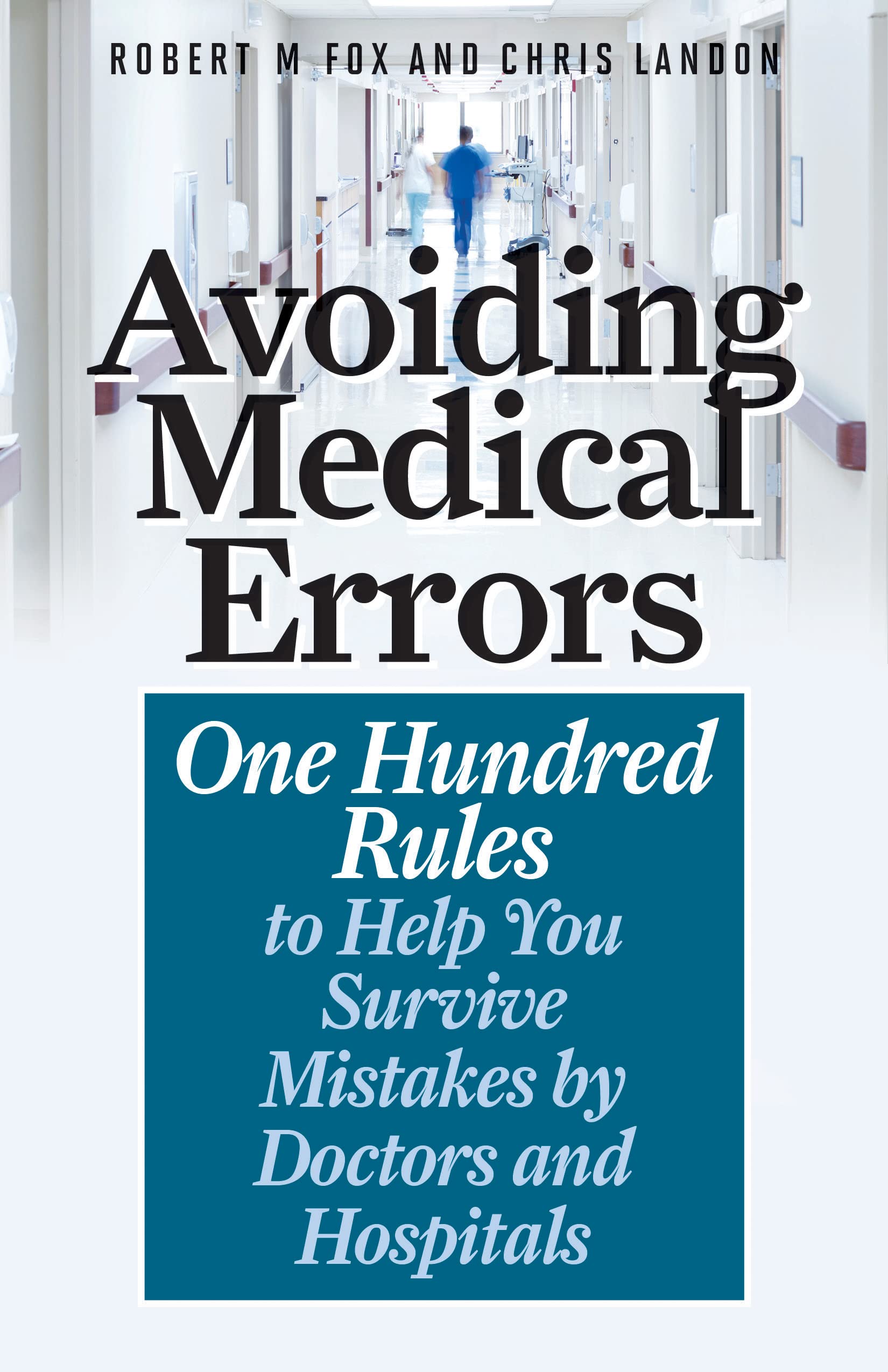
Avoiding Medical Errors: One Hundred Rules to Help You Survive Mistakes by Doctors and Hospitals
$29.77
by Robert M. Fox



This book, written by a lawyer and a doctor explains to everyday readers ways in which they can avoid death and injury caused by medical mistakes. It may be shocking to learn that preventable errors by doctor and hospital personnel are a leading cause of death and injury in the United States―perhaps even exceeding the annual deaths caused by heart disease and cancer. But avoiding these mistakes is possible, and the rules found in this book will arm readers against the careless errors that lead to such deaths and injuries. From hospitals to doctors’ offices, medical professionals are overwhelmed, overtired, even overworked and mistakes are sometimes unavoidable even with the best safety measures in place. A resident at the end of a 36-hour on-call stint may forget to wash her hands before performing a surgical procedure. A chart may be mismarked. Medications may be inaccurately listed. Test results may be inaccurately interpreted. But patients are in a position to help themselves and their medical caregivers to avoid these mistakes by taking more active and attentive part in their own healthcare. By being aware of the most common errors, patients can look for ways to ask questions, review information, even examine test results with a critical eye toward their own health and specific situations. Robert Fox and Chris Landon show them how. “. . . a practical and straightforward guide intended to help patients avoid becoming victims of the healthcare system. . . . Reminding readers the practice of medicine is still more art than science, Fox and Landon’s pragmatic manual should be an invaluable asset to readers.” ― Publishers Weekly “If you're ready to take control of your own well-being in the health care system, this book is a must-read. Few books offer this much detail on what to know to keep yourself or your loved ones safe from the harm that many in health care are not prepared to prevent themselves.” ―Mike Eisenberg, Director of "To Err Is Human: A Patient Safety Documentary" “This book is full of practical tips that can help avert medical errors; it should be in everyone’s library and consulted before seeking healthcare.” ―Sandra K. Hanneman, PhD, RN, FAAN, Advisory Board, Physician-Patient Alliance for Health and Safety (PPAHS) “People forget the potential dangers associated with doctors and hospitals. This book enumerates the most essential methods you will need to protect yourself.” ―Mark Scholz, MD, Medical Director, Prostate Oncology Specialists, Inc., Executive Director, Prostate Cancer Research Institute, Author of "The Key to Prostate Cancer," Co-author of "Invasion of the Prostate Snatchers" “Many books have been written about how to protect yourself from being harmed while seeking healthcare, but this book is by far the most comprehensive and detailed I have seen. The authors employ their knowledge gained over many experiences to convey to the reader how to step around or over the many pitfalls that exist in our current sick-care system. The “tips” are brought to life with stories of what happens when a tip is not followed. I’d recommend this book to anyone facing tough medical decisions, and it would make a good gift to a friend facing difficult medical decisions.” ―John T. James, PhD, Author of “A Sea of Broken Hearts” and Co-Editor of “The Truth about Big Medicine” Robert M. Fox, JD, is in private practice in Sherman Oaks, California. He has a broad background in personal injury and medical malpractice. He is a past president of the Los Angeles Trial Lawyers Association. He is the author of many legal articles and and the co-author, with his wife―Dr. Isabelle Fox―of The Prospective Spouse Checklist―Evaluating Your Potential Partner (2011). He lives in Los Angeles. Chris Landon, M.D ., was a pediatric intern and resident at Stanford University Hospital, and received additional training at Stanford’s Children’s Hospital. He is board certified in both pediatrics and pediatric pulmonology, and is director of pediatrics at Ventura County Medical Center. He is also a clinical assistant professor of family medicine at UCLA and of pediatrics at USC. He has contributed to articles in the Journal of the American Medical Association, the Journal of the American Board of Family Practice, and other professional publications. He is the director of the Pediatric Diagnostic Center in Ventura, California, where he also lives.