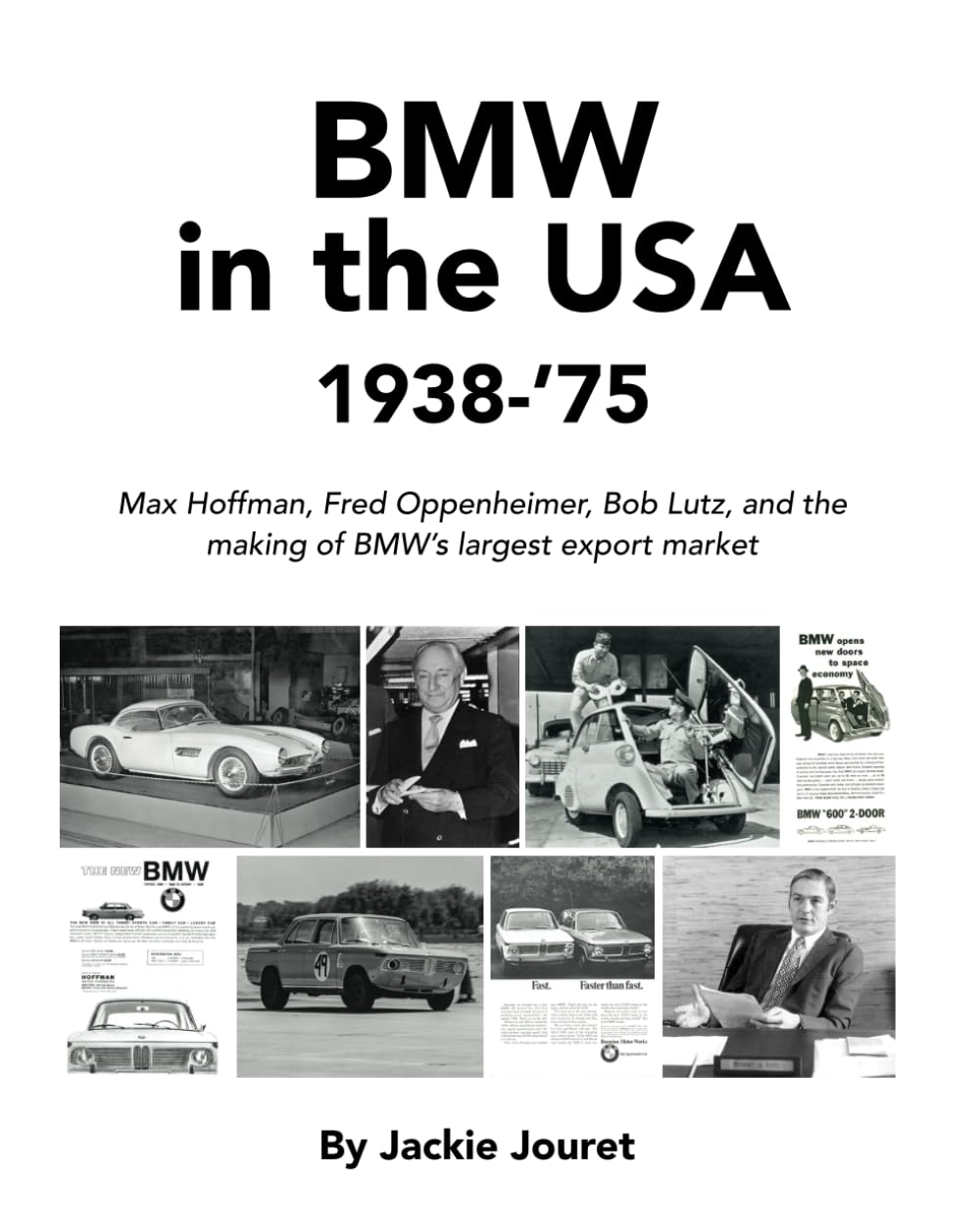
BMW in the USA, 1938-'75: Max Hoffman, Fred Oppenheimer, Bob Lutz, and the Making of BMW's Largest Export Market
$19.95
by Jackie Jouret



To most automotive enthusiasts in America, the story of BMW begins in 1968, with the arrival of the 2002. That car represented BMW’s first real hit in the US market, but it wasn’t the first Bavarian car to arrive on these shores. By the time the 2002 landed, BMWs had been coming to the United States for three decades already, imported privately by enthusiastic racers and returning service members who discovered the 328 and its derivatives while in Germany or the United Kingdom. BMW in the USA, 1938-’75 traces the origins of those early imports, as well as what came after. The US Army’s occupation of Bavaria put BMW’s fate into the hands of the American Commission, which dismantled the company before putting it back together again with Marshall Plan largesse. After resuming auto manufacture in 1951, BMW began exporting cars to the US three years later, splitting its distribution between Hoffman Motors and Oppenheimer’s Fadex Corp. That engendered a fierce rivalry between the two firms, while the development of V8-engined cars for the American market nearly drove BMW to bankruptcy just as it was recovering from wartime devastation. How BMW managed to recover and ultimately succeed in the US market is a fascinating story, one that has been largely untold for more than 40 years. BMW in the USA, 1938-’75 uncovers the facts about Fadex, and the truth of Max Hoffman’s machinations. It also reveals how BMW—led by American automotive legend Bob Lutz—finally untangled itself from a disastrous partnership with Hoffman to form BMW of North America, the wholly-owned sales subsidiary that took BMW to ever-greater heights from 1975 to the present. Throughout, BMW in the USA, 1938-’75 pays tribute to those who raced BMWs during this crucial era, providing invaluable exposure for BMW’s technical excellence when the marque was little-known to American enthusiasts.