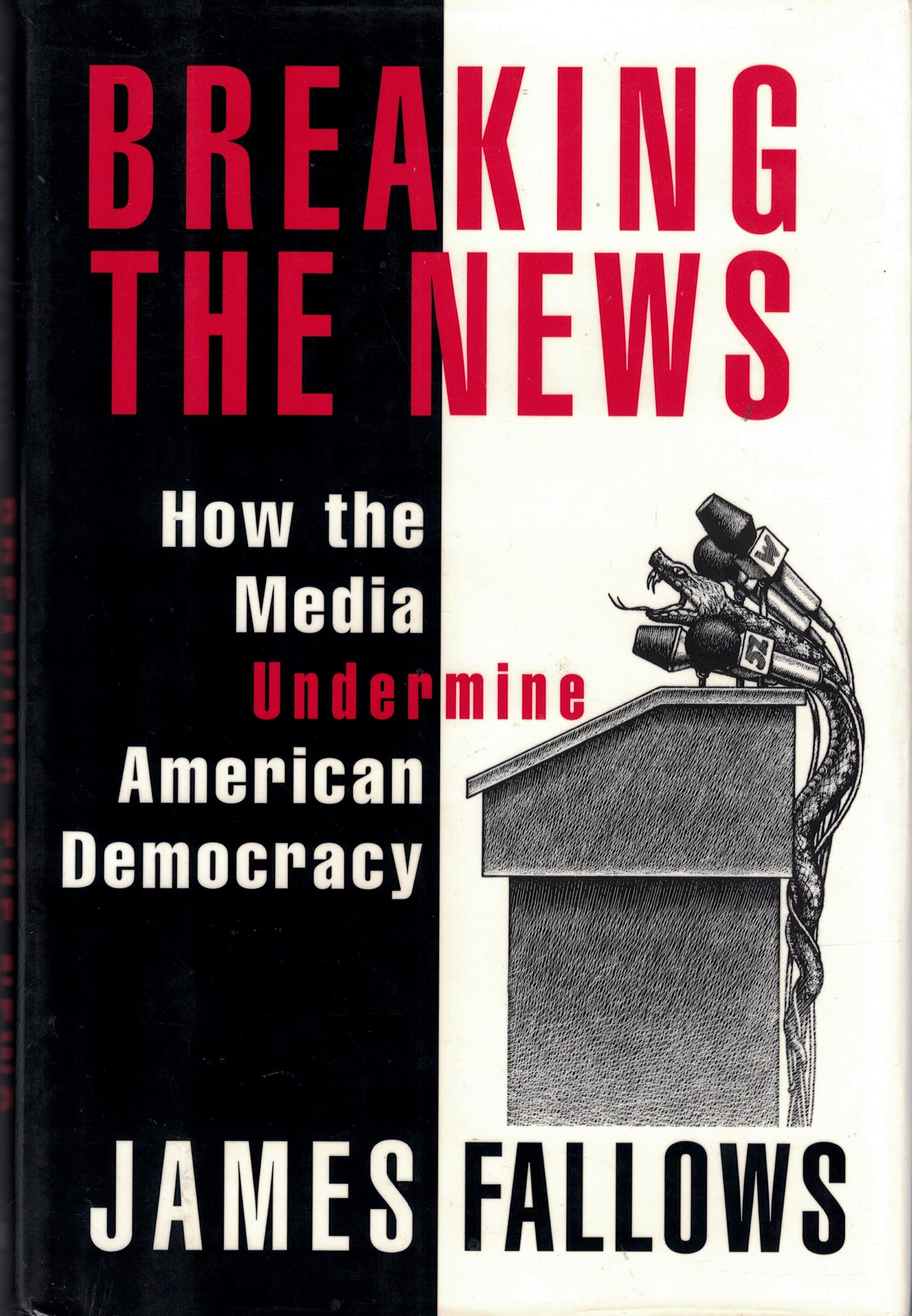



At last a persuasive explanation of what's gone wrong with the American media--and what can be done about it. Fallows details the ways in which the current style of news coverage engenders a sense of futility in the American public about our ability to influence our society. He reveals how the reigning practices evolved and whose interests are served. National ads/media. A lot of big-shot journalists didn't like this book, a systematic jeremiad about the current sad state of American political journalism. For instance, both the New York Times op-ed page and the New Yorker took pains to excoriate the book and its author--pretty good hints that Fallows is onto something. His point is that greed and intellectual sloth have fostered a political media elite that increasingly focuses on spin and ignores substance at the very time when solving the country's real problems requires all possible nuance. How the media give us the truth, the whole truth, and nothing but the truth?as they want us to see it. Copyright 1995 Reed Business Information, Inc. Expect fireworks in response to this penetrating critique of the media from Fallows, Washington editor of the Atlantic Monthly and a National Book Award recipient for National Defense (1981). Journalism, he argues, is the "main tool we have for keeping the world's events in perspective . . . the main source of agreed-upon facts we can use in public decisions," but Americans justifiably hate the media for arrogance, irresponsibility, and negativism. Fallows traces the financial, cultural, and political changes that have diminished the authority and "wholeness" of the American media and finds that instead of engaging the public in debate about vital issues, the media "entertain" people with celebrity journalism and badger them with news that the world is out of control or that they will always be governed by crooks or that their fellow citizens are about to kill them. Fallows characterizes the public reaction to this kind of news as a "strange motiveless irritability" that makes it difficult for citizens to face complicated challenges and competing ideas or even to "tolerate" politicians interested in doing more than winning elections. Analyzing coverage of health care reform to show how the media "get in the way" of democracy, Fallows endorses the public journalism movement as a first step in bringing journalism back to serving its fundamental purpose, that of "making democratic self-government possible." A timely, thoughtful study. Mary Carroll rsuasive explanation of what's gone wrong with the American media--and what can be done about it. Fallows details the ways in which the current style of news coverage engenders a sense of futility in the American public about our ability to influence our society. He reveals how the reigning practices evolved and whose interests are served. National ads/media. James Fallows is Washington editor of The Atlantic Monthly.